
菲律宾肉鸡养殖场产超广谱β-内酰胺酶大肠杆菌分离株中 bla、bla、bla 基因的流行和分布。
Prevalence and distribution of bla, bla, bla genes in extended- spectrum β- lactamase- producing E. coli isolates from broiler farms in the Philippines.
机构信息
College of Veterinary Science and Medicine, Central Luzon State University, 3120, Science City of Munoz, Nueva Ecija, Philippines.
Ph.D. Program in Veterinary Science, Faculty of Veterinary Medicine, Chiang Mai University, Chiang Mai, Thailand.
出版信息
BMC Vet Res. 2019 Jul 5;15(1):227. doi: 10.1186/s12917-019-1975-9.
BACKGROUND
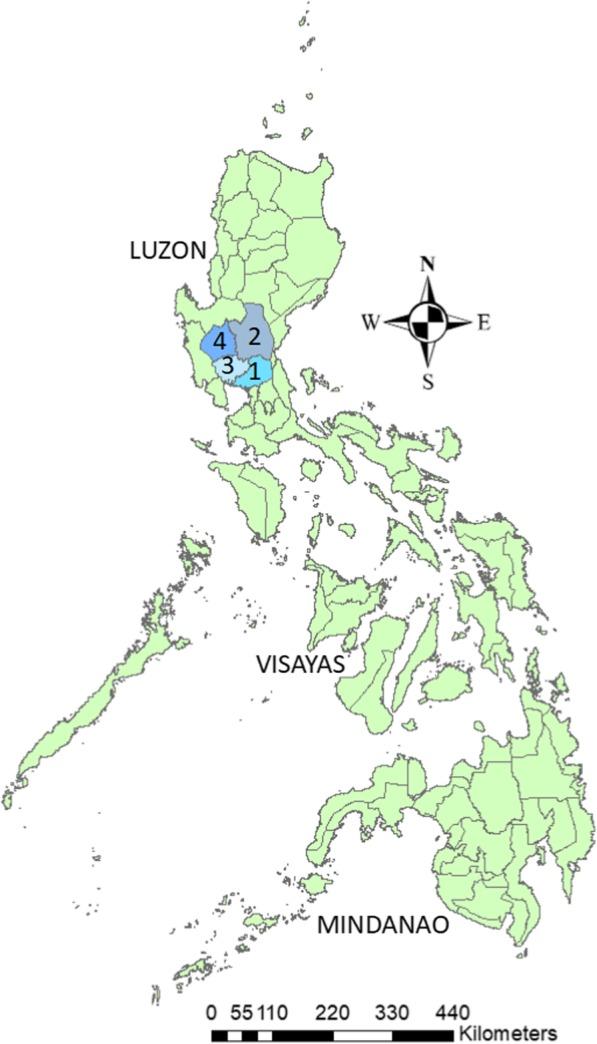
Antimicrobial resistance is a worldwide problem causing serious health threats. Escherichia coli is one of the most important bacteria that causes resistance problem. These bacteria produce an enzyme called extended-spectrum β-lactamase (ESBL) that allows it to become resistant to a wide variety of penicillins and cephalosporins. Currently, no information or published studies on ESBL-producing E.coli in broilers are available in the Philippines. This cross-sectional study was conducted to determine the prevalence and distribution of extended-spectrum β-lactamase (ESBL)-encoding genes, bla, bla, and bla, among E. coli isolates from broiler farms in Luzon, Philippines.
RESULTS
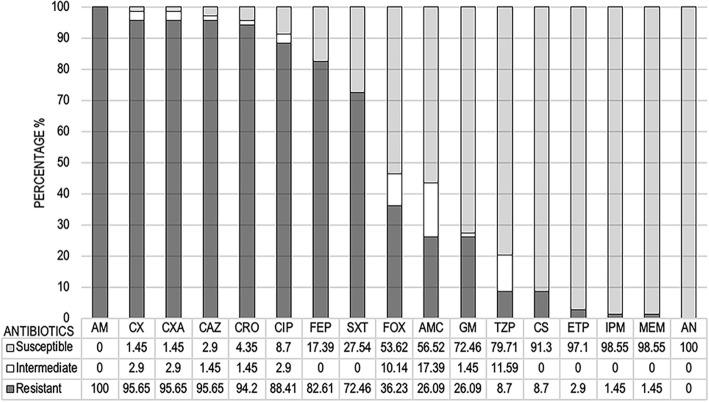
Results showed a farm prevalence of 66. 67%. A total of 69 (44.23%) ESBL-producing E. coli were isolated from boot swabs and cloacal swab samples from broiler farms. All major bla groups except bla group were identified in the isolates. The most prevalent group was bla, 72.46% (CI: 60.38-82.54%), followed by bla, bla group and bla. The bla and bla genes were identified in 57.97 and 27.54% of isolates, respectively. The bla and bla were the most common gene combinations (33.33%). Coexistence of bla types was observed in 50 (73.53%) isolates.
CONCLUSION
This study shows the high prevalence, diversity of patterns and coexistence of ESBL genes in the E. coli isolates from cloacal and boot swabs from broiler farms which pose risks of possible transmission to the environment, other animals and human.
背景
抗微生物药物耐药性是一个全球性问题,对健康构成严重威胁。大肠杆菌是引起耐药问题的最重要细菌之一。这些细菌产生一种称为超广谱β-内酰胺酶(ESBL)的酶,使其能够抵抗多种青霉素和头孢菌素。目前,在菲律宾没有关于肉鸡中产生 ESBL 的大肠杆菌的信息或已发表的研究。本横断面研究旨在确定菲律宾吕宋岛肉鸡养殖场大肠杆菌分离株中 ESBL 编码基因 blaCTX-M、blaTEM 和 blaSHV 的流行率和分布。
结果
结果显示农场的流行率为 66.67%。从肉鸡养殖场的靴拭子和泄殖腔拭子样本中总共分离出 69 株(44.23%)产 ESBL 的大肠杆菌。在分离株中鉴定出除 blaCTX-M 组外的所有主要 bla 组。最常见的组是 blaCTX-M,72.46%(CI:60.38-82.54%),其次是 blaTEM、blaSHV 和 blaCTX-M 组。blaTEM 和 blaCTX-M 基因分别在 57.97%和 27.54%的分离株中被鉴定出。blaCTX-M 和 blaTEM 是最常见的基因组合(33.33%)。在 50 株(73.53%)分离株中观察到 bla 类型的共存。
结论
本研究表明,从肉鸡养殖场的泄殖腔和靴拭子中分离的大肠杆菌中 ESBL 基因的流行率高、模式多样且共存,这对环境、其他动物和人类可能的传播风险构成威胁。
 Zotero 插件