
环境塑造了一种野生夜间灵长类动物的睡眠模式。
Environment shapes sleep patterns in a wild nocturnal primate.
机构信息
Nocturnal Primate Research Group, Oxford Brookes University, Oxford, United Kingdom.
Center for Ecological and Evolutionary Synthesis, University of Oslo, Oslo, Norway.
出版信息
Sci Rep. 2019 Jul 9;9(1):9939. doi: 10.1038/s41598-019-45852-2.
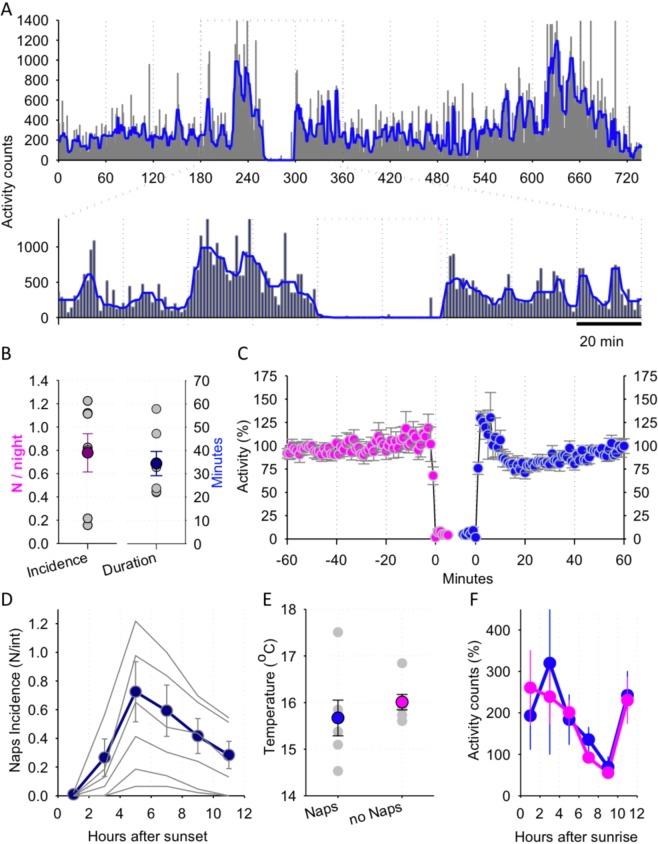
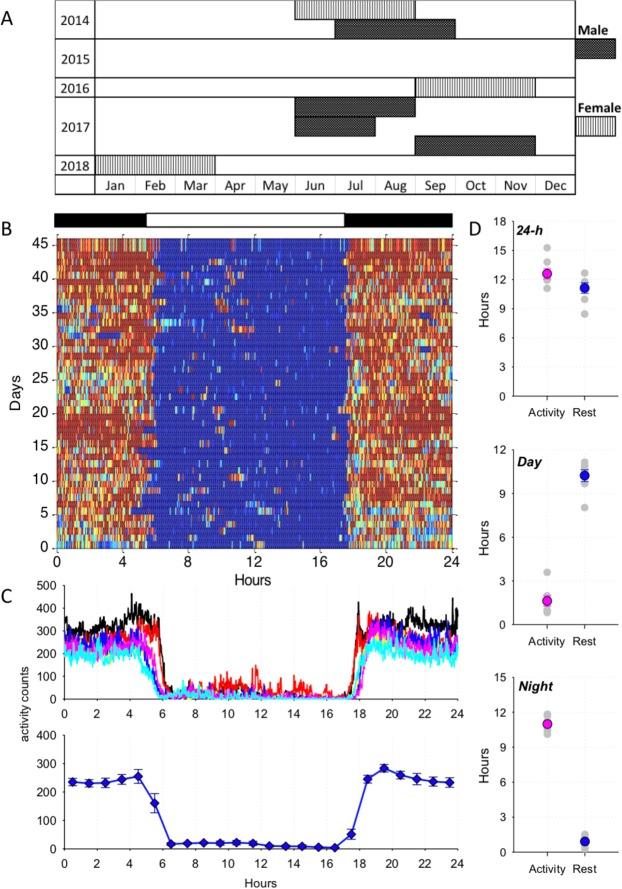
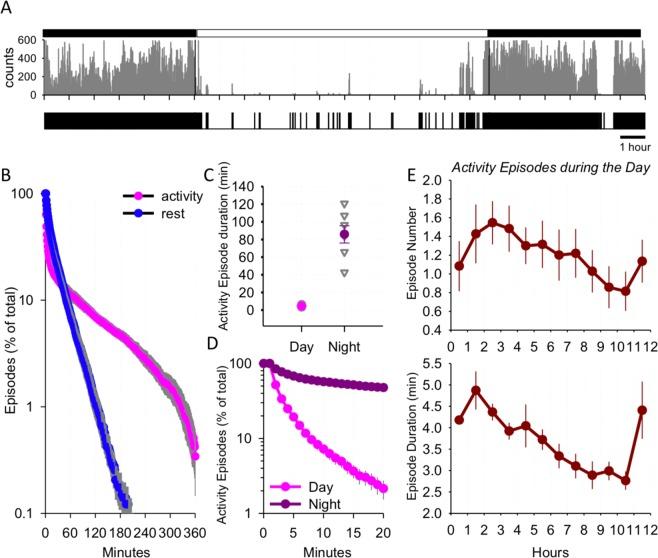
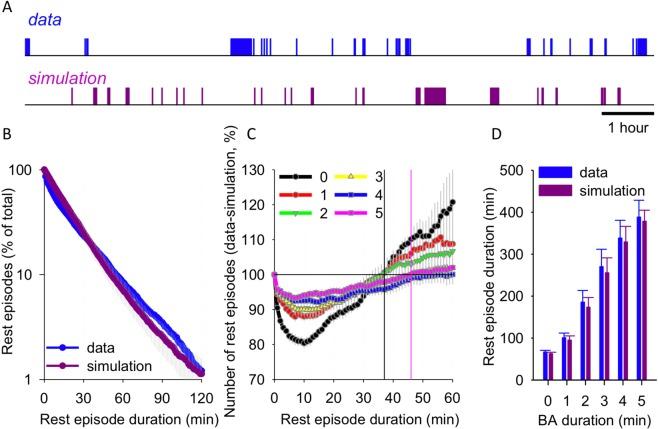
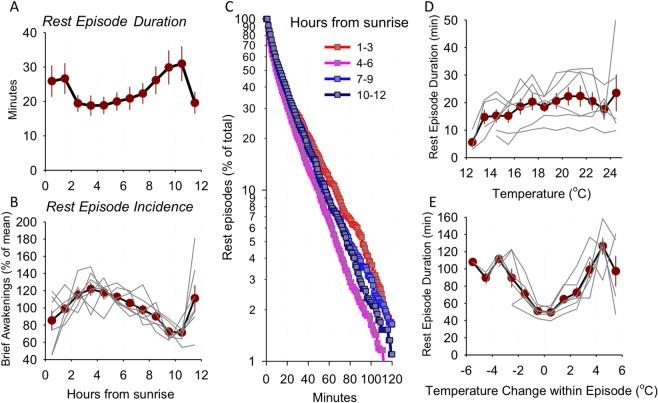
Among primates, the suborder Haplorhini is considered to have evolved a consolidated monophasic sleep pattern, with diurnal species requiring a shorter sleep duration than nocturnal species. Only a few primate species have been systematically studied in their natural habitat where environmental variables, including temperature and light, have a major influence on sleep and activity patterns. Here we report the first sleep study on a nocturnal primate performed in the wild. We fitted seven wild Javan slow lorises (Nycticebus javanicus) in West Java, Indonesia with accelerometers that collected activity data, and installed climate loggers in each individual's home range to collect ambient temperature readings (over 321 days in total). All individuals showed a strictly nocturnal pattern of activity and displayed a striking synchronisation of onset and cessation of activity in relation to sunset and sunrise. The longest consolidated rest episodes were typically clustered near the beginning and towards the end of the light period, and this pattern was inversely related to daily fluctuations of the ambient temperature. The striking relationship between daily activity patterns, light levels and temperature suggests a major role of the environment in shaping the daily architecture of waking and sleep. We concluded that well-known phenotypic variability in daily sleep amount and architecture across species may represent an adaptation to changes in the environment. Our data suggest that the consolidated monophasic sleep patterns shaped by environmental pressures observed in slow lorises represent phylogenetic inertia in the evolution of sleep patterns in humans.
在灵长类动物中,简鼻亚目被认为已经进化出了一种统一的单相睡眠模式,昼行性物种比夜行性物种需要的睡眠时间更短。只有少数几种灵长类动物在其自然栖息地进行了系统研究,在那里,环境变量,包括温度和光照,对睡眠和活动模式有重大影响。在这里,我们报告了首例在野外对夜行性灵长类动物进行的睡眠研究。我们在印度尼西亚西爪哇为 7 只野生爪哇懒猴(Nycticebus javanicus)佩戴了加速度计,这些加速度计收集了活动数据,并在每个个体的栖息地安装了气象记录仪,以收集环境温度读数(总共超过 321 天)。所有个体都表现出严格的夜间活动模式,并表现出与日落和日出相关的活动开始和停止的惊人同步性。最长的连续休息时间通常集中在光周期的开始和结束附近,这种模式与环境温度的日常波动呈反比。每日活动模式、光照水平和温度之间的显著关系表明,环境在塑造清醒和睡眠的日常结构方面起着重要作用。我们得出的结论是,在不同物种中,每日睡眠时间和结构的显著表型可变性可能代表了对环境变化的适应。我们的数据表明,在懒猴中观察到的由环境压力塑造的统一单相睡眠模式,代表了人类睡眠模式进化中的系统发育惯性。

 Zotero 插件