
淫羊藿素对载脂蛋白 E 缺陷小鼠主动脉中长链非编码 RNA 和信使 RNA 表达谱的影响。
Effects of icariin on long noncoding RNA and mRNA expression profile in the aortas of apoE-deficient mice.
机构信息
Department of Pharmacology and Toxicology, Jilin University School of Pharmaceutical Sciences, 1163 Xinmin Ave, Changchun 130021, China.
Department of Ophthalmology, The First Hospital of Jilin University, Changchun 130021, Jilin, China.
出版信息
Biosci Rep. 2019 Jul 25;39(7). doi: 10.1042/BSR20190855. Print 2019 Jul 31.
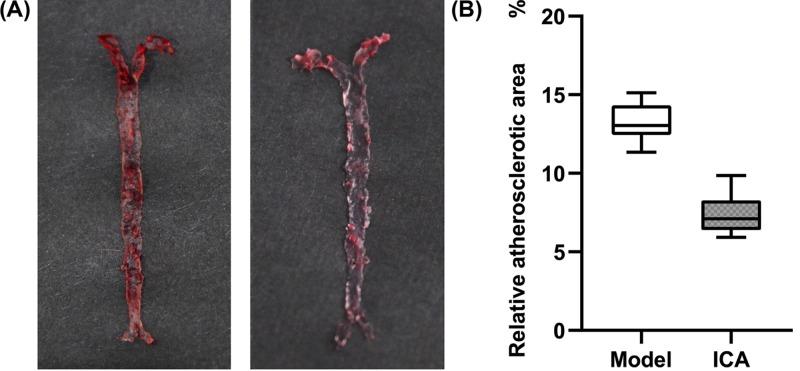
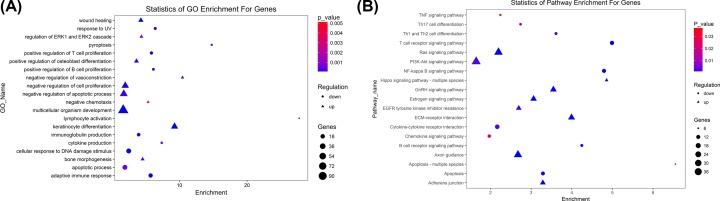
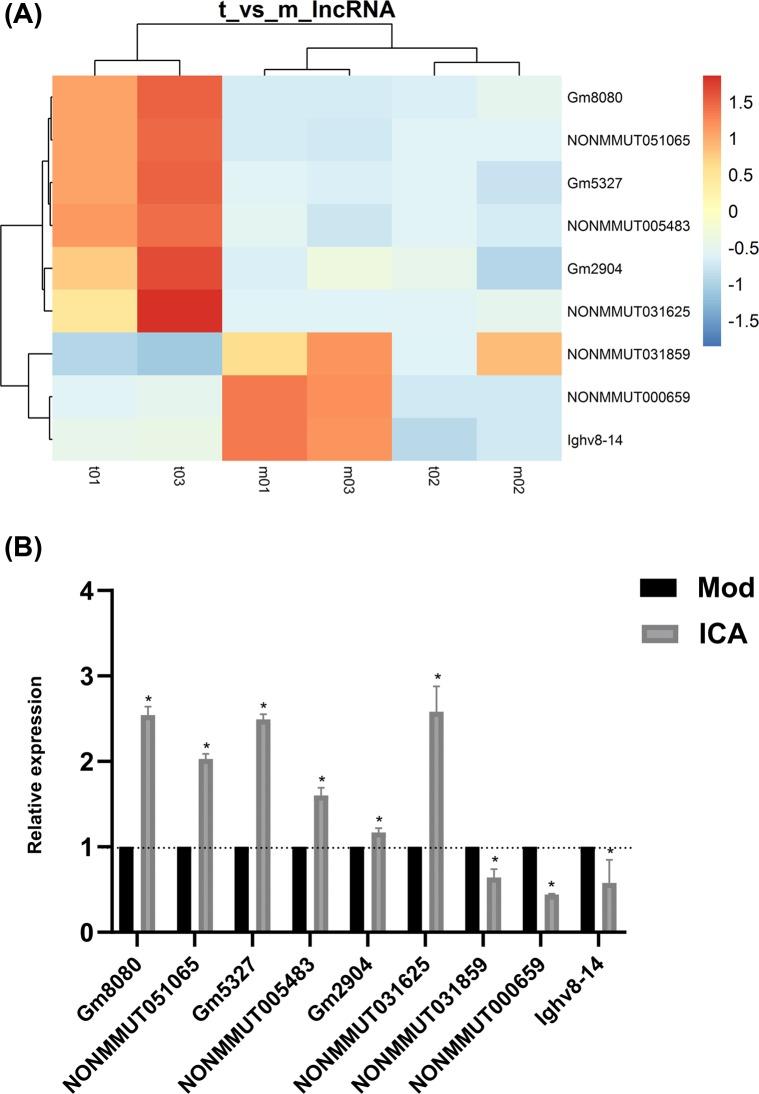
: The beneficial effects of icariin (ICA) in ameliorating atherosclerosis (AS) are well known, but the underlying protective mechanism has not been fully elucidated. The present study aimed to investigate altered long noncosing RNA (lncRNA) and mRNA expression profiles in ApoE mice after ICA treatment. : The atherosclerotic plaque area was evaluated on high-fat diet (HFD)-induced ApoE mice treated with either ICA or vehicle. LncRNA and mRNA integrated microarrays was performed on aortic tissues. Gene Ontology (GO) and Kyoto Encyclopedia of Genes and Genomes (KEGG) pathway analysis were utilized to explore the significant function and pathway of the differentially expressed (DE) mRNAs, global signal transduction network were constructed to select key mRNAs, and lncRNA-mRNA co-expression network was built to find out the interactions between lncRNA and mRNA. Quantitative real-time PCR (qPCR) was used to further validate the expressions of selected lncRNAs and mRNAs. : Administration of ICA significantly reduced plaque size after 12 weeks (<0.05). A total of 1512 DE lncRNAs and 2059 DE mRNAs were identified. The mRNAs: protein kinase C, β (Prkcb), Cyp2c65, Mapk10, Calmodulin 5 (Calm5), Calmodulin-like 3 (Calml3) and Camk4 were selected as hub mRNAs, the correlated lncRNAs in co-expression network were identified as important regulatory lncRNAs. The identified target pairs such as lncRNA-NONMMUT000659/Prkcb may play critical roles in AS development mediated by ICA. : Taken together, our study highlights a panel of DE lncRNAs and mRNAs that could explain the molecular mechanism of ICA's anti-atherosclerotic effects. The work lays a foundation for subsequent genes functional researches, which could contribute to provide new therapeutic targets for AS.
: 淫羊藿苷(ICA)改善动脉粥样硬化(AS)的有益作用是众所周知的,但潜在的保护机制尚未完全阐明。本研究旨在探讨 ICA 治疗后 ApoE 小鼠中长链非编码 RNA(lncRNA)和 mRNA 表达谱的变化。 : 在高脂饮食(HFD)诱导的 ApoE 小鼠中,用 ICA 或载体处理后,评估动脉粥样硬化斑块面积。对主动脉组织进行 lncRNA 和 mRNA 整合微阵列分析。利用基因本体论(GO)和京都基因与基因组百科全书(KEGG)通路分析探讨差异表达(DE)mRNA 的显著功能和通路,构建全局信号转导网络选择关键的 mRNAs,并构建 lncRNA-mRNA 共表达网络以发现 lncRNA 和 mRNA 之间的相互作用。定量实时 PCR(qPCR)进一步验证了所选 lncRNA 和 mRNA 的表达。 : ICA 给药后 12 周可显著减小斑块大小(<0.05)。共鉴定出 1512 个 DE lncRNA 和 2059 个 DE mRNA。mRNA:蛋白激酶 C,β(Prkcb)、Cyp2c65、Mapk10、钙调蛋白 5(Calm5)、钙调蛋白样 3(Calml3)和 Camk4 被选为关键 mRNAs,共表达网络中的相关 lncRNA 被鉴定为重要的调节 lncRNA。鉴定的靶对,如 lncRNA-NONMMUT000659/Prkcb,可能在 ICA 介导的 AS 发展中发挥关键作用。 : 综上所述,我们的研究强调了一组 DE lncRNA 和 mRNAs,这些基因可能解释了 ICA 抗动脉粥样硬化作用的分子机制。这项工作为后续基因功能研究奠定了基础,这可能有助于为 AS 提供新的治疗靶点。




 Zotero 插件