
在家中对幼儿进行自动情绪和注意力分析:一项ResearchKit自闭症可行性研究。
Automatic emotion and attention analysis of young children at home: a ResearchKit autism feasibility study.
作者信息
Egger Helen L, Dawson Geraldine, Hashemi Jordan, Carpenter Kimberly L H, Espinosa Steven, Campbell Kathleen, Brotkin Samuel, Schaich-Borg Jana, Qiu Qiang, Tepper Mariano, Baker Jeffrey P, Bloomfield Richard A, Sapiro Guillermo
机构信息
1Department of Psychiatry and Behavioral Sciences, Duke Health, Durham, USA.
6Present Address: Department of Child and Adolescent Psychiatry, NYU Langone Health, Adjunct at Duke Health, Durham, USA.
出版信息
NPJ Digit Med. 2018 Jun 1;1:20. doi: 10.1038/s41746-018-0024-6. eCollection 2018.
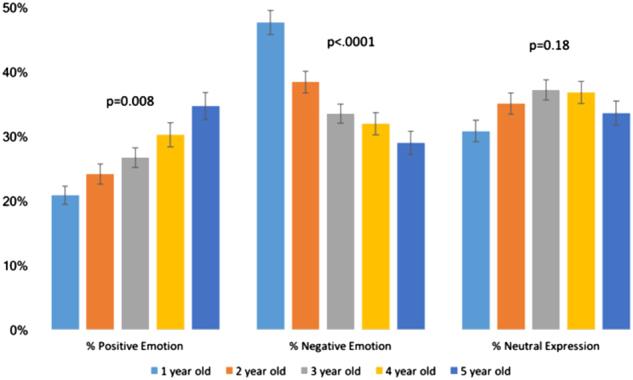
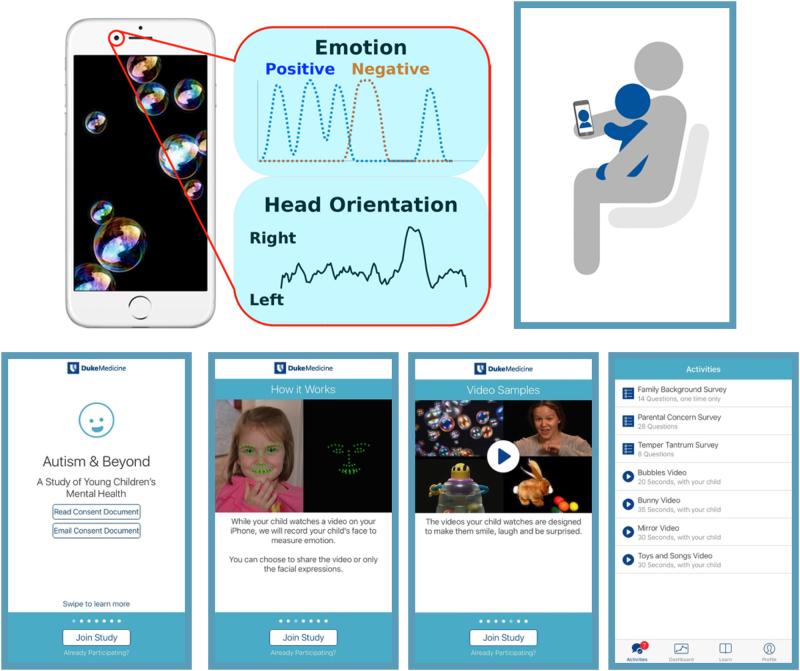
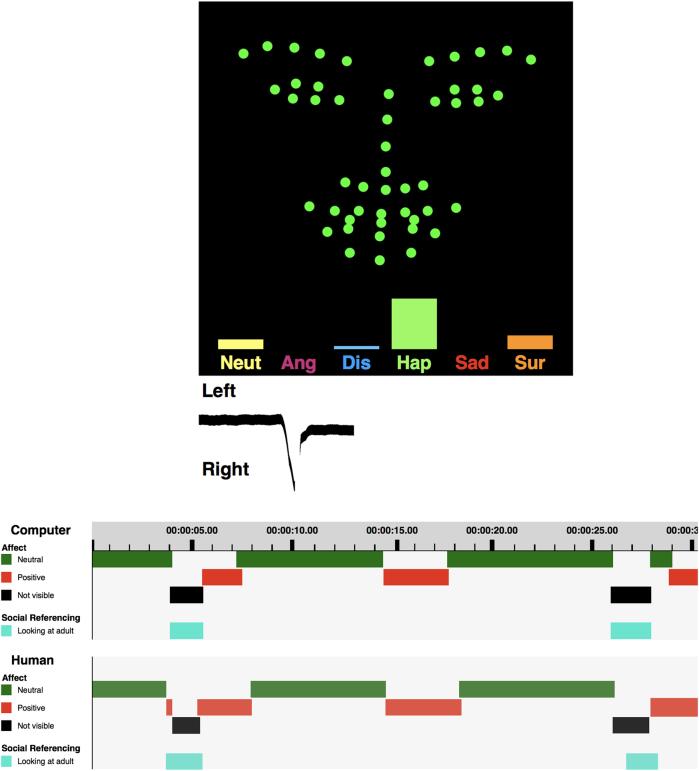
Current tools for objectively measuring young children's observed behaviors are expensive, time-consuming, and require extensive training and professional administration. The lack of scalable, reliable, and validated tools impacts access to evidence-based knowledge and limits our capacity to collect population-level data in non-clinical settings. To address this gap, we developed mobile technology to collect videos of young children while they watched movies designed to elicit autism-related behaviors and then used automatic behavioral coding of these videos to quantify children's emotions and behaviors. We present results from our iPhone study Autism & Beyond, built on ResearchKit's open-source platform. The entire study-from an e-Consent process to stimuli presentation and data collection-was conducted within an iPhone-based app available in the Apple Store. Over 1 year, 1756 families with children aged 12-72 months old participated in the study, completing 5618 caregiver-reported surveys and uploading 4441 videos recorded in the child's natural settings. Usable data were collected on 87.6% of the uploaded videos. Automatic coding identified significant differences in emotion and attention by age, sex, and autism risk status. This study demonstrates the acceptability of an app-based tool to caregivers, their willingness to upload videos of their children, the feasibility of caregiver-collected data in the home, and the application of automatic behavioral encoding to quantify emotions and attention variables that are clinically meaningful and may be refined to screen children for autism and developmental disorders outside of clinical settings. This technology has the potential to transform how we screen and monitor children's development.
目前用于客观测量幼儿观察行为的工具价格昂贵、耗时,且需要大量培训和专业管理。缺乏可扩展、可靠且经过验证的工具影响了获取基于证据的知识,并限制了我们在非临床环境中收集人群层面数据的能力。为了弥补这一差距,我们开发了移动技术,在幼儿观看旨在引发自闭症相关行为的电影时收集他们的视频,然后对这些视频进行自动行为编码,以量化儿童的情绪和行为。我们展示了基于ResearchKit开源平台的iPhone研究“自闭症及其他”的结果。整个研究——从电子同意过程到刺激呈现和数据收集——都在苹果应用商店中一款基于iPhone的应用程序内进行。在一年多的时间里,1756个有12至72个月大孩子的家庭参与了这项研究,完成了5618份由照顾者报告的调查,并上传了4441段在孩子自然环境中录制的视频。在上传的视频中,87.6%收集到了可用数据。自动编码识别出了年龄、性别和自闭症风险状态在情绪和注意力方面的显著差异。这项研究证明了基于应用程序的工具对照顾者的可接受性、他们上传孩子视频的意愿、照顾者在家中收集数据的可行性,以及自动行为编码在量化具有临床意义且可进一步完善以在临床环境之外筛查儿童自闭症和发育障碍的情绪和注意力变量方面的应用。这项技术有可能改变我们筛查和监测儿童发育的方式。
 Zotero 插件