
6350 名致病性错配修复变异携带者的基因、年龄和性别与癌症风险:来自前瞻性 Lynch 综合征数据库的研究结果。
Cancer risks by gene, age, and gender in 6350 carriers of pathogenic mismatch repair variants: findings from the Prospective Lynch Syndrome Database.
机构信息
Department of Tumor Biology, Institute of Cancer Research, The Norwegian Radium Hospital, Oslo University Hospital, Oslo, Norway.
Institute of Medical Genetics, Division of Cancer and Genetics, Cardiff University School of Medicine, Cardiff, UK.
出版信息
Genet Med. 2020 Jan;22(1):15-25. doi: 10.1038/s41436-019-0596-9. Epub 2019 Jul 24.
PURPOSE
Pathogenic variants affecting MLH1, MSH2, MSH6, and PMS2 cause Lynch syndrome and result in different but imprecisely known cancer risks. This study aimed to provide age and organ-specific cancer risks according to gene and gender and to determine survival after cancer.
METHODS
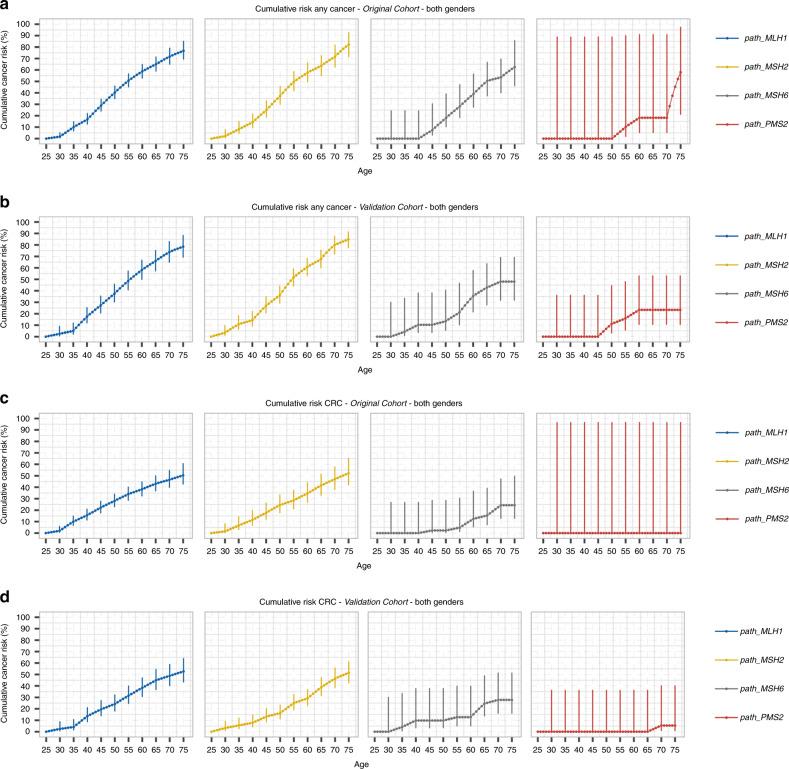
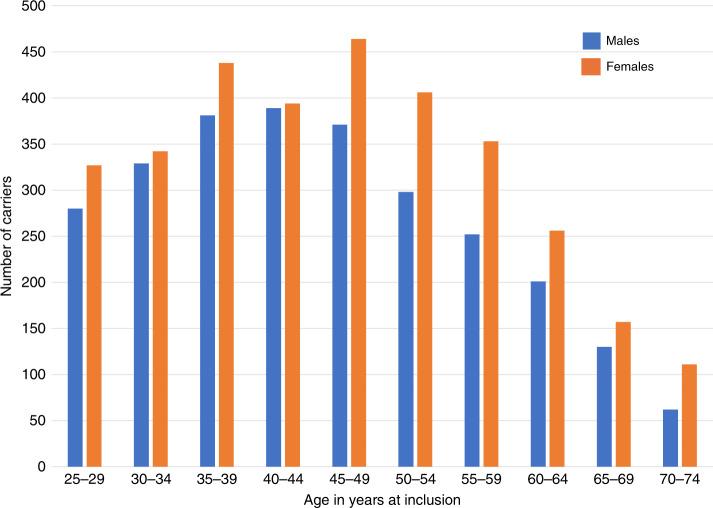
We conducted an international, multicenter prospective observational study using independent test and validation cohorts of carriers of class 4 or class 5 variants. After validation the cohorts were merged providing 6350 participants and 51,646 follow-up years.
RESULTS
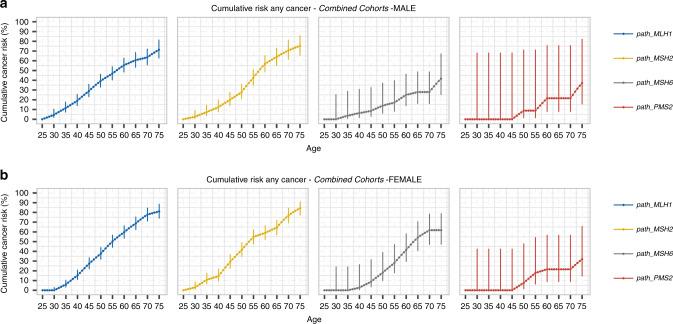
There were 1808 prospectively observed cancers. Pathogenic MLH1 and MSH2 variants caused high penetrance dominant cancer syndromes sharing similar colorectal, endometrial, and ovarian cancer risks, but older MSH2 carriers had higher risk of cancers of the upper urinary tract, upper gastrointestinal tract, brain, and particularly prostate. Pathogenic MSH6 variants caused a sex-limited trait with high endometrial cancer risk but only modestly increased colorectal cancer risk in both genders. We did not demonstrate a significantly increased cancer risk in carriers of pathogenic PMS2 variants. Ten-year crude survival was over 80% following colon, endometrial, or ovarian cancer.
CONCLUSION
Management guidelines for Lynch syndrome may require revision in light of these different gene and gender-specific risks and the good prognosis for the most commonly associated cancers.
目的
影响 MLH1、MSH2、MSH6 和 PMS2 的致病性变异导致林奇综合征,并导致不同但不精确已知的癌症风险。本研究旨在根据基因和性别提供年龄和器官特异性的癌症风险,并确定癌症后的生存情况。
方法
我们使用 4 类或 5 类变异携带者的独立测试和验证队列进行了一项国际、多中心前瞻性观察研究。在验证后,这些队列被合并,提供了 6350 名参与者和 51646 年的随访。
结果
前瞻性观察到 1808 例癌症。致病性 MLH1 和 MSH2 变异导致高外显率显性癌症综合征,具有相似的结直肠癌、子宫内膜癌和卵巢癌风险,但较年长的 MSH2 携带者具有更高的上尿路、上消化道、脑癌风险,特别是前列腺癌风险。致病性 MSH6 变异导致性限制特征,具有高子宫内膜癌风险,但在两性中仅适度增加结直肠癌风险。我们没有证明致病性 PMS2 变异携带者的癌症风险显著增加。结直肠癌、子宫内膜癌或卵巢癌后 10 年的粗生存率超过 80%。
结论
鉴于这些不同的基因和性别特异性风险以及最常见相关癌症的良好预后,林奇综合征的管理指南可能需要修订。
 Zotero 插件