
不明原因复发性流产的中国夫妇的精子 DNA 碎片化。
Sperm DNA fragmentation in Chinese couples with unexplained recurrent pregnancy loss.
机构信息
Reproductive Medical Center of Ruijin Hospital, Shanghai Jiao Tong University, School of Medicine, Shanghai 200025, China.
出版信息
Asian J Androl. 2020 May-Jun;22(3):296-301. doi: 10.4103/aja.aja_60_19.
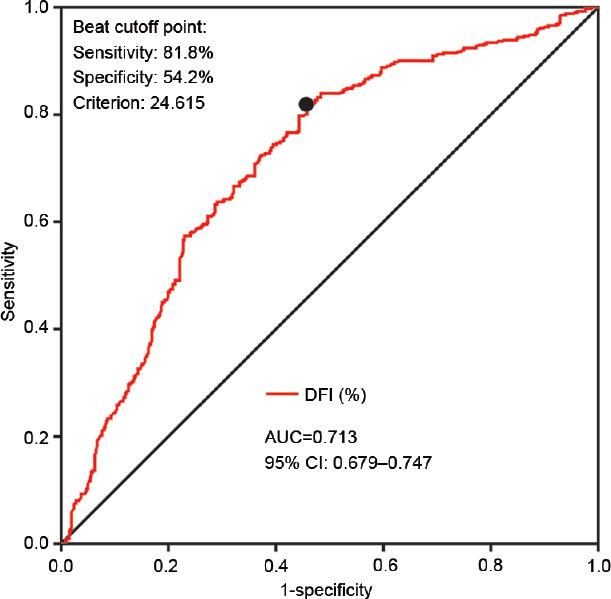
We aimed to study the association between sperm DNA fragmentation and recurrent pregnancy loss (RPL) in the Chinese population via a retrospective observational study of Chinese couples who had experienced RPL between May 2013 and August 2018. The study population included 461 men from couples with RPL and 411 men from a control group (couples with clinical pregnancy via in vitro fertilization owing to female causes). Routine semen analysis, sperm chromatin analysis, and microscopic (high-power) morphological analysis were performed using semen samples. Semen samples were assessed for volume, sperm count, and motility. The sperm DNA fragmentation index (DFI) was calculated, and the median DFI was obtained. Men were categorized as having normal (37.8%; DFI ≤ 15.0%), moderate (33.6%; 15.0% < DFI < 30.0%), or severe (28.6%; DFI ≥ 30.0%) DNA fragmentation levels. The percentage of men with severe DNA fragmentation was significantly higher in the RPL (42.3%) group than that in the control group (13.1%), whereas the percentage of men with normal levels of DNA fragmentation was significantly lower in the RPL group (22.8%) than that in the control group (54.7%). Subsequent analysis also demonstrated that the sperm DNA fragmentation rate had a moderate reverse correlation with the sperm progressive motility rate (r = -0.47, P < 0.001) and the total motile sperm count (r = -0.31, P < 0.001). We found a positive correlation between RPL and sperm DNA fragmentation. The results suggest that increased sperm DNA damage is associated with RPL.
我们旨在通过对 2013 年 5 月至 2018 年 8 月期间经历过复发性妊娠丢失(RPL)的中国夫妇进行回顾性观察研究,来研究精子 DNA 碎片化与 RPL 之间的关联。研究人群包括 461 名来自 RPL 夫妇的男性和 411 名来自因女性原因行体外受精而具有临床妊娠的对照组夫妇的男性。使用精液样本对常规精液分析、精子染色质分析和显微镜(高倍)形态学分析进行了分析。评估了精液样本的体积、精子计数和活力。计算了精子 DNA 碎片化指数(DFI),并获得了中位数 DFI。将男性分为正常(37.8%;DFI ≤ 15.0%)、中度(33.6%;15.0% < DFI < 30.0%)或严重(28.6%;DFI ≥ 30.0%)DNA 碎片化水平。RPL(42.3%)组中具有严重 DNA 碎片化的男性比例明显高于对照组(13.1%),而 RPL 组中具有正常水平 DNA 碎片化的男性比例明显低于对照组(22.8%)(54.7%)。后续分析还表明,精子 DNA 碎片化率与精子前向运动率呈中度负相关(r = -0.47,P < 0.001),与总活动精子计数呈中度负相关(r = -0.31,P < 0.001)。我们发现 RPL 与精子 DNA 碎片化之间存在正相关。结果表明,精子 DNA 损伤增加与 RPL 有关。


 Zotero 插件