
单独及联合应用 siRNA 下调 STAT3、β-连环蛋白和 Notch-1 可增强野生型和阿霉素耐药 MCF7 乳腺癌细胞对阿霉素的化疗敏感性。
Downregulation of STAT3, β-Catenin, and Notch-1 by Single and Combinations of siRNA Treatment Enhance Chemosensitivity of Wild Type and Doxorubicin Resistant MCF7 Breast Cancer Cells to Doxorubicin.
机构信息
Cell Therapy Center, The University of Jordan, Amman 11942, Jordan.
Department of Pharmacology, Faculty of Medicine, The University of Jordan, Amman 11942, Jordan.
出版信息
Int J Mol Sci. 2019 Jul 28;20(15):3696. doi: 10.3390/ijms20153696.
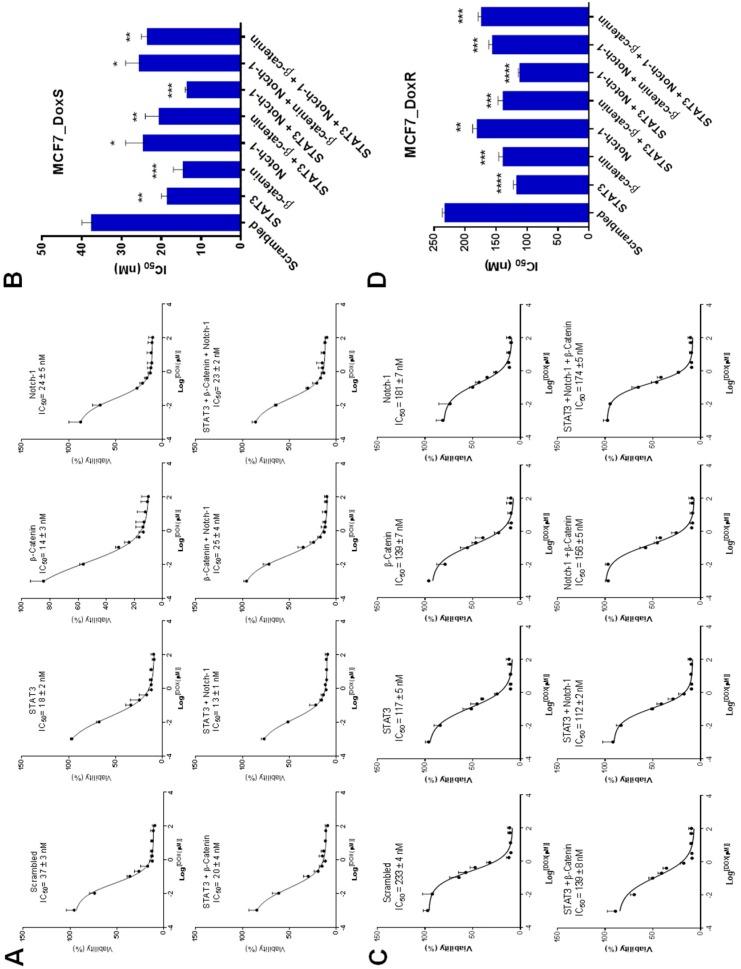
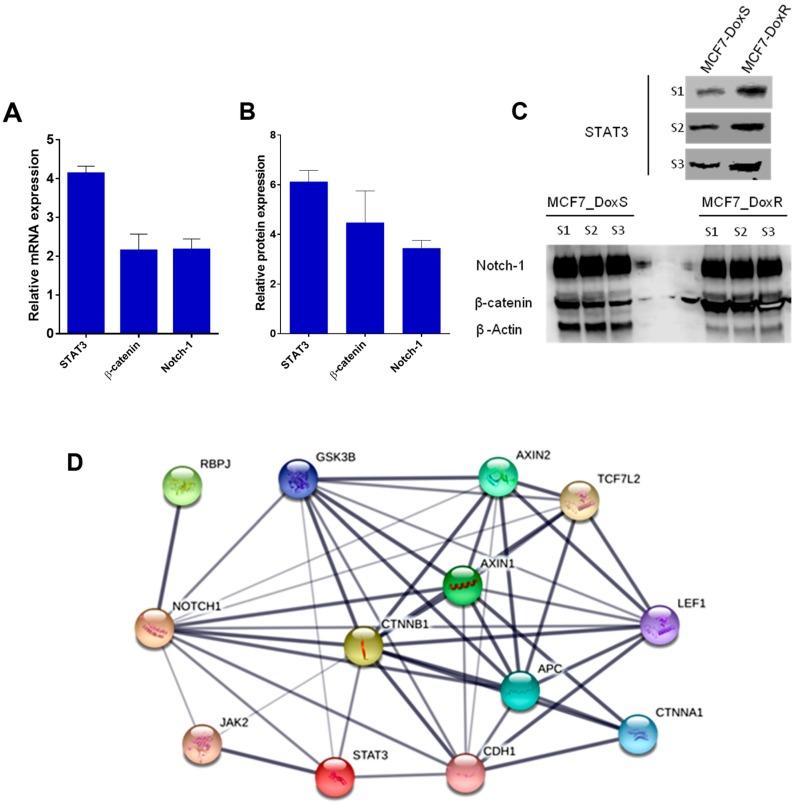
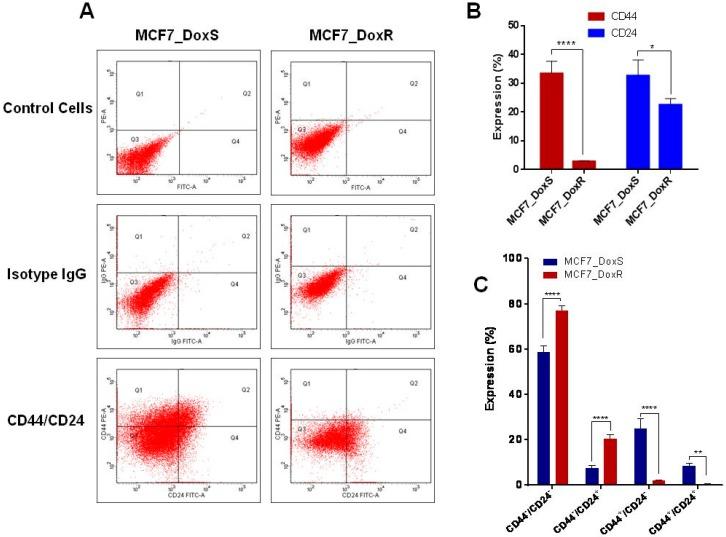
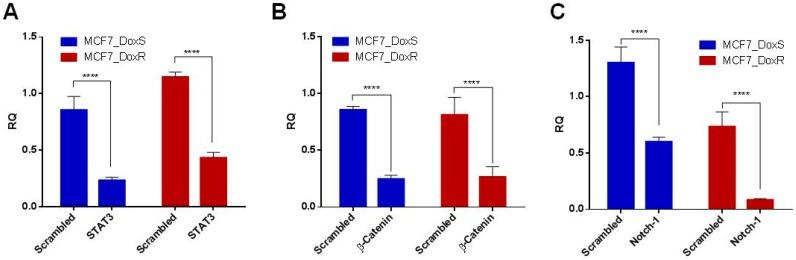
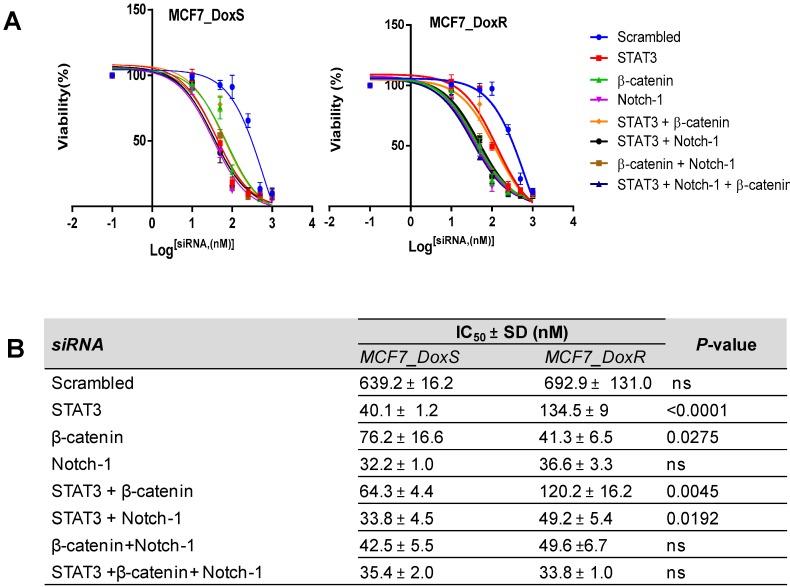
Combinatorial therapeutic strategies using siRNA and small molecules to eradicate tumors are emerging. Targeting multiple signaling pathways decreases the chances of cancer cells switching and adapting new signaling processes that may occur when using a single therapeutic modality. Aberrant functioning of Notch-1, Wnt/β-catenin, and STAT3 proteins and their crosstalk signaling pathways have been found to be involved in tumor survival, drug resistance, and relapse. In the current study, we describe a therapeutic potential of single and combinations of siRNA designed for silencing Notch-1, Wnt/β-catenin, and STAT3 in MCF7_DoxS (wild type) and MCF7_DoxR (doxorubicin resistant) breast cancer cells. The MCF7_DoxR cells were developed through treatment with a gradual increase in doxorubicin concentration, the expression of targeted genes was investigated, and the expression profiling of CD44/CD24 of the MCF7_DoxS and MCF7_DoxR cells were detected by flow cytometry. Both MCF7_DoxS and MCF7_DoxR breast cancer cells were treated with single and combinations of siRNA to investigate synergism and were analyzed for their effect on cell proliferation with and without doxorubicin treatment. The finding of this study showed the overexpression of targeted genes and the enrichment of the CD44/CD24 phenotype in MCF7_DoxR cells when compared to MCF7_DoxS cells. In both cell lines, the gene silencing efficacy showed a synergistic effect when combining STAT3/Notch-1 and STAT3/Notch-1/β-catenin siRNA. Interestingly, the chemosensitivity of MCF7_DoxS and MCF7_DoxR cells to doxorubicin was increased when combined with siRNA treatment. Our study shows the possibility of using single and combinations of siRNA to enhance the chemosensitivity of cancer cells to conventional antitumor chemotherapy.
联合治疗策略使用 siRNA 和小分子来消灭肿瘤正在出现。靶向多个信号通路可以降低癌细胞切换和适应新信号过程的机会,当使用单一治疗方式时可能会发生这种情况。 Notch-1、Wnt/β-catenin 和 STAT3 蛋白的异常功能及其信号通路的串扰已被发现参与肿瘤存活、耐药和复发。在本研究中,我们描述了针对沉默 Notch-1、Wnt/β-catenin 和 STAT3 的 siRNA 的单一和组合的治疗潜力,这些 siRNA 设计用于 MCF7_DoxS(野生型)和 MCF7_DoxR(多柔比星耐药)乳腺癌细胞。 MCF7_DoxR 细胞是通过用逐渐增加的多柔比星浓度处理而开发的,研究了靶向基因的表达,并通过流式细胞术检测 MCF7_DoxS 和 MCF7_DoxR 细胞的 CD44/CD24 表达谱。用单链和双链 siRNA 处理 MCF7_DoxS 和 MCF7_DoxR 乳腺癌细胞,以研究协同作用,并分析其在有无多柔比星处理的情况下对细胞增殖的影响。本研究的结果表明,与 MCF7_DoxS 细胞相比,MCF7_DoxR 细胞中靶向基因的过度表达和 CD44/CD24 表型的富集。在这两种细胞系中,当联合使用 STAT3/Notch-1 和 STAT3/Notch-1/β-catenin siRNA 时,基因沉默效果表现出协同作用。有趣的是,当与 siRNA 治疗联合使用时,MCF7_DoxS 和 MCF7_DoxR 细胞对多柔比星的化疗敏感性增加。我们的研究表明,使用单链和双链 siRNA 来增强癌细胞对传统抗肿瘤化疗的敏感性是可能的。


 Zotero 插件