
基于完整叶绿体基因组的姜科姜属植物的比较与系统发育分析。
Comparative and Phylogenetic Analyses of Ginger ( ) in the Family Zingiberaceae Based on the Complete Chloroplast Genome.
作者信息
Cui Yingxian, Nie Liping, Sun Wei, Xu Zhichao, Wang Yu, Yu Jing, Song Jingyuan, Yao Hui
机构信息
Key Lab of Chinese Medicine Resources Conservation, State Administration of Traditional Chinese Medicine of the People's Republic of China, Institute of Medicinal Plant Development, Chinese Academy of Medical Sciences and Peking Union Medical College, Beijing 100193, China.
Engineering Research Center of Chinese Medicine Resources, Ministry of Education, Beijing 100193, China.
出版信息
Plants (Basel). 2019 Aug 12;8(8):283. doi: 10.3390/plants8080283.
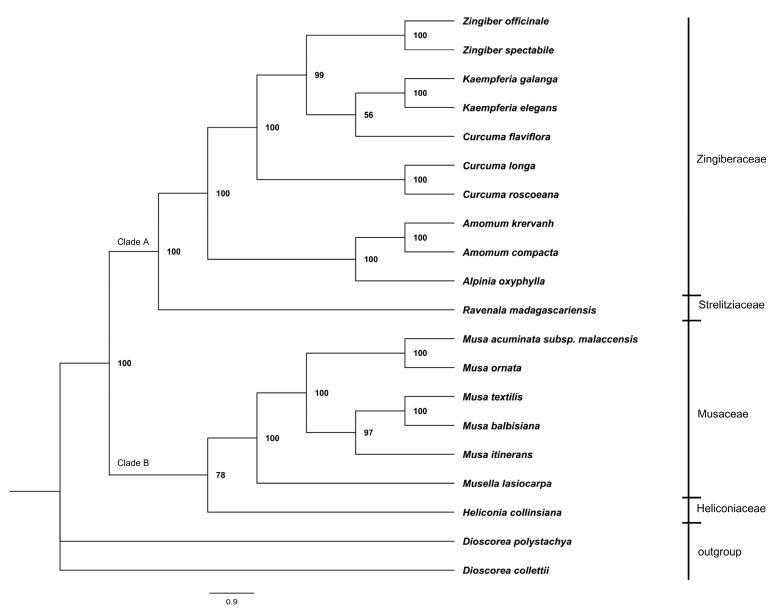
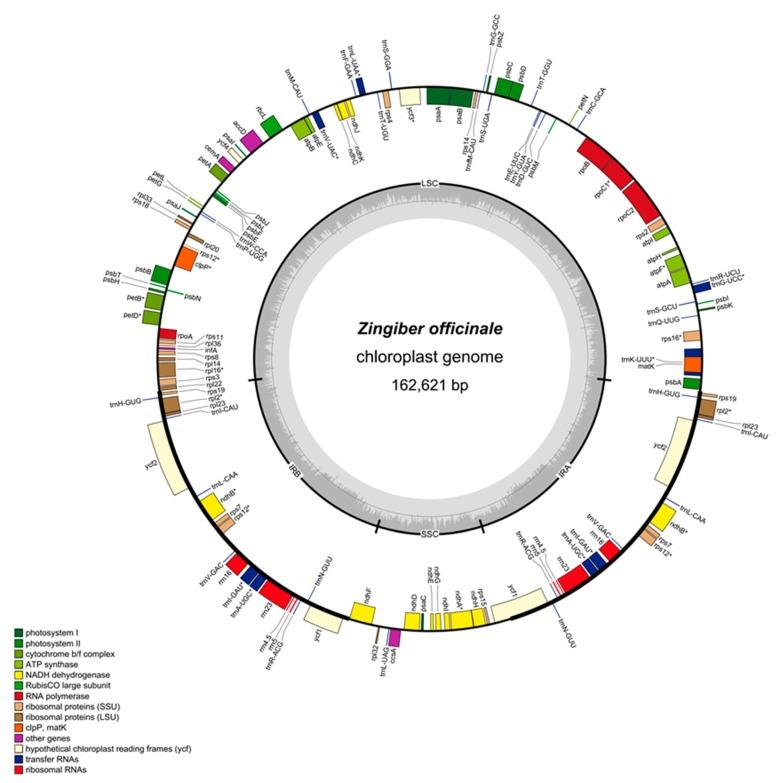
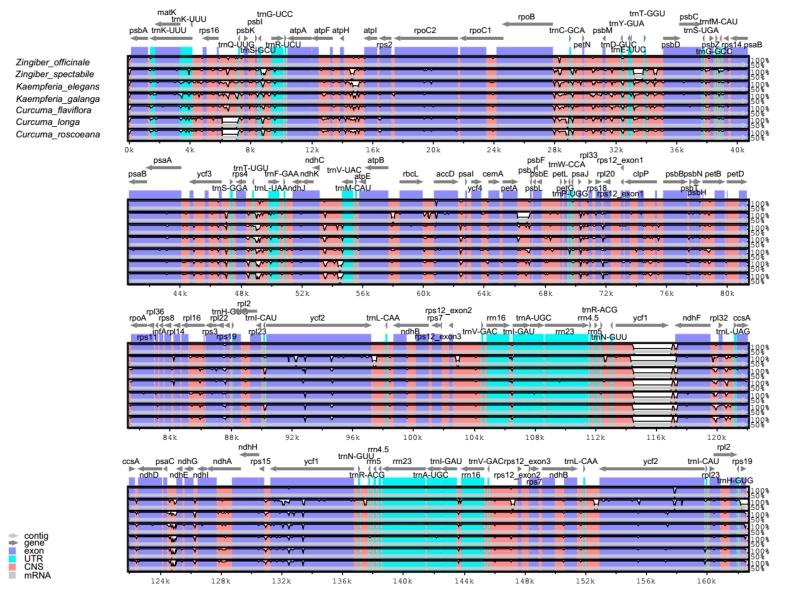
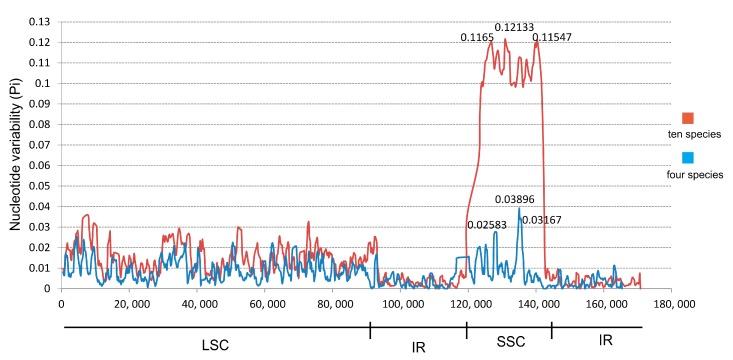
, commonly known as ginger, is an important plant of the family Zingiberaceae and is widely used as an herbal medicine and condiment. The lack of chloroplast genomic information hinders molecular research and phylogenetic analysis on ginger. We introduced the complete chloroplast genome of . and identified its phylogenetic position in Zingiberaceae. The chloroplast genome of . is 162,621 bp with a four-part circular structure and 36.1% GC content. All 113 unique genes were annotated. A total of 78 simple sequence repeats (SSRs) and 42 long repeat sequences, which are potential areas for species authentication, were found. Comparative analysis revealed some highly variable regions, including , , , , and . Moreover, the small single-copy (SSC) region was the most variable region in all four shared regions, indicating that it may be undergoing rapid nucleotide substitution in the family Zingiberaceae. Phylogenetic analysis based on all available chloroplasts of Zingiberales in the National Center for Biotechnology Information indicated that Zingiber is a sister branch to Kaempferia species. The availability of the . chloroplast genome provided invaluable data for species-level authentication and phylogenetic analysis and can thus benefit further investigations on species in the family Zingiberaceae.
,通常被称为姜,是姜科的一种重要植物,被广泛用作草药和调味品。叶绿体基因组信息的缺乏阻碍了对姜的分子研究和系统发育分析。我们介绍了的完整叶绿体基因组,并确定了其在姜科中的系统发育位置。的叶绿体基因组为162,621 bp,具有四分体环状结构,GC含量为36.1%。共注释了113个独特基因。共发现78个简单序列重复(SSR)和42个长重复序列,这些是物种鉴定的潜在区域。比较分析揭示了一些高度可变区域,包括、、、和。此外,小单拷贝(SSC)区域是所有四个共享区域中最可变的区域,表明它可能在姜科中经历快速的核苷酸替换。基于美国国立生物技术信息中心所有可用的姜目叶绿体进行的系统发育分析表明,姜是山柰属物种的姐妹分支。的叶绿体基因组的可用性为物种水平的鉴定和系统发育分析提供了宝贵的数据,从而有助于对姜科物种的进一步研究。

 Zotero 插件