
剖析局灶性皮质发育不良的遗传基础:一项大样本队列研究。
Dissecting the genetic basis of focal cortical dysplasia: a large cohort study.
机构信息
Sorbonne Université, UPMC Univ Paris 06, UMR S 1127, Paris, France.
INSERM, U1127, Paris, France.
出版信息
Acta Neuropathol. 2019 Dec;138(6):885-900. doi: 10.1007/s00401-019-02061-5. Epub 2019 Aug 23.
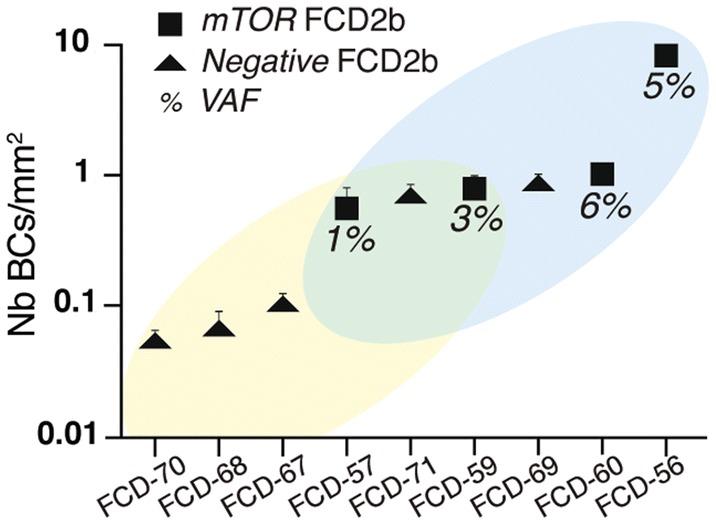
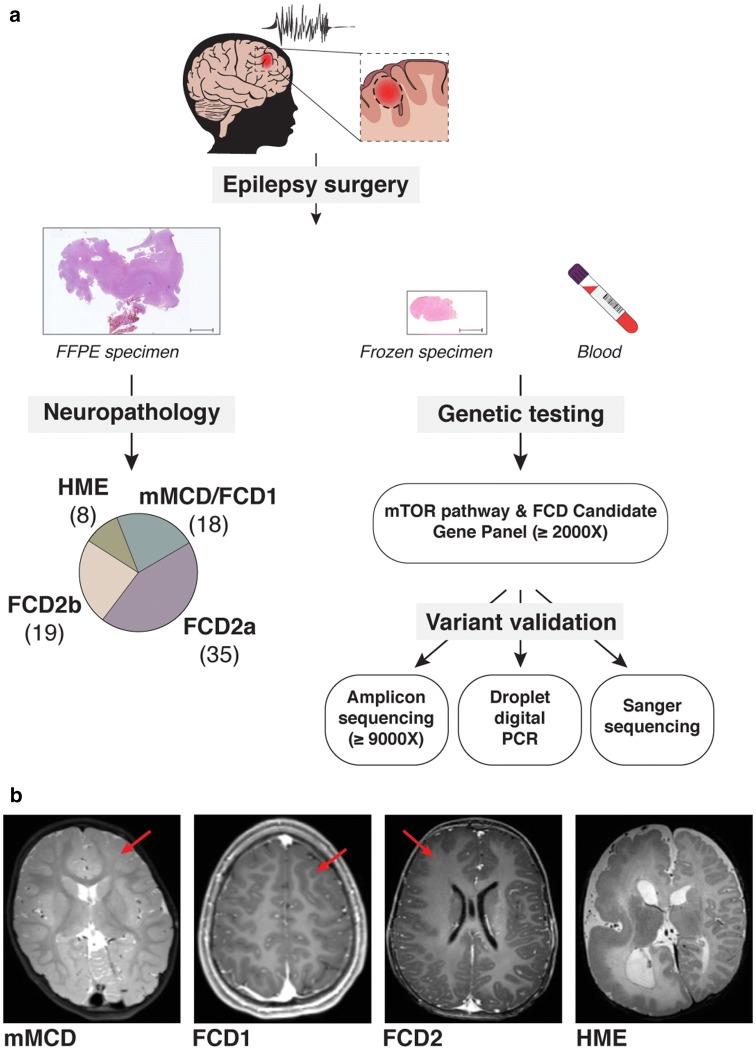
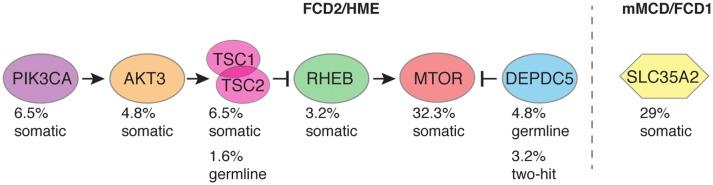
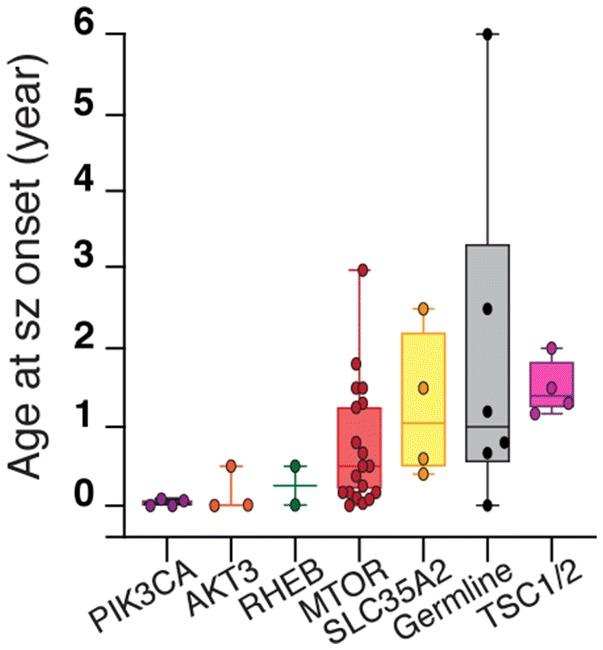
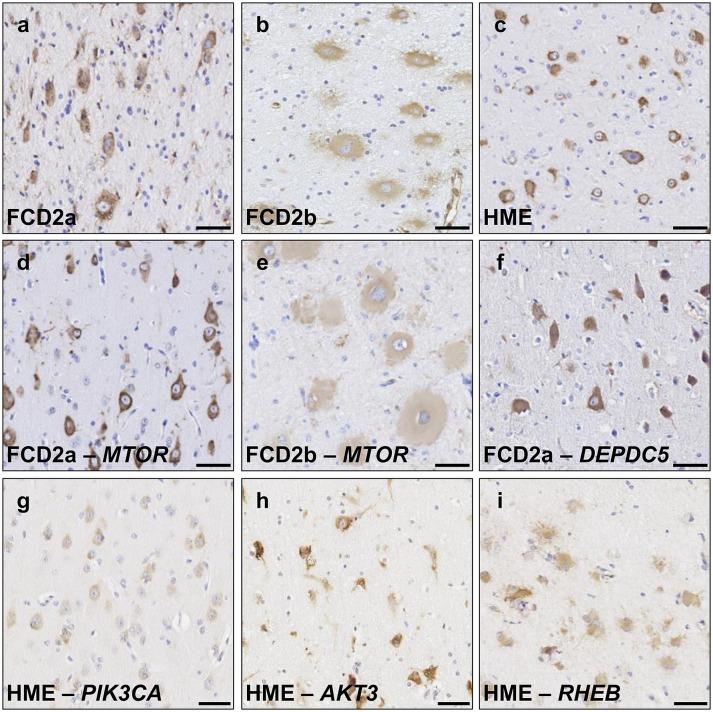
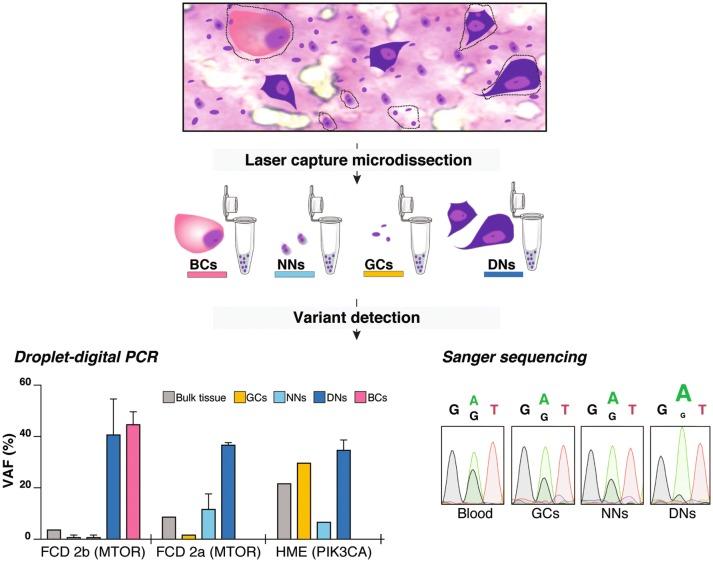
Genetic malformations of cortical development (MCDs), such as mild MCDs (mMCD), focal cortical dysplasia (FCD), and hemimegalencephaly (HME), are major causes of severe pediatric refractory epilepsies subjected to neurosurgery. FCD2 are characterized by neuropathological hallmarks that include enlarged dysmorphic neurons (DNs) and balloon cells (BCs). Here, we provide a comprehensive assessment of the contribution of germline and somatic variants in a large cohort of surgical MCD cases. We enrolled in a monocentric study 80 children with drug-resistant epilepsy and a postsurgical neuropathological diagnosis of mMCD, FCD1, FCD2, or HME. We performed targeted gene sequencing ( ≥ 2000X read depth) on matched blood-brain samples to search for low-allele frequency variants in mTOR pathway and FCD genes. We were able to elucidate 29% of mMCD/FCD1 patients and 63% of FCD2/HME patients. Somatic loss-of-function variants in the N-glycosylation pathway-associated SLC35A2 gene were found in mMCD/FCD1 cases. Somatic gain-of-function variants in MTOR and its activators (AKT3, PIK3CA, RHEB), as well as germline, somatic and two-hit loss-of-function variants in its repressors (DEPDC5, TSC1, TSC2) were found exclusively in FCD2/HME cases. We show that panel-negative FCD2 cases display strong pS6-immunostaining, stressing that all FCD2 are mTORopathies. Analysis of microdissected cells demonstrated that DNs and BCs carry the pathogenic variants. We further observed a correlation between the density of pathological cells and the variant-detection likelihood. Single-cell microdissection followed by sequencing of enriched pools of DNs unveiled a somatic second-hit loss-of-heterozygosity in a DEPDC5 germline case. In conclusion, this study indicates that mMCD/FCD1 and FCD2/HME are two distinct genetic entities: while all FCD2/HME are mosaic mTORopathies, mMCD/FCD1 are not caused by mTOR-pathway-hyperactivating variants, and ~ 30% of the cases are related to glycosylation defects. We provide a framework for efficient genetic testing in FCD/HME, linking neuropathology to genetic findings and emphasizing the usefulness of molecular evaluation in the pediatric epileptic neurosurgical population.
皮质发育不良(MCD)的遗传畸形,如轻度 MCD(mMCD)、局灶性皮质发育不良(FCD)和偏侧巨脑回(HME),是接受神经外科手术的严重小儿难治性癫痫的主要原因。FCD2 的病理特征包括增大的畸形神经元(DN)和气球样细胞(BC)。在这里,我们在一大群手术 MCD 病例中全面评估了种系和体细胞变异的贡献。我们在一项单中心研究中纳入了 80 名耐药性癫痫患儿,这些患儿在术后神经病理学诊断为 mMCD、FCD1、FCD2 或 HME。我们对匹配的血脑样本进行了靶向基因测序( ≥ 2000X 读深),以搜索 mTOR 通路和 FCD 基因中的低等位基因频率变异。我们能够阐明 29%的 mMCD/FCD1 患者和 63%的 FCD2/HME 患者。在 mMCD/FCD1 病例中发现了与 N-糖基化途径相关的 SLC35A2 基因的体细胞失活变异。在 FCD2/HME 病例中发现了 MTOR 及其激活剂(AKT3、PIK3CA、RHEB)的体细胞获得性功能变异,以及其抑制剂(DEPDC5、TSC1、TSC2)的种系、体细胞和双打击失活变异。我们表明,面板阴性的 FCD2 病例显示出强烈的 pS6 免疫染色,这强调了所有 FCD2 都是 mTOR 病。对微切割细胞的分析表明,DN 和 BC 携带致病性变异。我们还观察到病理细胞密度与变异检测可能性之间的相关性。对富集的 DN 池进行单细胞微切割和测序,揭示了 DEPDC5 种系病例中的体细胞二次失活杂合性。总之,这项研究表明,mMCD/FCD1 和 FCD2/HME 是两种不同的遗传实体:虽然所有 FCD2/HME 都是镶嵌性 mTOR 病,但 mMCD/FCD1 不是由 mTOR 通路激活变异引起的,并且约 30%的病例与糖基化缺陷有关。我们为 FCD/HME 的有效遗传检测提供了一个框架,将神经病理学与遗传发现联系起来,并强调了分子评估在儿科癫痫神经外科人群中的有用性。
 Zotero 插件