
抗精神病药治疗期间的心血管不良反应:1993 年至 2013 年期间 AMSP 药物监测计划的结果。
Cardiovascular Adverse Reactions During Antipsychotic Treatment: Results of AMSP, A Drug Surveillance Program Between 1993 and 2013.
机构信息
Department of Psychiatry and Psychotherapy, Division of General Psychiatry, Medical University of Vienna, Austria.
Karl Landsteiner Institute for Clinical Risk Management, Vienna, Austria.
出版信息
Int J Neuropsychopharmacol. 2020 Feb 1;23(2):67-75. doi: 10.1093/ijnp/pyz046.
BACKGROUND
Cardiovascular diseases are still the leading cause of global mortality. Some antipsychotic agents can show severe cardiovascular side effects and are also associated with metabolic syndrome.
METHODS
This observational study was based on data of AMSP (Arzneimittelsicherheit in der Psychiatrie), a multicenter drug surveillance program in Austria, Germany and Switzerland, that recorded severe drug reactions in psychiatric inpatients.
RESULTS
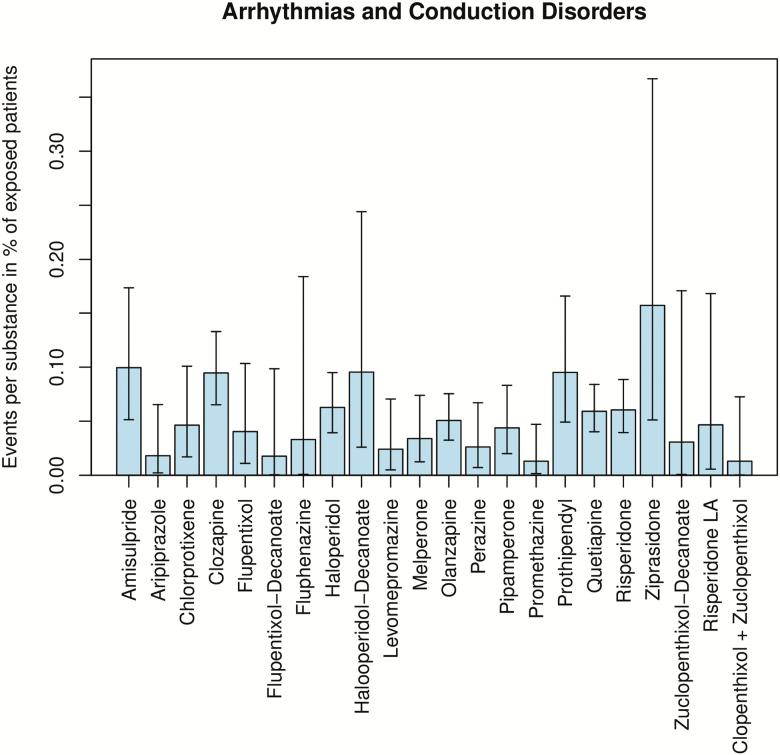
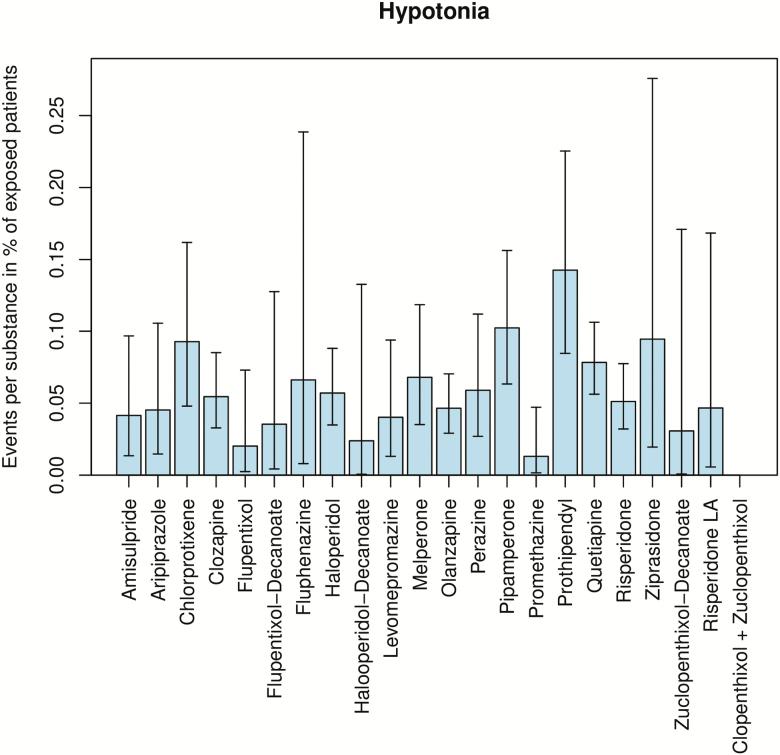
A total of 404 009 inpatients were monitored between 1993 and 2013, whereas 291 510 were treated with antipsychotics either in combination or alone. There were 376 cases of severe cardiovascular adverse reactions reported in the given timespan, yielding a relative frequency of 0.13%. The study revealed that incidence rates of cardiovascular adverse reactions were highest during treatment with ziprasidone (0.35%), prothipendyl (0.32%), and clozapine (0.23%). The lowest rate of cardiovascular symptoms occurred during treatment with promethazine (0.03%) as well as with aripiprazole (0.06%). The most common clinical symptoms were orthostatic collapse and severe hypotonia, sinustachycardia, QTc prolongation, myocarditis, and different forms of arrhythmia. The dosage at the timepoint when severe cardiovascular events occurred was not higher in any of the given antipsychotics than in everyday clinical practice and was in average therapeutic ranges. In terms of subclasses of antipsychotics, no significant statistical difference was seen in the overall frequencies of adverse reactions cases, when first-generation high potency, first-generation low potency, and second-generation antipsychotics were compared. Thirty percent of adverse events among second-generation antipsychotics were induced by clozapine.
CONCLUSIONS
Our findings on cardiovascular adverse reactions contribute to a better understanding of cardiovascular risk profiles of antipsychotic agents in inpatients.
背景
心血管疾病仍然是全球死亡的主要原因。一些抗精神病药物会表现出严重的心血管副作用,并且还与代谢综合征有关。
方法
这项观察性研究基于奥地利、德国和瑞士的多中心药物监测项目 AMSP(精神病学中的药物安全性)的数据,该项目记录了精神科住院患者的严重药物反应。
结果
在 1993 年至 2013 年间,共监测了 404009 名住院患者,其中 291510 名患者单独或联合使用抗精神病药物治疗。在给定的时间段内报告了 376 例严重心血管不良反应病例,相对频率为 0.13%。研究表明,心血管不良反应的发生率在使用齐拉西酮(0.35%)、丙咪嗪(0.32%)和氯氮平(0.23%)治疗时最高。使用普罗米嗪(0.03%)和阿立哌唑(0.06%)治疗时心血管症状发生率最低。最常见的临床症状是直立性低血压和严重的低血压、窦性心动过速、QTc 延长、心肌炎和各种形式的心律失常。在发生严重心血管事件时的剂量在任何一种给定的抗精神病药物中都不比日常临床实践中的剂量高,并且处于治疗范围内。在抗精神病药物的亚类中,当比较第一代高效能、第一代低效能和第二代抗精神病药物时,不良反应病例的总体频率没有显著的统计学差异。第二代抗精神病药物中 30%的不良反应是由氯氮平引起的。
结论
我们关于心血管不良反应的发现有助于更好地了解住院患者中抗精神病药物的心血管风险概况。

 Zotero 插件