
韩国碎肉产品的定量微生物风险评估
Quantitative Microbial Risk Assessment for in Ground Meat Products in Korea.
作者信息
Lee Jeeyeon, Lee Heeyoung, Lee Soomin, Kim Sejeong, Ha Jimyeong, Choi Yukyung, Oh Hyemin, Kim Yujin, Lee Yewon, Yoon Ki-Sun, Seo Kunho, Yoon Yohan
机构信息
Risk Analysis Research Center, Sookmyung Women's University, Seoul 04310, Korea.
Food Standard Research Center, Korea Food Research Institutue, Wanju 55365, Korea.
出版信息
Food Sci Anim Resour. 2019 Aug;39(4):565-575. doi: 10.5851/kosfa.2019.e39. Epub 2019 Aug 31.
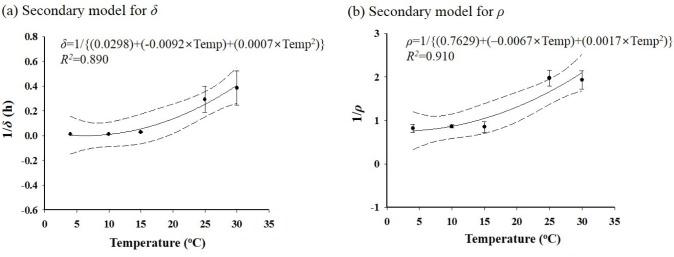
This study evaluated risk in ground meat products. The prevalence in ground meat products was investigated. To develop the predictive model, survival data of were collected at 4°C-30°C during storage, and the data were fitted using the Weibull model. In addition, the storage temperature and time of ground meat products were investigated during distribution. The consumption amount and frequency of ground meat products were investigated by interviewing 1,500 adults. The prevalence, temperature, time, and consumption data were analyzed by @RISK to generate probabilistic distributions. In 224 samples of ground meat products, there were no -contaminated samples. A scenario with a series of probabilistic distributions, a predictive model and a dose-response model was prepared to calculate the probability of illness, and it showed that the probability of foodborne illness caused by per person per day from ground meat products was 5.68×10, which can be considered low risk.
本研究评估了碎肉产品中的风险。对碎肉产品中的患病率进行了调查。为建立预测模型,在储存期间于4°C至30°C收集了的数据的存活数据,并使用威布尔模型对数据进行拟合。此外,还调查了碎肉产品在配送过程中的储存温度和时间。通过采访1500名成年人来调查碎肉产品的消费量和食用频率。利用@RISK对患病率、温度、时间和消费数据进行分析,以生成概率分布。在224份碎肉产品样本中,没有受污染的样本。准备了一个包含一系列概率分布、一个预测模型和一个剂量反应模型的情景,以计算患病概率,结果表明,每人每天因碎肉产品感染的食源性疾病概率为5.68×10,可认为风险较低。 (注:原文中部分关键信息缺失,翻译可能存在一定局限性)


 Zotero 插件