
提高世卫组织东地中海区域流感监测能力:在充满挑战的环境中取得进展。
Improved capacity for influenza surveillance in the WHO Eastern Mediterranean Region: Progress in a challenging setting.
机构信息
Infectious Hazard Management, Department of Health Emergency, World Health Organization, Eastern Mediterranean Regional Office, Cairo, Egypt.
Infectious Hazard Management, Department of Health Emergency, World Health Organization, Eastern Mediterranean Regional Office, Cairo, Egypt.
出版信息
J Infect Public Health. 2020 Mar;13(3):391-401. doi: 10.1016/j.jiph.2019.07.018. Epub 2019 Sep 13.
BACKGROUND
The World Health Organization Regional Office for Eastern Mediterranean has partnered with the United States Centers for Disease Control and Prevention (CDC) to strengthen pandemic influenza preparedness and response in the Region since 2006. This partnership focuses on pandemic preparedness planning, establishing and enhancing influenza surveillance systems, improving laboratory capacity for detection of influenza viruses, estimating the influenza disease burden, and providing evidence to support policies for the introduction and increased use of seasonal influenza vaccines.
METHODS
Various published and unpublished data from public and WHO sources, programme indicators of the CDC cooperative agreement and Pandemic Influenza Preparedness Framework were reviewed and analysed. Analyses and review of the programme indicators and published articles enabled us to generate information that was unavailable from only WHO sources.
RESULTS
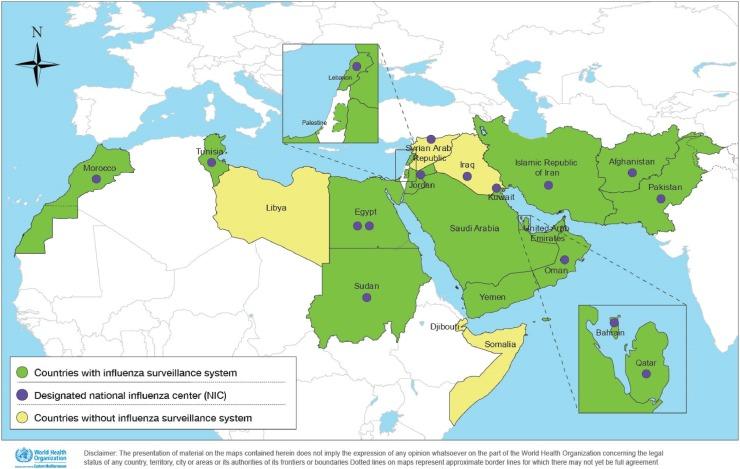
Most (19/22) countries of the Region have established influenza surveillance system; 16 countries in the Region have designated National Influenza Centres. The Region has seen considerable improvement in geographic coverage of influenza surveillance and influenza detection. Virus sharing has improved and almost all of the participating laboratories have achieved a 100% efficiency score in the WHO external quality assessment programme. At least seven countries have estimated their influenza disease burden using surveillance data and at least 17 are now using seasonal influenza vaccines as a control strategy for influenza illness.
CONCLUSION
The Region has achieved substantial progress in surveillance and response to seasonal influenza, despite the adverse effects to the health systems of many countries due to acute and protracted emergencies and other significant challenges.
背景
自 2006 年以来,世界卫生组织东地中海区域办事处与美国疾病控制与预防中心(CDC)合作,加强该区域的大流行性流感防备和应对工作。这一伙伴关系侧重于大流行防备规划、建立和加强流感监测系统、提高流感病毒检测实验室能力、评估流感疾病负担以及提供证据支持季节性流感疫苗的引进和使用。
方法
对来自公共和世卫组织来源的各种已发表和未发表的数据、CDC 合作协议和大流行性流感防备框架的方案指标进行了审查和分析。对方案指标和已发表文章的分析和审查使我们能够生成仅从世卫组织来源无法获得的信息。
结果
该区域大多数(19/22)国家都建立了流感监测系统;该区域有 16 个国家指定了国家流感中心。该区域在流感监测和流感检测的地理覆盖范围方面取得了相当大的进展。病毒共享有所改善,几乎所有参与的实验室在世卫组织外部质量评估方案中都达到了 100%的效率得分。至少有七个国家利用监测数据估计了本国的流感疾病负担,至少有 17 个国家正在使用季节性流感疫苗作为流感疾病的控制策略。
结论
尽管许多国家的卫生系统受到急性和长期紧急情况以及其他重大挑战的不利影响,但该区域在季节性流感监测和应对方面取得了实质性进展。

 Zotero 插件