
人芽囊原虫ST-1与印度尼西亚青少年的腹泻型肠易激综合征(IBS-D)有关。
Blastocystis ST-1 is associated with Irritable Bowel Syndrome-diarrhoea (IBS-D) in Indonesian adolescences.
作者信息
Kesuma Yudianita, Firmansyah Agus, Bardosono Saptawati, Sari Ika Puspa, Kurniawan Agnes
机构信息
Department of Pediatrics, Faculty of Medicine, Universitas Sriwijaya and Moh. Hoesin Hospital, Palembang, Indonesia.
Doctoral Study program, Faculty of Medicine, Universitas Indonesia, Jakarta, Indonesia.
出版信息
Parasite Epidemiol Control. 2019 May 31;6:e00112. doi: 10.1016/j.parepi.2019.e00112. eCollection 2019 Aug.
OBJECTIVE
IBS is a functional gastrointestinal disorder and commonly presents in children and adolescences, presented as diarrhoea, constipation or mixed type. is a common intestinal protozoa found worldwide, which pathogenicity is still controversial. This study aimed to identify the risk factors of IBS, the association between IBS types with and analyse pathogenicity.
DESIGN
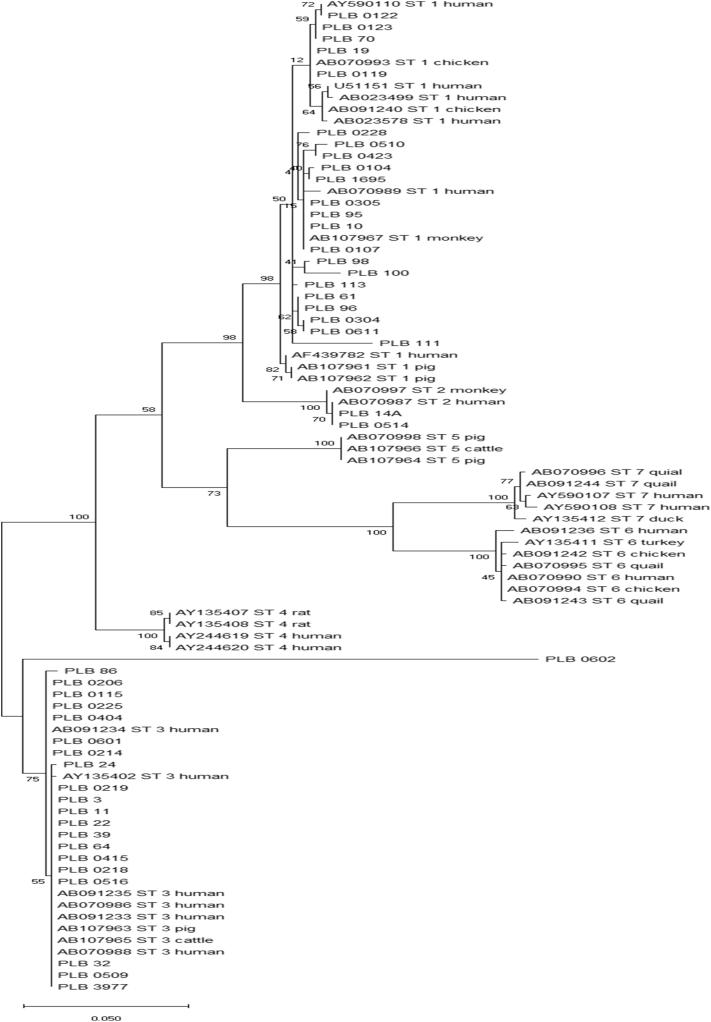
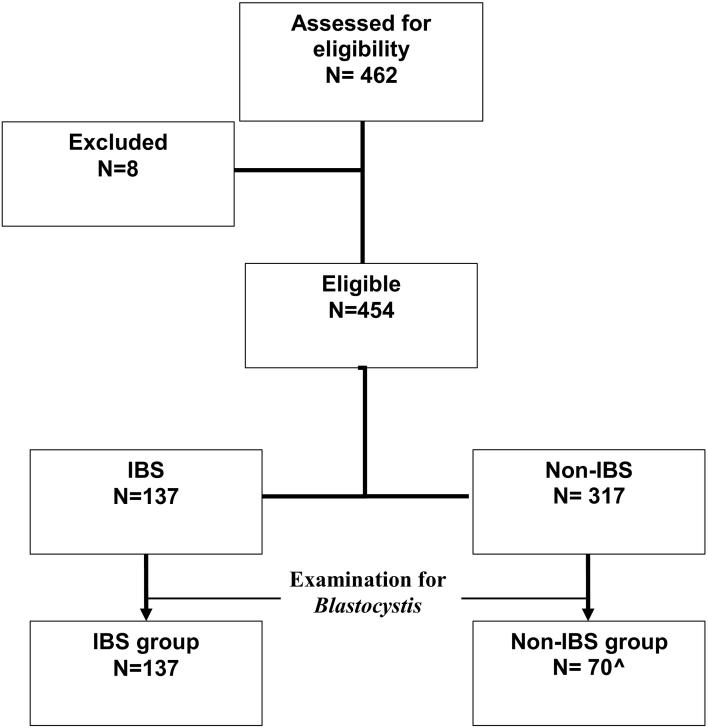
A comparative cross-sectional study was conducted among senior high school students. Rome III Criteria for IBS diagnosis, questionnaires on the risk factors of IBS and types of IBS were recorded. Students were further selected and classified into IBS and non-IBS groups to analyse the association between IBS, IBS types with infection and its subtypes. Direct microscopic stool examination to identify single infection was performed, followed by culture in Jones' medium, PCR, sequencing of 18S rRNA and phylogenetic analysis to determine subtype. Data was analysed using SPSS v22.0 and value <0.05 was considered statistically significant (95% confidence intervals).
RESULTS
IBS was found in 30.2% of 454 students, consisted of 33.3% IBS Diarrhoea, 27.7% IBS Mixed, 27.7% IBS Unclassified and 11.1% IBS Constipation. Major risk factors to IBS consisted of family history of recurrent abdominal pain, abuse, bullying and female gender in respective order (OR 3.6-2.1). ST-1 was significantly associated to IBS-D with 2.9 times risk factor.
CONCLUSIONS
infection is a risk factor to develop IBS-D type in adolescence; ST-1 can be regarded as a pathogenic subtype.
目的
肠易激综合征(IBS)是一种功能性胃肠疾病,常见于儿童和青少年,表现为腹泻、便秘或混合型。贾第虫是一种在全球范围内普遍存在的肠道原生动物,其致病性仍存在争议。本研究旨在确定IBS的危险因素、IBS类型与贾第虫之间的关联,并分析贾第虫的致病性。
设计
在高中生中进行了一项比较横断面研究。记录了IBS诊断的罗马III标准、IBS危险因素问卷和IBS类型。进一步选择学生并分为IBS组和非IBS组,以分析IBS、IBS类型与贾第虫感染及其亚型之间的关联。进行直接粪便显微镜检查以识别单一贾第虫感染,随后在琼斯培养基中培养、进行PCR、18S rRNA测序和系统发育分析以确定贾第虫亚型。使用SPSS v22.0分析数据,P值<0.05被认为具有统计学意义(95%置信区间)。
结果
在454名学生中,30.2%被发现患有IBS,其中腹泻型IBS占33.3%,混合型IBS占27.7%,未分类型IBS占27.7%,便秘型IBS占11.1%。IBS的主要危险因素依次为反复腹痛家族史、虐待、欺凌和女性性别(OR为3.6 - 2.1)。贾第虫ST-1与腹泻型IBS显著相关,风险因素为2.9倍。
结论
贾第虫感染是青少年发生腹泻型IBS的一个危险因素;贾第虫ST-1可被视为一种致病亚型。
 Zotero 插件