
NLRP3 炎性小体在炎症性肠病中的作用。
Role of NLRP3 inflammasome in inflammatory bowel diseases.
机构信息
Division of Gastroenterology, Department of Internal Medicine, Medical School, University of Patras, Patras 26504, Greece.
出版信息
World J Gastroenterol. 2019 Sep 7;25(33):4796-4804. doi: 10.3748/wjg.v25.i33.4796.
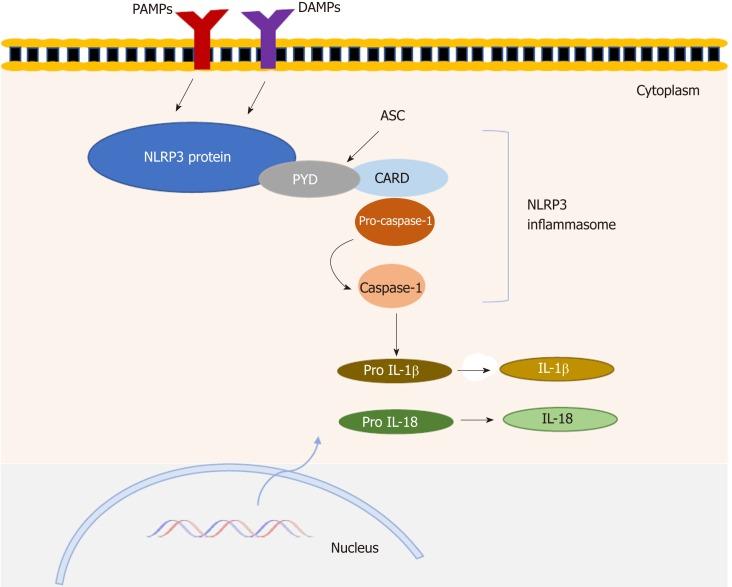
Inflammasomes are multiprotein intracellular complexes which are responsible for the activation of inflammatory responses. Among various subtypes of inflammasomes, NLRP3 has been a subject of intensive investigation. NLRP3 is considered to be a sensor of microbial and other danger signals and plays a crucial role in mucosal immune responses, promoting the maturation of proinflammatory cytokines interleukin 1β (IL-1β) and IL-18. NLRP3 inflammasome has been associated with a variety of inflammatory and autoimmune conditions, including inflammatory bowel diseases (IBD). The role of NLRP3 in IBD is not yet fully elucidated as it seems to demonstrate both pathogenic and protective effects. Studies have shown a relationship between genetic variants and mutations in NLRP3 gene with IBD pathogenesis. A complex interaction between the NLRP3 inflammasome and the mucosal immune response has been reported. Activation of the inflammasome is a key function mediated by the innate immune response and in parallel the signaling through IL-1β and IL-18 is implicated in adaptive immunity. Further research is needed to delineate the precise mechanisms of NLRP3 function in regulating immune responses. Targeting NLRP3 inflammasome and its downstream signaling will provide new insights into the development of future therapeutic strategies.
炎症小体是负责激活炎症反应的多蛋白细胞内复合物。在各种炎症小体亚型中,NLRP3 一直是研究的热点。NLRP3 被认为是微生物和其他危险信号的传感器,在黏膜免疫反应中发挥着关键作用,促进前炎性细胞因子白细胞介素 1β(IL-1β)和 IL-18 的成熟。NLRP3 炎症小体与多种炎症和自身免疫性疾病有关,包括炎症性肠病(IBD)。NLRP3 在 IBD 中的作用尚未完全阐明,因为它似乎具有致病和保护作用。研究表明,NLRP3 基因的遗传变异和突变与 IBD 的发病机制有关。已经报道了 NLRP3 炎症小体与黏膜免疫反应之间的复杂相互作用。炎症小体的激活是先天免疫反应介导的关键功能,而通过 IL-1β 和 IL-18 的信号转导则与适应性免疫有关。需要进一步的研究来阐明 NLRP3 在调节免疫反应中的精确机制。针对 NLRP3 炎症小体及其下游信号转导将为未来治疗策略的发展提供新的见解。
 Zotero 插件