
心肌磁共振在肌肉疾病中的应用价值。
The Added Value of Cardiac Magnetic Resonance in Muscular Dystrophies.
机构信息
Division of Cardiology, Department of Medicine, University of Ottawa Heart Institute, Ontario, Canada.
Division of Neurology, Department of Medicine, University of Ottawa, Ontario, Canada.
出版信息
J Neuromuscul Dis. 2019;6(4):389-399. doi: 10.3233/JND-190415.
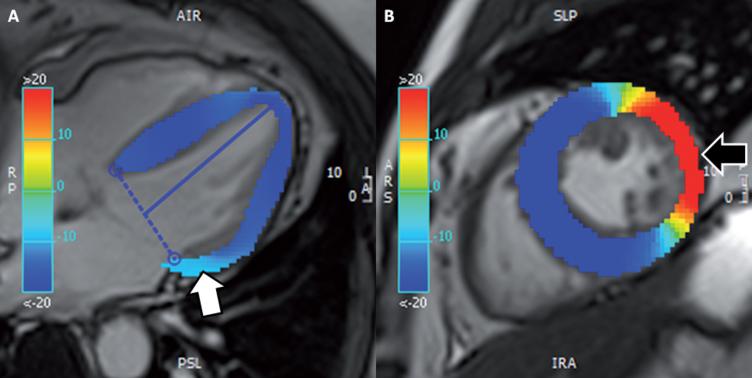
Muscular dystrophies (MD) represent a heterogeneous group of rare genetic diseases that often lead to significant weakness due to progressive muscle degeneration. In many forms of MD, cardiac manifestations including heart failure, atrial and ventricular arrhythmias and conduction abnormalities can occur and may be a predominant feature of the disease. Cardiac magnetic resonance (CMR) can assess cardiac anatomy, global and regional ventricular function, volumes and mass as well as presence of myocardial inflammation, infiltration or fibrosis. The role for cardiac MRI has been well-established in a wide range of muscular dystrophies related cardiomyopathies. CMR is a more sensitive technique than echocardiography for early diagnosis of cardiac involvement. It has also great potential to improve the prediction of long-term outcome, particularly the development of heart failure and arrhythmic events; however it still has to be validated by longitudinal studies including large populations. This review will outline the utility of CMR in patients with muscular dystrophies for assessment of myocardial involvement, risk stratification, and in guiding therapeutic management.
肌肉萎缩症(MD)是一组异质性罕见遗传疾病,由于肌肉进行性退化,常导致严重的肌无力。在许多形式的 MD 中,会出现心脏表现,包括心力衰竭、心房和心室心律失常以及传导异常,并且可能是疾病的主要特征。心脏磁共振(CMR)可评估心脏解剖结构、整体和局部心室功能、容量和质量以及心肌炎症、浸润或纤维化的存在。CMR 在广泛的与肌肉萎缩症相关的心肌病中的作用已经得到充分证实。与超声心动图相比,CMR 是一种更敏感的早期诊断心脏受累的技术。它也有很大的潜力来改善长期预后的预测,特别是心力衰竭和心律失常事件的发展;然而,它仍然需要通过包括大量人群的纵向研究来验证。这篇综述将概述 CMR 在肌肉萎缩症患者中的应用,用于评估心肌受累、风险分层和指导治疗管理。

 Zotero 插件