
载有生物相容的芦荟和盐酸四环素的混合纳米纤维支架在皮肤组织工程中的应用。
Biocompatible Aloe vera and Tetracycline Hydrochloride Loaded Hybrid Nanofibrous Scaffolds for Skin Tissue Engineering.
机构信息
Department of Anatomy, Yong Loo Lin School of Medicine, National University of Singapore, Singapore 117594, Singapore.
Department of Mechanical Engineering, Center for Nanofibers & Nanotechnology, Faculty of Engineering, National University of Singapore, Singapore 117576, Singapore.
出版信息
Int J Mol Sci. 2019 Oct 18;20(20):5174. doi: 10.3390/ijms20205174.
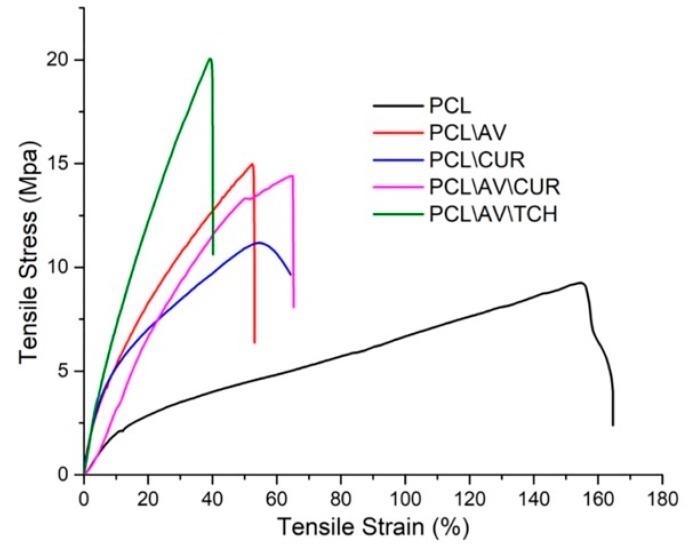
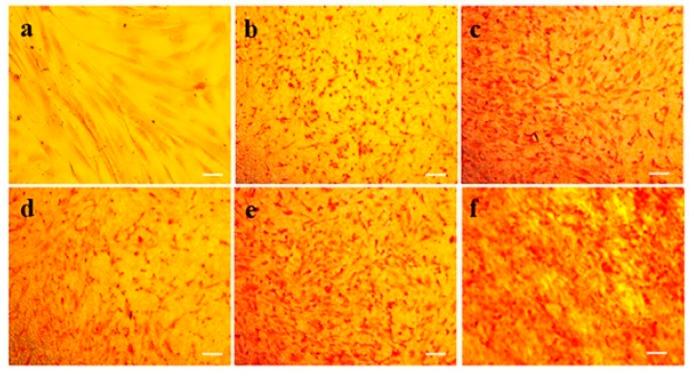
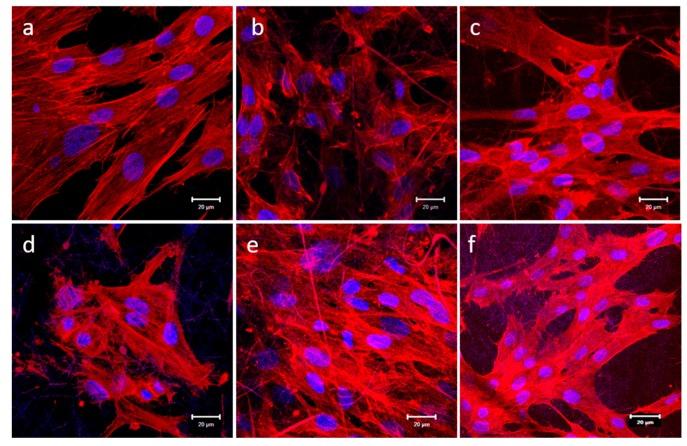
Aloe vera (AV) and tetracycline hydrochloride (TCH) exhibit significant properties such as anti-inflammatory, antioxidant and anti-bacterial activities to facilitate skin tissue engineering. The present study aims to develop poly-ε-caprolactone (PCL)/ AV containing curcumin (CUR), and TCH loaded hybrid nanofibrous scaffolds to validate the synergistic effect on the fibroblast proliferation and antimicrobial activity against Gram-positive and Gram-negative bacteria for wound healing. PCL/AV, PCL/CUR, PCL/AV/CUR and PCL/AV/TCH hybrid nanofibrous mats were fabricated using an electrospinning technique and were characterized for surface morphology, the successful incorporation of active compounds, hydrophilicity and the mechanical property of nanofibers. SEM revealed that there was a decrease in the fiber diameter (ranging from 360 to 770 nm) upon the addition of AV, CUR and TCH in PCL nanofibers, which were randomly oriented with bead free morphology. FTIR spectra of various electrospun samples confirmed the successful incorporation of AV, CUR and TCH into the PCL nanofibers. The fabricated nanofibrous scaffolds possessed mechanical properties within the range of human skin. The biocompatibility of electrospun nanofibrous scaffolds were evaluated on primary human dermal fibroblasts (hDF) by MTS assay, CMFDA, Sirius red and F-actin stainings. The results showed that the fabricated PCL/AV/CUR and PCL/AV/TCH nanofibrous scaffolds were non-toxic and had the potential for wound healing applications. The disc diffusion assay confirmed that the electrospun nanofibrous scaffolds possessed antibacterial activity and provided an effective wound dressing for skin tissue engineering.
库拉索芦荟(AV)和盐酸四环素(TCH)具有显著的特性,如抗炎、抗氧化和抗菌活性,以促进皮肤组织工程。本研究旨在开发聚己内酯(PCL)/AV 载姜黄素(CUR)和 TCH 的混合纳米纤维支架,以验证对成纤维细胞增殖的协同作用和对革兰氏阳性和革兰氏阴性细菌的抗菌活性,用于伤口愈合。使用静电纺丝技术制备 PCL/AV、PCL/CUR、PCL/AV/CUR 和 PCL/AV/TCH 混合纳米纤维垫,并对其表面形貌、活性化合物的成功掺入、亲水性和纳米纤维的机械性能进行了表征。SEM 显示,在 PCL 纳米纤维中加入 AV、CUR 和 TCH 后,纤维直径(范围为 360 至 770nm)减小,纤维呈无珠形态随机取向。各种静电纺丝样品的 FTIR 光谱证实了 AV、CUR 和 TCH 成功掺入 PCL 纳米纤维中。所制备的纳米纤维支架具有在人体皮肤范围内的机械性能。通过 MTS 测定、CMFDA、Sirius 红和 F-肌动蛋白染色评估电纺纳米纤维支架的生物相容性。结果表明,所制备的 PCL/AV/CUR 和 PCL/AV/TCH 纳米纤维支架无毒,具有伤口愈合应用的潜力。圆盘扩散试验证实,电纺纳米纤维支架具有抗菌活性,为皮肤组织工程提供了有效的伤口敷料。





 Zotero 插件