
癌相关脂肪细胞表现出独特的表型,并促进胰腺癌的肿瘤进展。
Cancer‑associated adipocytes exhibit distinct phenotypes and facilitate tumor progression in pancreatic cancer.
机构信息
Department of General Surgery, Huadong Hospital, Fudan University, Shanghai 200040, P.R. China.
Key Laboratory of Metabolism and Molecular Medicine of The Chinese Ministry of Education, Fudan University, Shanghai 200032, P.R. China.
出版信息
Oncol Rep. 2019 Dec;42(6):2537-2549. doi: 10.3892/or.2019.7365. Epub 2019 Oct 10.
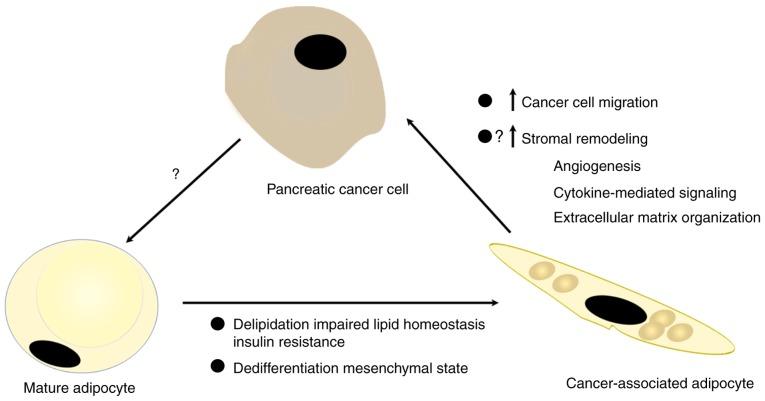
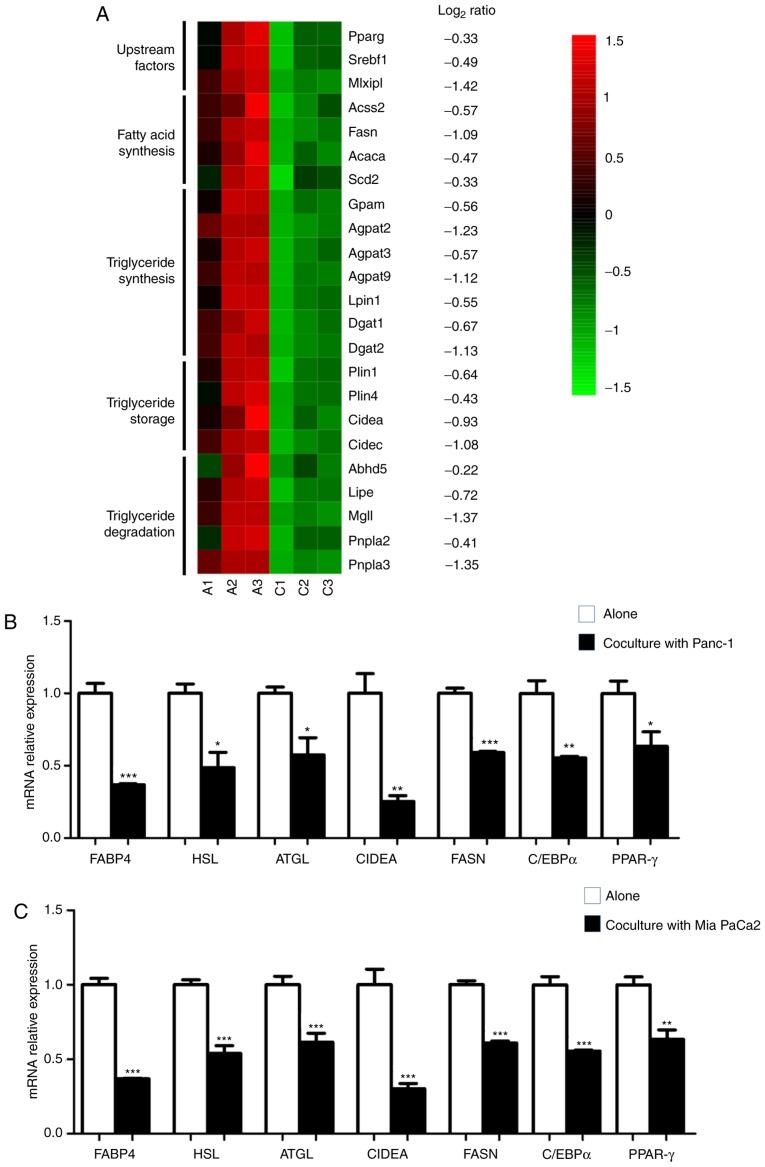
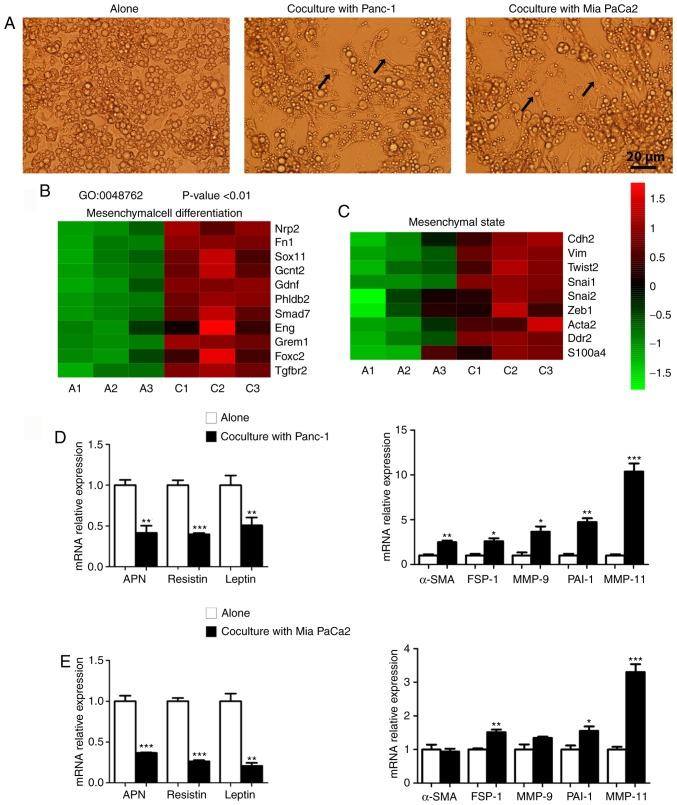
Adipocyte infiltration in pancreatic cancer (PC) has been demonstrated to be independently associated with PC risk and an active contributor to tumor progression. However, to date, little is known about these unique pancreatic tumor‑surrounding adipocytes, or their response to cancer cells. The present study utilized an in vitro indirect coculture model in which the phenotypic changes of adipocytes following exposure to PC cells were directly observed. RNA‑sequencing was performed on 3T3‑L1 adipocytes cultured with or without Panc‑1 cancer cells, and significant changes were identified at the transcriptional level. In terms of delipidation and the impaired function of glucose and lipid metabolism, coculture with tumor cells resulted in an altered metabolic phenotype in mature adipocytes. In co‑cultured adipocytes, the appearance of fibroblast‑like cells was observed, and the mesenchymal cell differentiation pathway was enriched following the integrated analysis into the transcriptome. In addition, reverse transcription‑quantitative PCR analyses of co‑cultured adipocytes revealed a loss in gene expression of mature adipocyte markers, and a gain in gene expression of fibroblast‑specific markers. It was also confirmed that newly generated cancer‑associated adipocytes could facilitate the invasive capacities of the tumor, and may contribute to PC stromal remodeling. The present study supports a novel concept that reprogramming of stromal adipocytes orchestrated by PC cells may generate cancer‑associated adipocytes with activated phenotypes, which may ultimately drive pancreatic tumor progression.
脂肪细胞浸润胰腺癌(PC)已被证明与 PC 风险独立相关,并且是肿瘤进展的积极贡献者。然而,迄今为止,人们对这些独特的胰腺肿瘤周围脂肪细胞知之甚少,也不知道它们对癌细胞的反应。本研究利用体外间接共培养模型,直接观察暴露于 PC 细胞后脂肪细胞的表型变化。对用或不用 Panc-1 癌细胞培养的 3T3-L1 脂肪细胞进行 RNA 测序,在转录水平上发现了显著变化。在去脂和葡萄糖及脂质代谢功能受损方面,与肿瘤细胞共培养导致成熟脂肪细胞的代谢表型发生改变。在共培养的脂肪细胞中,观察到成纤维细胞样细胞的出现,并且在转录组的综合分析中,间充质细胞分化途径被富集。此外,对共培养的脂肪细胞进行逆转录定量 PCR 分析显示,成熟脂肪细胞标志物的基因表达丢失,而成纤维细胞特异性标志物的基因表达增加。还证实了新生成的癌相关脂肪细胞可以促进肿瘤的侵袭能力,并可能有助于 PC 基质重塑。本研究支持了一个新的概念,即 PC 细胞协调的基质脂肪细胞的重编程可能产生具有激活表型的癌相关脂肪细胞,这最终可能推动胰腺肿瘤的进展。




 Zotero 插件