
氧化锌纳米颗粒抑制群体感应及(此处原文不完整,未明确具体抑制对象)中的毒力。
Zinc oxide nanoparticles inhibits quorum sensing and virulence in .
作者信息
Saleh Moustafa M, Sadeq Refa't A, Latif Hemat K Abdel, Abbas Hisham A, Askoura Momen
机构信息
Department of Microbiology and Immunology, Faculty of Pharmacy, Port Said University, Port Said 42515, Egypt.
Department of Microbiology and Immunology, Faculty of Medicine, Port Said University, Egypt.
出版信息
Afr Health Sci. 2019 Jun;19(2):2043-2055. doi: 10.4314/ahs.v19i2.28.
BACKGROUND
Quorum sensing inhibitionis an advanced strategy that aims to interfere with bacterial cell-to-cell communication systems (quorum sensing), which regulate virulence factors production in , in order to overcome the globalcrisis of antimicrobial resistance.
OBJECTIVES
Study the potential quorum sensing inhibitory effect of Zinc oxide (ZnO)nanoparticlesin and the impact on production of virulence factors.
METHODS
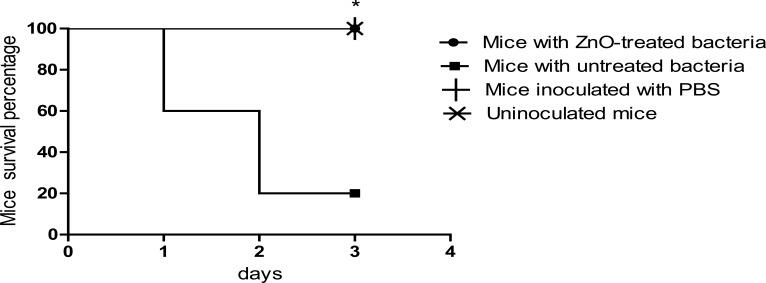
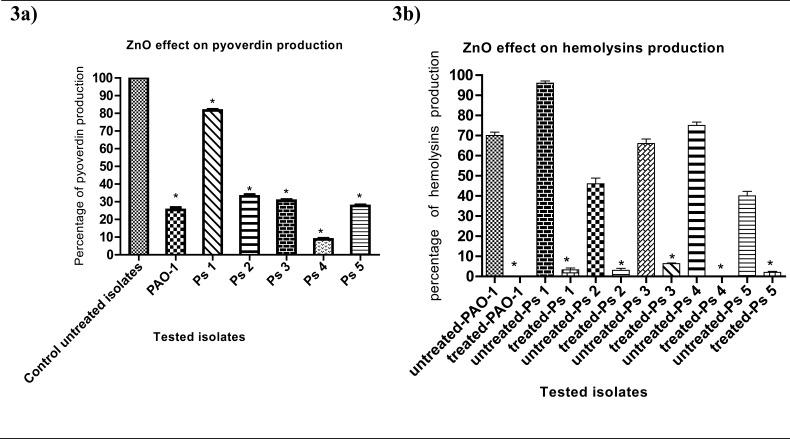
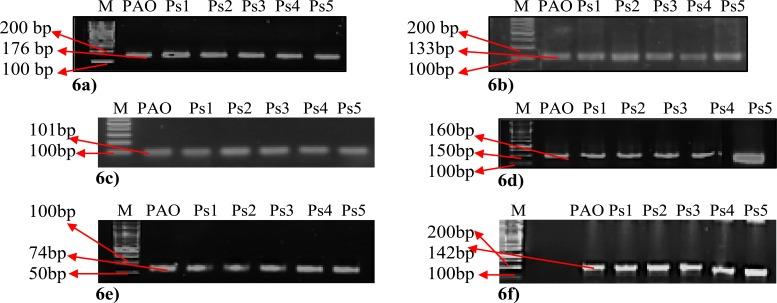
Quorum sensing inhibitory effect of ZnO was evaluated by assessing its ability to reducePseudomonas aeruginosa virulence factors production; rhamnolipids, pyocyanin, pyoverdin, hemolysins, elastase and proteases. Furthermore, qRT-PCR was performed to determine ZnO inhibitory effect onQS-regulatory geneslasI, lasR, rhlI, rhlR, pqsA and pqsR that control virulence factors secretion. Moreover, mice survival test was conducted to investigate the influence of ZnO on Pseudomonas aeruginosa-induced mortality in vivo.
RESULTS
ZnO revealed a statistically significant reduction in the production of QS-controlled virulence factors rhamnolipids, pyocyanin, pyoverdin, hemolysins, elastase and proteases. Furthermore, ZnO exhibited a significant decrease in the relative expression of QS-regulatory geneslasI, lasR, rhlI, rhlR, pqsA and pqsR. Additionally, ZnO significantly reduced the pathogenesis of in vivo.
CONCLUSION
ZnO nanoparticles can be used as a quorum sensing inhibitor in infections either as an adjuvant or alternative to conventional antimicrobials.
背景
群体感应抑制是一种先进的策略,旨在干扰细菌细胞间通讯系统(群体感应),该系统调节细菌毒力因子的产生,以应对全球抗微生物药物耐药性危机。
目的
研究氧化锌(ZnO)纳米颗粒对铜绿假单胞菌的潜在群体感应抑制作用及其对毒力因子产生的影响。
方法
通过评估氧化锌降低铜绿假单胞菌毒力因子(鼠李糖脂、绿脓菌素、绿脓荧光素、溶血素、弹性蛋白酶和蛋白酶)产生的能力,来评价其群体感应抑制效果。此外,进行qRT-PCR以确定氧化锌对控制毒力因子分泌的群体感应调节基因lasI、lasR、rhlI、rhlR、pqsA和pqsR的抑制作用。此外,进行小鼠存活试验以研究氧化锌对铜绿假单胞菌诱导的体内死亡率的影响。
结果
氧化锌显示出对群体感应控制的毒力因子鼠李糖脂、绿脓菌素、绿脓荧光素、溶血素、弹性蛋白酶和蛋白酶的产生有统计学意义的降低。此外,氧化锌使群体感应调节基因lasI、lasR、rhlI、rhlR、pqsA和pqsR的相对表达显著降低。此外,氧化锌显著降低了铜绿假单胞菌在体内的致病性。
结论
氧化锌纳米颗粒可作为铜绿假单胞菌感染的群体感应抑制剂,作为传统抗菌药物的佐剂或替代品。



 Zotero 插件