
社区获得性耐甲氧西林金黄色葡萄球菌 USA300 中 Sle1 细胞壁酰胺酶对β-内酰胺类药物耐药至关重要。
The Sle1 Cell Wall Amidase Is Essential for β-Lactam Resistance in Community-Acquired Methicillin-Resistant USA300.
机构信息
Department of Veterinary and Animal Sciences, University of Copenhagen, Copenhagen, Denmark.
Statens Serum Institut, Copenhagen, Denmark.
出版信息
Antimicrob Agents Chemother. 2019 Dec 20;64(1). doi: 10.1128/AAC.01931-19.
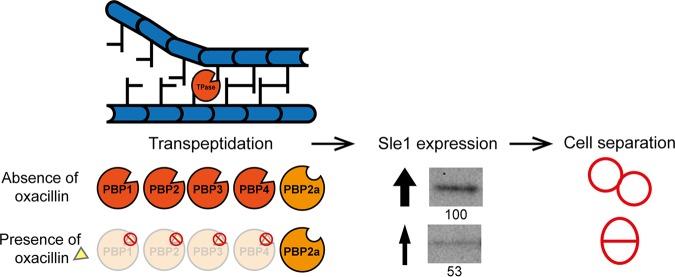
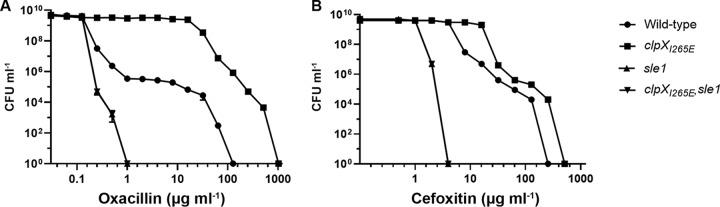
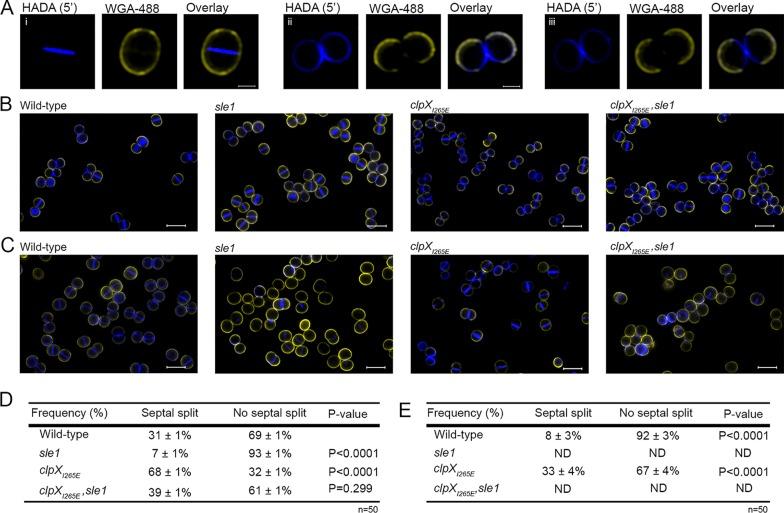
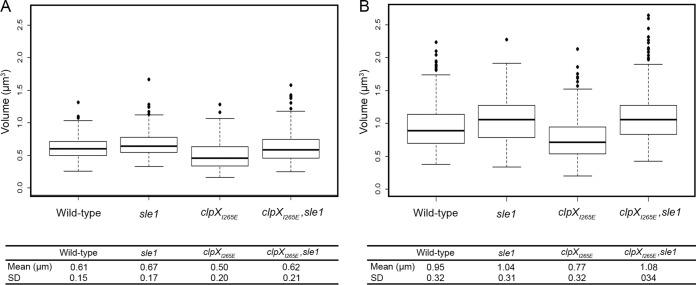
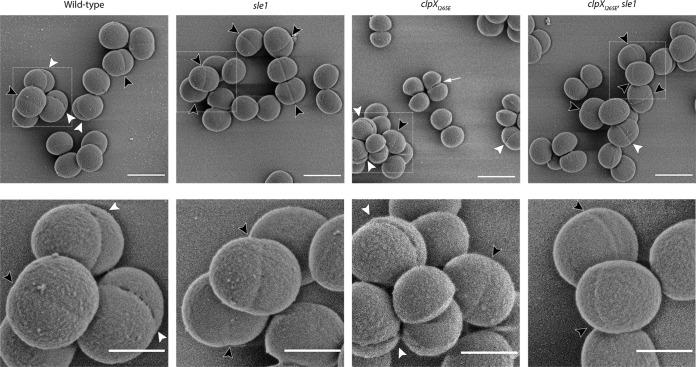
Most clinically relevant methicillin-resistant (MRSA) strains have become resistant to β-lactams antibiotics through horizontal acquisition of the gene encoding PBP2a, a peptidoglycan transpeptidase with low affinity for β-lactams. The level of resistance conferred by is, however, strain dependent, and the mechanisms underlying this phenomenon remain poorly understood. We show here that β-lactam resistance correlates to expression of the Sle1 cell wall amidase in the fast-spreading and highly virulent community-acquired MRSA USA300 clone. Sle1 is a substrate of the ClpXP protease, and while the high Sle1 levels in cells lacking ClpXP activity confer β-lactam hyper-resistance, USA300 cells lacking Sle1 are as susceptible to β-lactams as cells lacking This finding prompted us to assess the cellular roles of Sle1 in more detail, and we demonstrate that high Sle1 levels accelerate the onset of daughter cells splitting and decrease cell size. Vice versa, oxacillin decreases the Sle1 level and imposes a cell separation defect that is antagonized by high Sle1 levels, suggesting that high Sle1 levels increase tolerance to oxacillin by promoting cell separation. In contrast, increased oxacillin sensitivity of cells appears linked to a synthetic lethal effect on septum synthesis. In conclusion, this study demonstrates that Sle1 is a key factor in resistance to β-lactam antibiotics in the JE2 USA300 model strain and that PBP2a is required for the expression of Sle1 in JE2 cells exposed to oxacillin.
大多数临床上相关的耐甲氧西林金黄色葡萄球菌(MRSA)菌株通过水平获得编码 PBP2a 的基因而对β-内酰胺类抗生素产生耐药性,PBP2a 是一种对β-内酰胺类抗生素亲和力低的肽聚糖转肽酶。然而, 的耐药水平取决于菌株,并且这种现象的机制仍知之甚少。我们在这里表明,β-内酰胺耐药性与快速传播和高毒力的社区获得性 MRSA USA300 克隆中的 Sle1 细胞壁酰胺酶的表达相关。Sle1 是 ClpXP 蛋白酶的底物,虽然缺乏 ClpXP 活性的细胞中 Sle1 水平升高赋予了β-内酰胺类药物的高耐药性,但缺乏 Sle1 的 USA300 细胞对β-内酰胺类药物的敏感性与缺乏 的细胞相同。这一发现促使我们更详细地评估 Sle1 在细胞中的作用,我们证明高水平的 Sle1 加速了子细胞分裂的开始并减小了细胞大小。反之,苯唑西林降低了 Sle1 水平并引起细胞分离缺陷,而高水平的 Sle1 则拮抗了该缺陷,表明高水平的 Sle1 通过促进细胞分离增加了对苯唑西林的耐受性。相比之下, 细胞对苯唑西林的敏感性增加似乎与对隔膜合成的合成致死作用有关。总之,这项研究表明,Sle1 是 JE2 USA300 模型菌株中对β-内酰胺类抗生素耐药的关键因素,并且在暴露于苯唑西林的 JE2 细胞中,PBP2a 是 Sle1 表达所必需的。



 Zotero 插件