
姜黄素通过抑制氧化应激和炎症反应,调节 Akt/GSK-3β信号通路,改善铅诱导的肝毒性。
Curcumin Ameliorates Lead-Induced Hepatotoxicity by Suppressing Oxidative Stress and Inflammation, and Modulating Akt/GSK-3β Signaling Pathway.
机构信息
Pharmacology and Toxicology Department, Faculty of Pharmacy, King Saud University, Riyadh 11451, Saudi Arabia.
Pharmaceutics Department, College of Pharmacy, King Saud University, Riyadh 11451, Saudi Arabia.
出版信息
Biomolecules. 2019 Nov 5;9(11):703. doi: 10.3390/biom9110703.
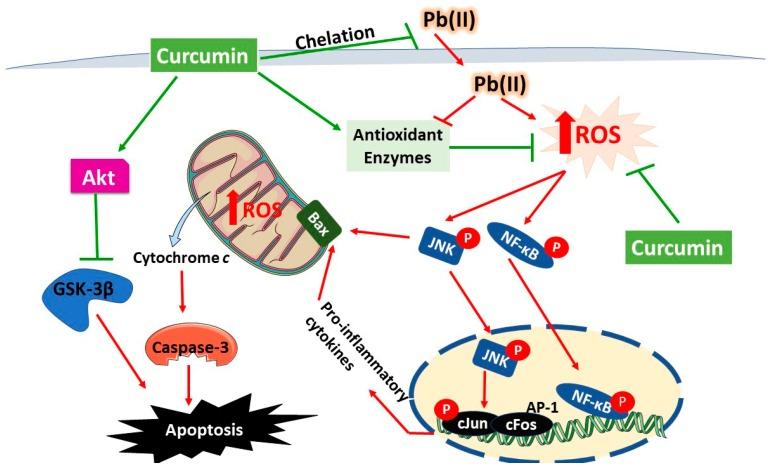
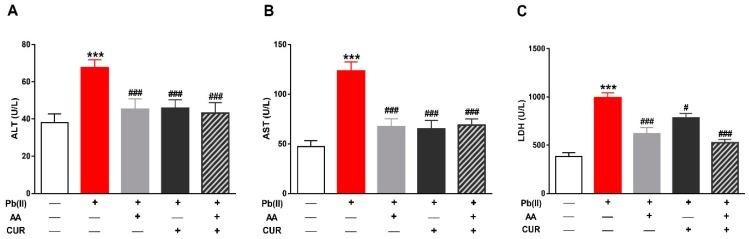
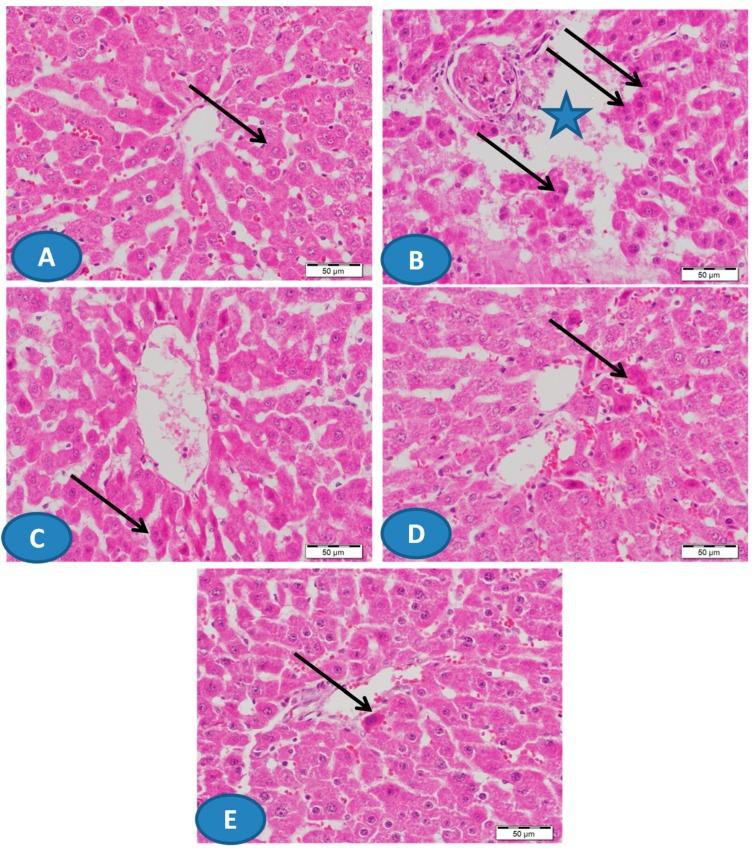
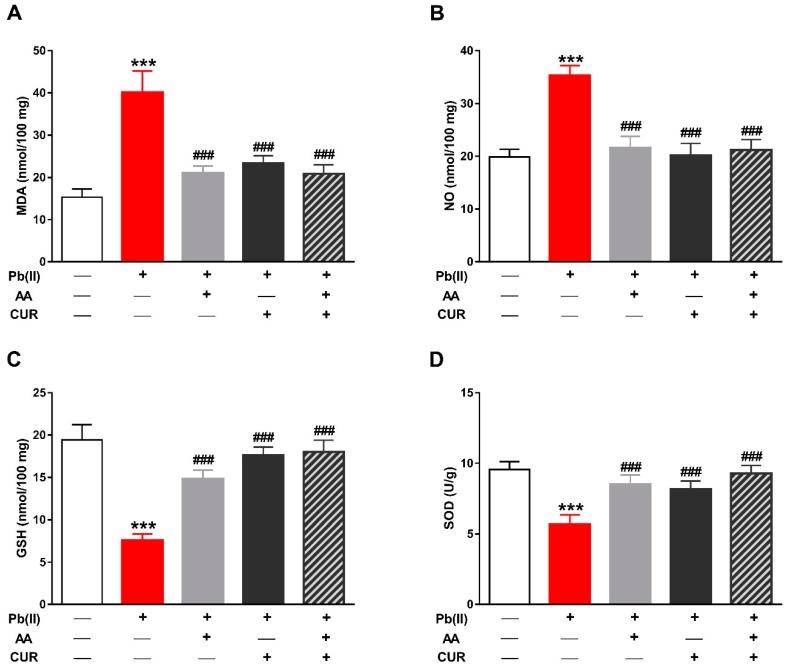
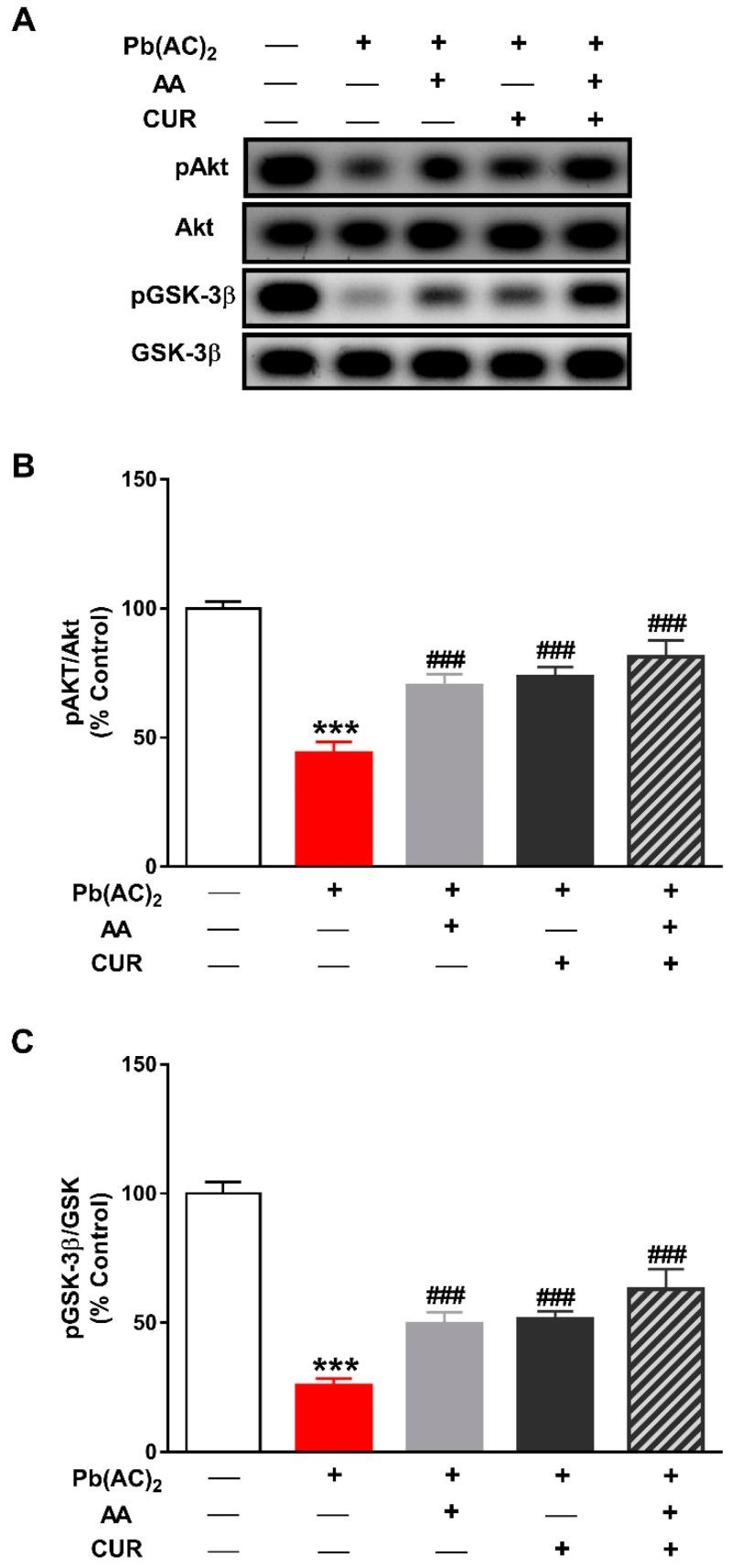
Lead (Pb) is a toxic heavy metal pollutant with adverse effects on the liver and other body organs. Curcumin (CUR) is the principal curcuminoid of turmeric and possesses strong antioxidant and anti-inflammatory activities. This study explored the protective effect of CUR on Pb hepatotoxicity with an emphasis on oxidative stress, inflammation and Akt/GSK-3β signaling. Rats received lead acetate and CUR and/or ascorbic acid (AA) for seven days and samples were collected for analyses. Pb(II) induced liver injury manifested by elevated serum alanine aminotransferase (ALT), aspartate aminotransferase (AST) and lactate dehydrogenase (LDH), as well as histopathological alterations, including massive hepatocyte degeneration and increased collagen deposition. Lipid peroxidation, nitric oxide, TNF-α and DNA fragmentation were increased, whereas antioxidant defenses were diminished in the liver of Pb(II)-intoxicated rats. Pb(II) increased hepatic NF-κB and JNK phosphorylation and caspase-3 cleavage, whereas Akt and GSK-3β phosphorylation was decreased. CUR and/or AA ameliorated liver function, prevented tissue injury, and suppressed oxidative stress, DNA damage, NF-κB, JNK and caspase-3. In addition, CUR and/or AA activated Akt and inhibited GSK-3β in Pb(II)-induced rats. In conclusion, CUR prevents Pb(II) hepatotoxicity via attenuation of oxidative injury and inflammation, activation of Akt and inhibition of GSK-3β. However, further studies scrutinizing the exact role of Akt/GSK-3β signaling are recommended.
铅(Pb)是一种有毒重金属污染物,对肝脏和其他身体器官有不良影响。姜黄素(CUR)是姜黄的主要姜黄素类化合物,具有很强的抗氧化和抗炎活性。本研究探讨了 CUR 对 Pb 肝毒性的保护作用,重点关注氧化应激、炎症和 Akt/GSK-3β 信号通路。大鼠接受醋酸铅和 CUR 以及/或抗坏血酸(AA)治疗七天,并收集样本进行分析。Pb(II)诱导的肝损伤表现为血清丙氨酸氨基转移酶(ALT)、天冬氨酸氨基转移酶(AST)和乳酸脱氢酶(LDH)升高,以及组织病理学改变,包括大量肝细胞变性和胶原沉积增加。脂质过氧化、一氧化氮、TNF-α 和 DNA 片段化增加,而抗氧化防御在 Pb(II)中毒大鼠的肝脏中减少。Pb(II)增加了肝 NF-κB 和 JNK 磷酸化和 caspase-3 切割,而 Akt 和 GSK-3β 磷酸化减少。CUR 和/或 AA 改善了肝功能,防止了组织损伤,并抑制了氧化应激、DNA 损伤、NF-κB、JNK 和 caspase-3。此外,CUR 和/或 AA 在 Pb(II)诱导的大鼠中激活了 Akt 并抑制了 GSK-3β。总之,CUR 通过减轻氧化损伤和炎症、激活 Akt 和抑制 GSK-3β来预防 Pb(II)肝毒性。然而,建议进一步研究 Akt/GSK-3β 信号通路的确切作用。

 Zotero 插件