
MKK3 通过激活 p38DELTA MAPK 促进结直肠癌细胞的增殖和存活。
MKK3 sustains cell proliferation and survival through p38DELTA MAPK activation in colorectal cancer.
机构信息
Laboratory of Medical Physics and Expert Systems, Department of Diagnostic Research and Technological Innovation, IRCCS - Regina Elena National Cancer Institute, 00144 Rome, Italy.
Oncogenomic and Epigenetic Unit, Department of Diagnostic Research and Technological Innovation, IRCCS - Regina Elena National Cancer Institute, 00144 Rome, Italy.
出版信息
Cell Death Dis. 2019 Nov 6;10(11):842. doi: 10.1038/s41419-019-2083-2.
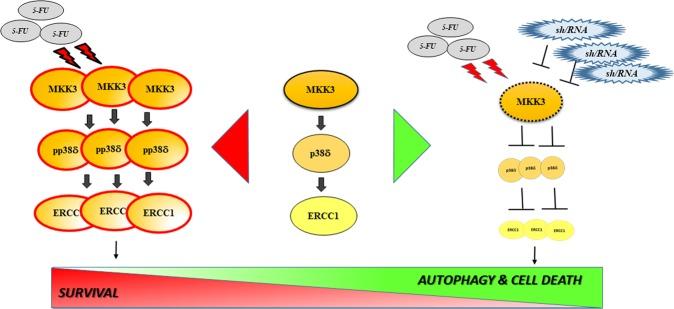
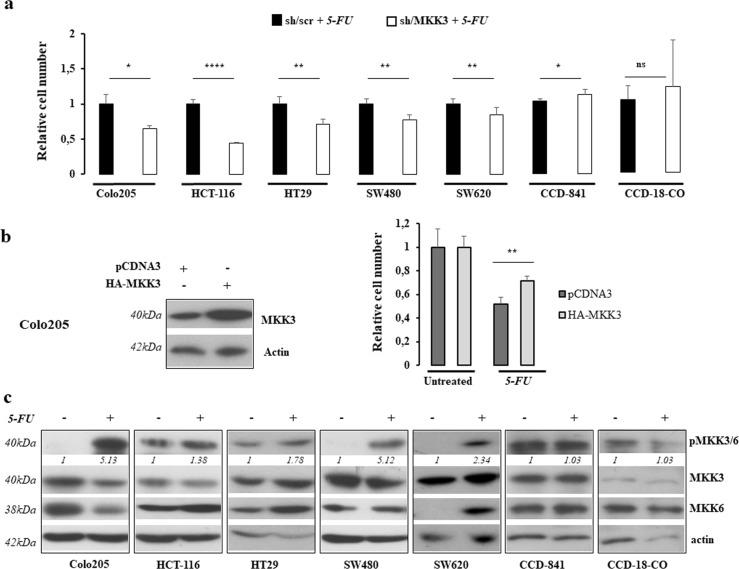
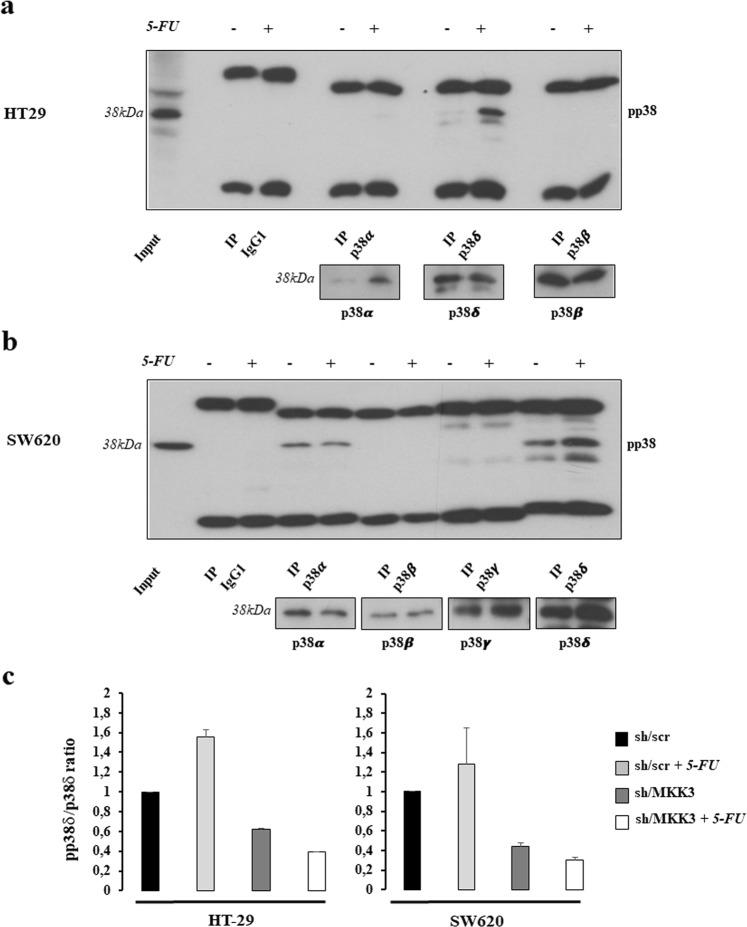
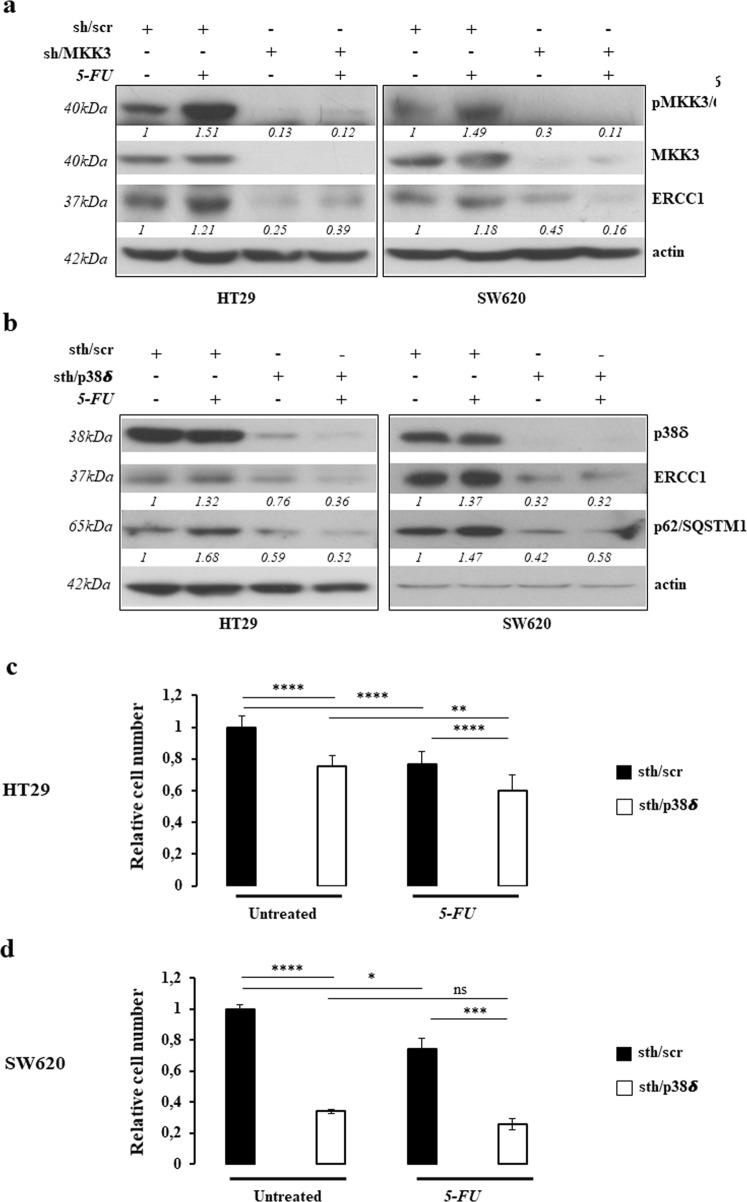
Colorectal cancer (CRC) is one of the most common malignant tumors worldwide and understanding its underlying molecular mechanisms is crucial for the development of therapeutic strategies. The mitogen-activated protein kinase-kinase 3 (MKK3) is a specific activator of p38 MAP kinases (p38 MAPKs), which contributes to the regulation of several cellular functions, such as proliferation, differentiation, apoptosis as well as response to drugs. At present, the exact MKK3/p38 MAPK pathway contribution in cancer is heavily debated because of its pleiotropic function. In this work, we retrospectively explored the prognostic and pathobiologic relevance of MKK3 in a cohort of CRC patients and assessed MKK3 molecular functions in a panel of CRC lines and colonocytes primary cultures. We found increased MKK3 levels in late-stage CRC patients which correlated with shorter overall survival. Herein, we report that the MKK3 targeting by inducible RNA interference univocally exerts antitumor effects in CRC lines but not in primary colonocytes. While MKK3 depletion per se affects growth and survival by induction of sustained autophagy and death in some CRC lines, it potentiates response to chemotherapeutic drug 5-fluorouracil (5-FU) in all of the tested CRC lines in vitro. Here, we demonstrate for the first time that in CRC the MKK3 specifically activates p38delta MAPK isoform to sustain prosurvival signaling and that such effect is exacerbated upon 5-FU challenge. Indeed, p38delta MAPK silencing recapitulates MKK3 depletion effects in CRC cells in vitro and in vivo. Overall, our data identified a molecular mechanism through which MKK3 supports proliferation and survival signaling in CRC, further supporting MKK3 as a novel and extremely attractive therapeutic target for the development of promising strategies for the management of CRC patients.
结直肠癌(CRC)是全球最常见的恶性肿瘤之一,了解其潜在的分子机制对于治疗策略的发展至关重要。丝裂原活化蛋白激酶激酶 3(MKK3)是 p38 MAP 激酶(p38 MAPKs)的特异性激活剂,有助于调节多种细胞功能,如增殖、分化、凋亡以及对药物的反应。目前,由于其多效性功能,MKK3/p38 MAPK 通路的确切作用在癌症中仍存在争议。在这项工作中,我们回顾性地研究了 MKK3 在一组 CRC 患者中的预后和病理生物学相关性,并评估了 MKK3 在一系列 CRC 细胞系和结肠细胞原代培养物中的分子功能。我们发现晚期 CRC 患者的 MKK3 水平升高,与总生存期缩短相关。在此,我们报告 MKK3 的靶向通过诱导性 RNA 干扰在 CRC 细胞系中一致地发挥抗肿瘤作用,但在原代结肠细胞中则不然。虽然 MKK3 耗竭本身通过在一些 CRC 细胞系中诱导持续自噬和死亡来影响生长和存活,但它增强了所有测试的 CRC 细胞系在体外对化疗药物 5-氟尿嘧啶(5-FU)的反应。在这里,我们首次证明在 CRC 中,MKK3 特异性激活 p38delta MAPK 同工型以维持生存信号,并且这种效应在 5-FU 挑战时会加剧。事实上,p38delta MAPK 沉默在体外和体内重现了 CRC 细胞中 MKK3 耗竭的效应。总的来说,我们的数据确定了一种分子机制,通过该机制,MKK3 支持 CRC 中的增殖和生存信号,进一步支持 MKK3 作为一种新型的、极具吸引力的治疗靶点,为开发有前途的 CRC 患者管理策略提供支持。



 Zotero 插件