
用于鉴定潜在涂层成分的人造纳米材料中可提取有机物的热重分析和质谱分析
Thermogravimetry and Mass Spectrometry of Extractable Organics from Manufactured Nanomaterials for Identification of Potential Coating Components.
作者信息
Clausen Per Axel, Kofoed-Sørensen Vivi, Nørgaard Asger W, Sahlgren Nicklas Mønster, Jensen Keld Alstrup
机构信息
National Research Centre for the Working Environment, DK-2100 Copenhagen, Denmark.
Novo Nordisk, DK-2760 Måløv, Denmark.
出版信息
Materials (Basel). 2019 Nov 6;12(22):3657. doi: 10.3390/ma12223657.
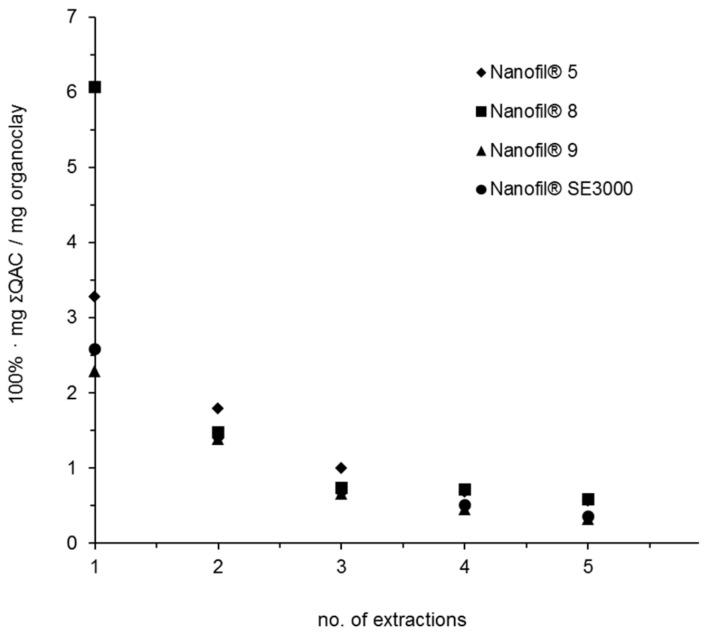
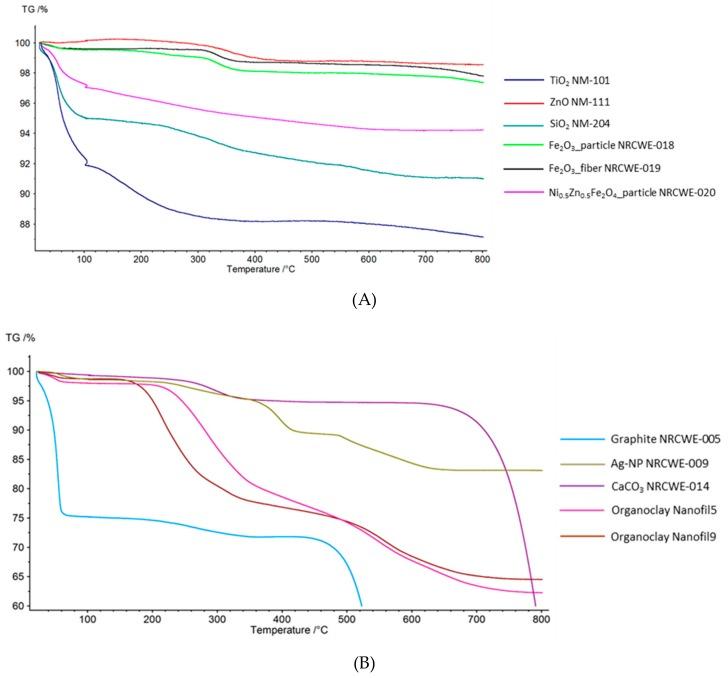
Manufactured nanomaterials (MNMs) often have a surface-chemical modification in order to tailor their physicochemical properties, including also powder properties and miscibility. Surface-chemical modifications may influence the toxicological properties of the MNM, but the specific chemistry and extent are rarely described in detail in suppliers' technical data sheets. Chemical and quantitative information on any surface-chemical treatment, coating and functionalization are required for chemicals registration in Europe. Currently there is no globally accepted and documented approach to generate such data. Consequently, there is a continued research need to establish a structured approach to identify and quantify surface-chemical modifications. Here we present a tiered approach starting with screening for mass-loss during heating in a furnace or thermogravimetric analysis (TGA) followed by solvent extraction, and analysis by several mass spectrometry (MS) techniques depending on the target analytes. Thermal treatment was assumed to be able to quantify the amount of organic coating and MS was used to identify the extractable organic coatings after pressurized liquid extraction (PLE) using methanol at 200 °C. Volatile organic compounds in extracts were identified with gas chromatography and MS (GC-MS), non-volatile organic compounds with liquid chromatography MS (LC-MS), and polymeric compounds with matrix-assisted laser desorption ionization time-of-flight MS (MALDI-TOF-MS). The approach was demonstrated by analysis of 24 MNM, comprising titanium dioxide, synthetic amorphous silica, graphite, zinc oxide, silver, calcium carbonate, iron oxide, nickel-zinc-iron oxide, and organoclay. In extracts of 14 MNMs a range of organic compounds were identified and the main groups were silanes/siloxanes, fatty acids, fatty acid esters, quaternary ammonium compounds and polymeric compounds. In the remaining 10 MNMs no organic compounds were detected by MS, despite the fact an organic coating was indicated by TGA.
人造纳米材料(MNMs)通常会进行表面化学改性,以调整其物理化学性质,包括粉末性质和混溶性。表面化学改性可能会影响MNM的毒理学性质,但供应商的技术数据表中很少详细描述具体的化学性质和程度。在欧洲,化学品注册需要有关任何表面化学处理、涂层和功能化的化学和定量信息。目前,尚无全球公认且有文献记载的方法来生成此类数据。因此,持续需要开展研究以建立一种结构化方法来识别和量化表面化学改性。在此,我们提出一种分层方法,首先在炉中加热或进行热重分析(TGA)以筛选质量损失,随后进行溶剂萃取,并根据目标分析物采用多种质谱(MS)技术进行分析。热处理被认为能够量化有机涂层的量,而MS则用于在200℃下使用甲醇进行加压液体萃取(PLE)后鉴定可萃取的有机涂层。提取物中的挥发性有机化合物用气相色谱和MS(GC-MS)鉴定,非挥发性有机化合物用液相色谱MS(LC-MS)鉴定,聚合化合物用基质辅助激光解吸电离飞行时间MS(MALDI-TOF-MS)鉴定。通过对24种MNM进行分析验证了该方法,这些MNM包括二氧化钛、合成无定形二氧化硅、石墨、氧化锌、银、碳酸钙、氧化铁、镍锌铁氧化物和有机粘土。在14种MNM的提取物中鉴定出了一系列有机化合物,主要类别为硅烷/硅氧烷、脂肪酸、脂肪酸酯、季铵化合物和聚合化合物。在其余10种MNM中,尽管TGA表明存在有机涂层,但MS未检测到有机化合物。

 Zotero 插件