
蛋白质羰基化作为重金属镉和铅对野燕麦(Avena fatua L.)造成损伤的生物标志物
Protein Carbonylation As a Biomarker of Heavy Metal, Cd and Pb, Damage in Willd. ex Flüggé.
作者信息
Salas-Moreno Manuel, Contreras-Puentes Neyder, Rodríguez-Cavallo Erika, Jorrín-Novo Jesús, Marrugo-Negrete José, Méndez-Cuadro Darío
机构信息
Faculty of Naturals Sciences, Biology Department, Biosistematic Research Group, Technological University of Chocó, Quibdó, Colombia.
Analytical Chemistry and Biomedicine Group. Exacts and Natural Sciences Faculty. University of Cartagena, Cartagena, Colombia.
出版信息
Plants (Basel). 2019 Nov 16;8(11):513. doi: 10.3390/plants8110513.
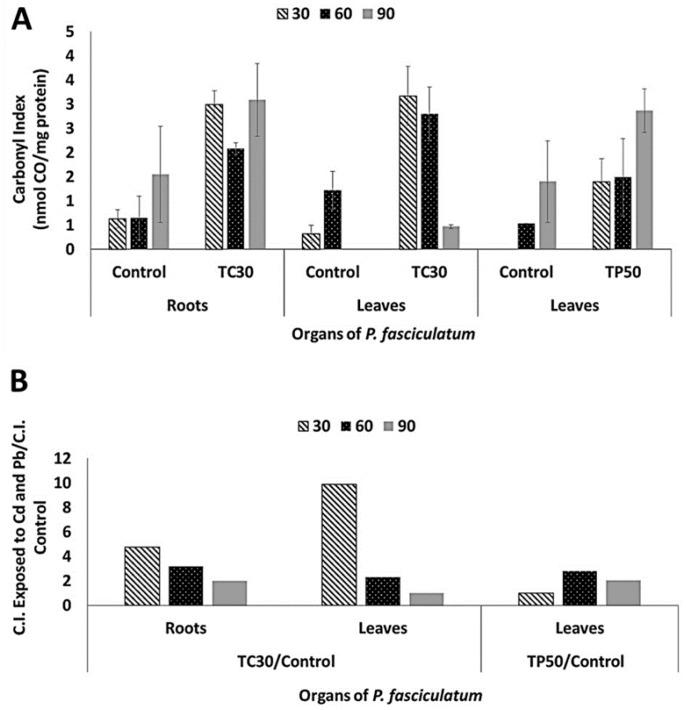
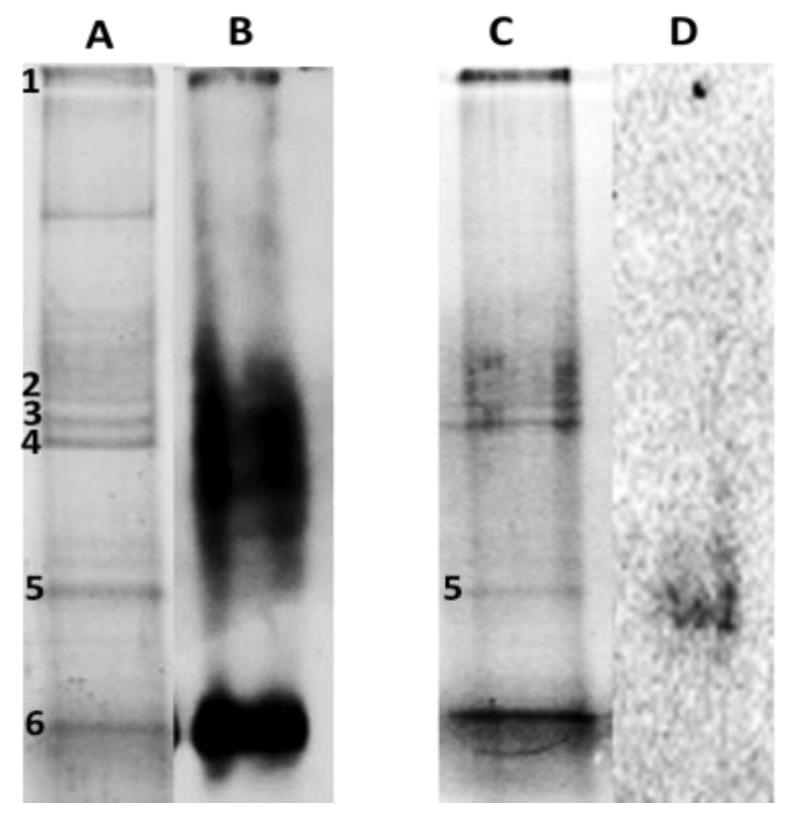
Heavy metal tolerant plants have phytoremediation potential for the recovery of contaminated soils, and the characterization of their metabolic adaptation processes is an important starting point to elucidate their tolerance mechanisms at molecular, biochemical and physiological levels. In this research, the effects of Cd and Pb on growth and protein carbonylation in tissues of exposed to 30 and 50 mg·Kg Cd and Pb respectively were determined. seedlings exposed to metals grew more than controls until 60 days of cultivation and limited their oxidative effects to a reduced protein group. Carbonyl indexes in leaf and root proteins reached a significant increase concerning their controls in plants exposed 30 days to Cd and 60 days to Pb. From the combined approach of Western Blot with Sodium Dodecyl Sulfate-Polyacrylamide Gel Electrophoresis (SDS-PAGE) and protein analysis by Matrix Asisted Laser Desorption/Ionisation - Time Of Flight (MALDI-TOF/TOF) mass spectrometry, chloroplastic proteins were identified into the main oxidative stress-inducible proteins to Cd and Pb, such as subunits α, γ of ATP synthetase, Chlorophyll CP26 binding protein, fructose-bisphosphate aldolase and long-chain ribulose bisphosphate carboxylase (RuBisCO LSU). Cd generated damage in the photosynthetic machinery of the leaves of into the first 30 days of treatment; five of the oxidized proteins are involved in photosynthesis processes. Moreover, there was a proteolytic fragmentation of the RuBisCO LSU. Results showed that intrinsic tolerance of to these metals reached 60 days in our conditions, along with the bioaccumulating appreciable quantities of metals in their roots.
重金属耐受植物对受污染土壤的修复具有植物修复潜力,其代谢适应过程的表征是在分子、生化和生理水平上阐明其耐受机制的重要起点。在本研究中,测定了分别暴露于30和50mg·Kg镉和铅的植物组织中镉和铅对生长和蛋白质羰基化的影响。暴露于金属的幼苗在培养60天之前比对照生长得更多,并将其氧化作用限制在减少的蛋白质组中。在暴露于镉30天和铅60天的植物中,叶片和根蛋白中的羰基指数相对于对照有显著增加。通过蛋白质印迹与十二烷基硫酸钠-聚丙烯酰胺凝胶电泳(SDS-PAGE)的联合方法以及基质辅助激光解吸/电离-飞行时间(MALDI-TOF/TOF)质谱分析蛋白质,叶绿体蛋白被鉴定为对镉和铅主要的氧化应激诱导蛋白,如ATP合成酶的α、γ亚基、叶绿素CP26结合蛋白、果糖-1,6-二磷酸醛缩酶和长链核酮糖二磷酸羧化酶(RuBisCO LSU)。在处理的前30天,镉对植物叶片的光合机制造成损害;其中五种氧化蛋白参与光合作用过程。此外,RuBisCO LSU存在蛋白水解片段化。结果表明,在我们的条件下,植物对这些金属的内在耐受性达到60天,同时其根部积累了可观数量的金属。



 Zotero 插件