
早产儿接种六价疫苗:意大利儿科过敏和免疫学学会与意大利新生儿学会联合更新。
Hexavalent vaccines in preterm infants: an update by Italian Society of Pediatric Allergy and Immunology jointly with the Italian Society of Neonatology.
机构信息
SODc Malattie Infettive AOU Meyer, Dipartimento di Scienze della Salute, Università di Firenze, Firenze, Italy.
Dipartimento di Scienze della Salute, Università di Firenze, Firenze, Italy.
出版信息
Ital J Pediatr. 2019 Nov 19;45(1):145. doi: 10.1186/s13052-019-0742-7.
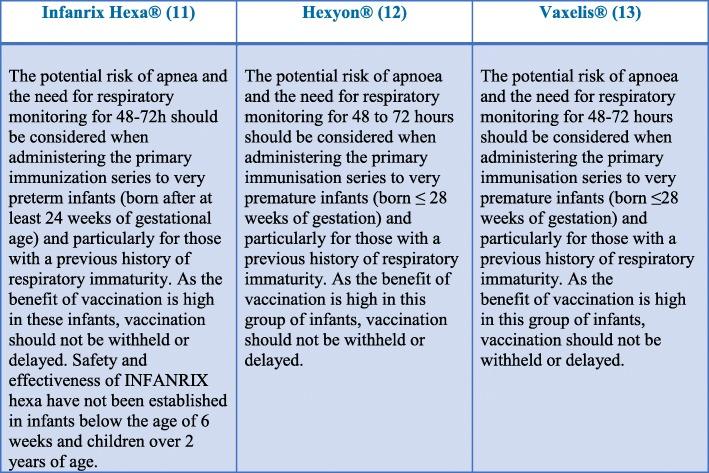
Hexavalent vaccines, protecting against six diseases (diphtheria, tetanus, pertussis [DTaP], poliovirus, hepatitis B virus [HBV], and Haemophilus influenzae type b [Hib], are routinely the standard of care in Europe. The use of combined vaccines allows the reduction of number of injections and side effects, the reduction of costs, and the increase in adherence of the family to the vaccination schedule both in terms of the number of doses and timing. The safety profile, efficacy and effectiveness of hexavalent vaccines have been extensively documented in infants and children born at term, and data are accumulating in preterm infants. Hexavalent vaccines are particularly important for preterm infants, who are at increased risk for severe forms of vaccine preventable diseases. However, immunization delay has been commonly reported in this age group. All the three hexavalent vaccines currently marketed in Italy can be used in preterm infants, and recent data confirm that hexavalent vaccines have a similar or lower incidence of adverse events in preterm compared to full-term infants; this is likely due to a weaker immune system response and reduced ability to induce an inflammatory response in preterm infants. Apnoea episodes are the adverse events that can occur in the most severe preterm infants and / or with history of respiratory distress. The risk of apnoea after vaccination seems to be related to a lower gestational age and a lower birth weight, supporting the hypothesis that it represents an unspecific response of the preterm infant to different procedures. High seroprotection rates have been reported in preterm infants vaccinated with hexavalent vaccine. However, a lower gestational age seems to be associated with lower antibody titres against some vaccine antigens (e.g. HBV, Hib, poliovirus serotype 1, and pertussis), regardless of the type of hexavalent vaccine used. Waiting for large effectiveness studies, hexavalent vaccines should be administered in preterm infants according to the same schedule recommended for infants born at term, considering their chronological age and providing an adequate monitoring for cardio-respiratory events in the 48-72 h after vaccination, especially for infants at risk of recurrence of apnoea.
六价疫苗可预防六种疾病(白喉、破伤风、百日咳[DTaP]、脊髓灰质炎病毒、乙型肝炎病毒[HBV]和流感嗜血杆菌[Hib]),在欧洲,它们通常是标准护理方法。联合疫苗的使用可以减少注射次数和副作用,降低成本,并增加家庭对疫苗接种计划的依从性,无论是在剂量还是时间方面。六价疫苗在足月出生的婴儿和儿童中的安全性、有效性和功效已得到广泛证明,并且在早产儿中的数据也在不断增加。六价疫苗对早产儿尤为重要,因为早产儿患疫苗可预防疾病严重形式的风险增加。然而,在这个年龄段,免疫接种延迟的情况很常见。目前在意大利市场上销售的所有三种六价疫苗都可用于早产儿,最近的数据证实,与足月儿相比,六价疫苗在早产儿中的不良反应发生率相似或更低;这可能是由于早产儿的免疫系统反应较弱,并且在早产儿中诱导炎症反应的能力降低。呼吸暂停发作是最严重的早产儿和/或有呼吸窘迫史的早产儿可能发生的不良事件。接种疫苗后发生呼吸暂停的风险似乎与较低的胎龄和出生体重有关,这支持了这样一种假设,即它代表早产儿对不同程序的非特异性反应。接种六价疫苗的早产儿报告了高血清保护率。然而,较低的胎龄似乎与针对某些疫苗抗原(例如 HBV、Hib、脊髓灰质炎病毒血清型 1 和百日咳)的抗体滴度较低有关,无论使用哪种六价疫苗。在等待大型有效性研究的同时,应根据推荐给足月出生婴儿的时间表为早产儿接种六价疫苗,考虑到他们的年龄,并在接种后 48-72 小时内对心肺事件进行充分监测,尤其是对于有呼吸暂停复发风险的婴儿。
 Zotero 插件