
应用下一代测序和 Sanger 测序技术对一个中国 Wilson 病家系进行 ATP7B 基因大片段缺失和断点连接序列分析
A novel gross deletion and breakpoint junction sequence analysis of ATP7B in a Chinese family with Wilson disease using next‑generation sequencing and Sanger sequencing.
机构信息
Department of Pediatrics, Affiliated Hospital of Guizhou Medical University, Guiyang, Guizhou 550004, P.R. China.
Department of Ophthalmology, Affiliated Hospital of Guizhou Medical University, Guiyang, Guizhou 550004, P.R. China.
出版信息
Mol Med Rep. 2020 Jan;21(1):517-523. doi: 10.3892/mmr.2019.10830. Epub 2019 Nov 20.
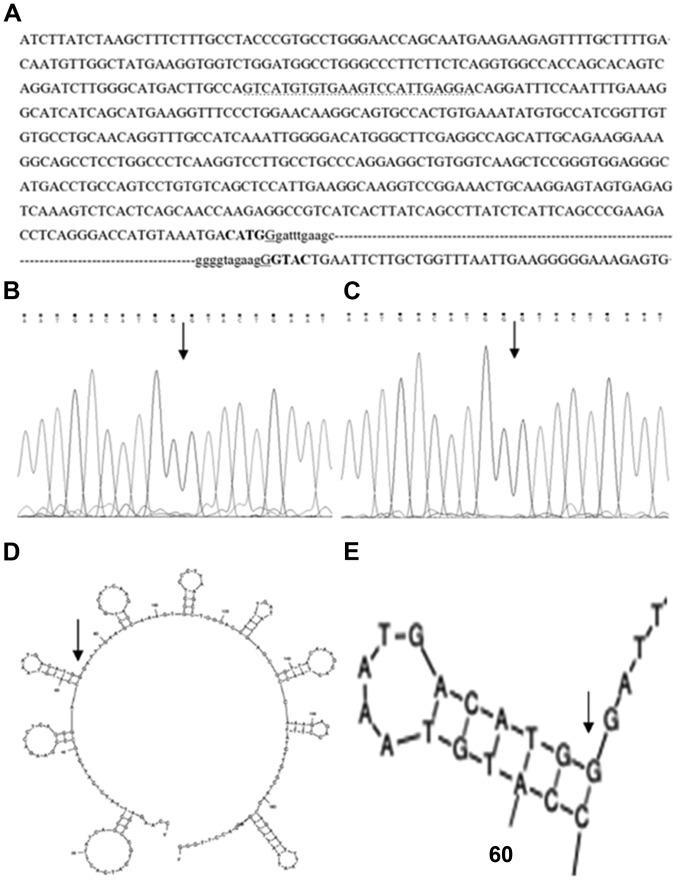
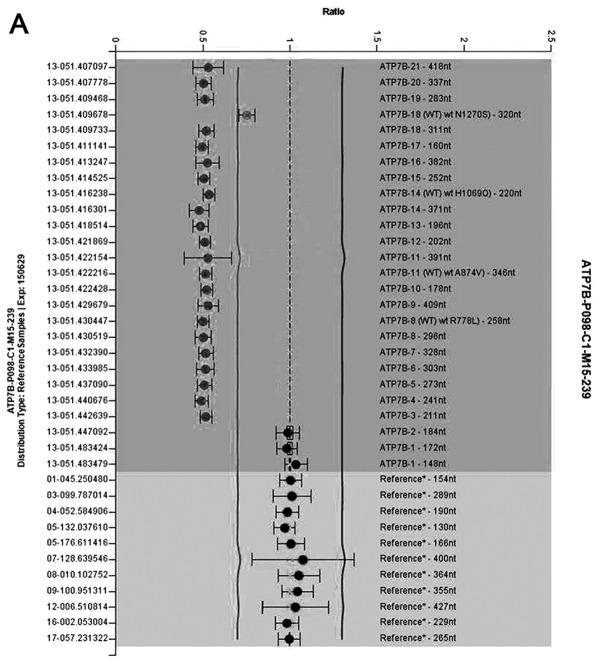
Wilson disease (WD) is a rare autosomal recessive genetic disorder that causes abnormal copper metabolism, resulting in pathological accumulation of copper in the liver, brain and other organs. Mutations in the ATPase copper transporter 7B (ATP7B) gene, which encodes a membrane P‑type adenosine triphosphatase, have been identified as being responsible for WD. The present study analyzed clinical data and collected DNA samples from a pediatric patient with WD and her healthy parents. Mutation screening for ATP7B was performed using direct sequencing, multiplex ligation‑dependent probe amplification(MLPA), next‑generation sequencing (NGS) and Sanger sequencing of the breakpoint junction sequence. The patient (age, 2.7 years) presented with early‑onset hepatic disease. The present study identified compound heterozygous mutations of ATP7B, including a heterozygous mutation (p.Arg1,041Trp) and a novel heterozygous gross deletion of a 57,771 bp fragment (chr13: 52490972‑52548742) (GRCh37) from partial exon2‑ exon21 to external ATP7B sequence (15.833bp) in the patient. Analysis of the family members of the patient showed that the missense mutation and the gross deletion mutation were inherited from her mother and father, respectively. Microhomology and inverted repeat sequences, which may mediate the deletion mutation, were identified through sequence analysis on both sides of the breakpoints of this deletion. The present study provided additional information on the genotypic spectrum of the ATP7B gene, particularly with regard to early onset hepatic disease, as observed in the present patient with WD. The identification of the precise breakpoint junction sequence warrants further investigation of DNA break and recombination mechanisms. In detecting precise deletions, the NGS associated with Sanger sequencing of breakpoint junction sequence have been found to have more advantages than MLPA.
威尔逊病(WD)是一种罕见的常染色体隐性遗传疾病,导致铜代谢异常,导致铜在肝脏、大脑和其他器官中病理性积累。ATP7B 基因(编码膜 P 型三磷酸腺苷酶)的突变已被确定为 WD 的原因。本研究分析了 WD 儿科患者及其健康父母的临床数据并收集了 DNA 样本。使用直接测序、多重连接依赖性探针扩增(MLPA)、下一代测序(NGS)和断点连接序列的 Sanger 测序对 ATP7B 进行突变筛查。患者(年龄,2.7 岁)表现为早发性肝疾病。本研究鉴定了 ATP7B 的复合杂合突变,包括杂合突变(p.Arg1,041Trp)和从外显子 2-21 到外部 ATP7B 序列(15.833bp)的全长 57,771bp 片段的新型杂合大片段缺失(chr13:52490972-52548742)(GRCh37)在患者中。对患者家庭成员的分析表明,错义突变和大片段缺失突变分别来自她的母亲和父亲。通过对该缺失两侧的断点序列进行分析,鉴定出可能介导缺失突变的微同源和反向重复序列。本研究为 ATP7B 基因的基因型谱提供了更多信息,特别是在本 WD 患者观察到的早发性肝疾病方面。确切的断点连接序列的鉴定需要进一步研究 DNA 断裂和重组机制。在检测精确缺失时,与 MLPA 相比,与 Sanger 测序相结合的 NGS 具有更多优势。

 Zotero 插件