
叶酸可延缓衰老加速小鼠8型的年龄相关性认知衰退:减轻端粒磨损作为一种潜在机制。
Folic acid delays age-related cognitive decline in senescence-accelerated mouse prone 8: alleviating telomere attrition as a potential mechanism.
作者信息
Lv Xin, Wang Xinyan, Wang Yalan, Zhou Dezheng, Li Wen, Wilson John X, Chang Hong, Huang Guowei
机构信息
Department of Nutrition and Food Science, School of Public Health, Tianjin Medical University, Tianjin 300070, China.
Tianjin Key Laboratory of Environment, Nutrition and Public Health, Center for International Collaborative Research on Environment, Nutrition and Public Health, Tianjin 300070, China.
出版信息
Aging (Albany NY). 2019 Nov 22;11(22):10356-10373. doi: 10.18632/aging.102461.
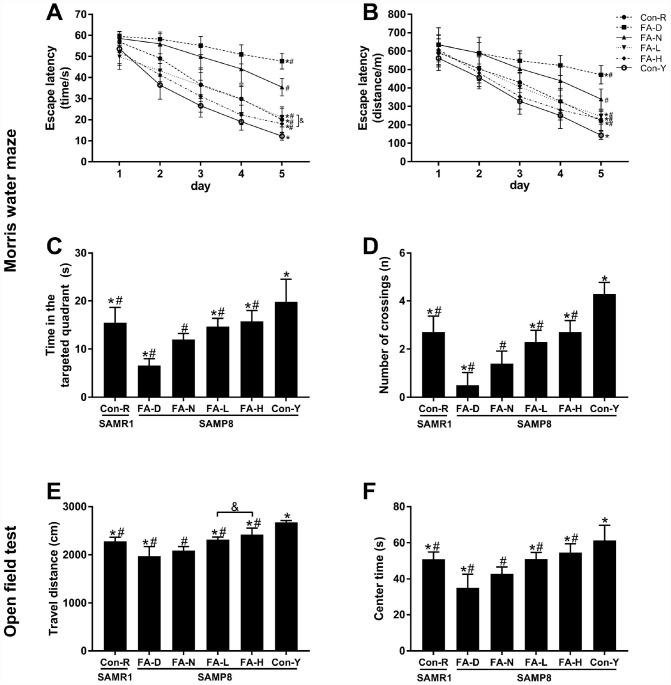
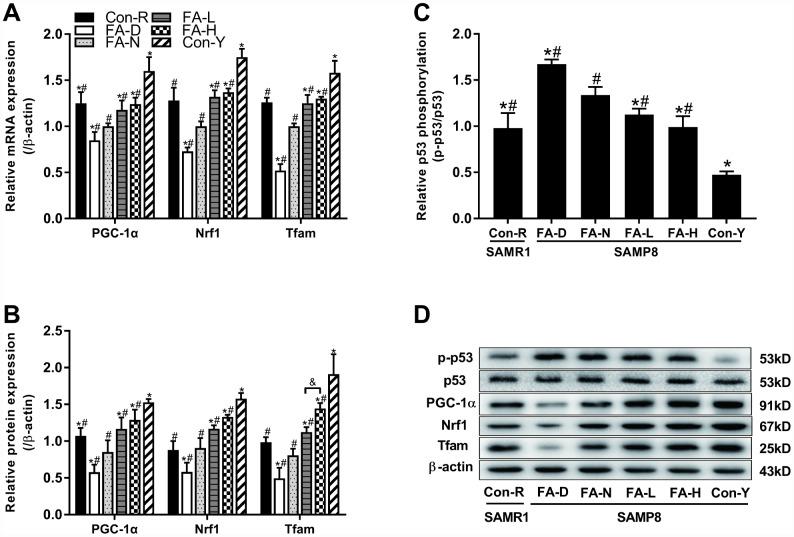
The occurrence of telomere attrition in brain may cause senescence and death of neurons, leading to cognitive decline. Folic acid (FA) has been reported to improve cognitive performance in mild cognitive impairment; however, its association with telomere remains unclear. The study aimed to investigate if alleviation of telomere attrition by FA supplementation could act as a potential mechanism to delay age-related cognitive decline in senescence-accelerated mouse prone 8 (SAMP8). Aged SAMP8 mice were assigned to four treatment groups: FAdeficient diet (FA-D) group, FA-normal diet (FA-N) group, low FA-supplemented diet (FA-L) group and high FAsupplemented diet (FA-H) group. There was also an age-matched senescence-accelerated mouse resistant 1 (SAMR1) control group (Con-R), and a young SAMP8 control group (Con-Y). The results demonstrated that FA supplementation delayed age-related cognitive decline and neurodegeneration in SAMP8 mice. Importantly, this effect could be attributed to the alleviated telomere attrition, which might be interpreted by the decreased levels of reactive oxygen species. Additionally, improved telomere integrity stimulated mitochondrial function via telomere-p53-mithondria pathway, consequently delayed neuronal degeneration. In conclusion, we demonstrate that FA supplementation delays age-related neurodegeneration and cognitive decline in SAMP8 mice, in which alleviated telomere attrition could serve as one influential factor in the process.
大脑中出现端粒损耗可能会导致神经元衰老和死亡,进而导致认知能力下降。据报道,叶酸(FA)可改善轻度认知障碍患者的认知表现;然而,其与端粒的关联仍不明确。本研究旨在调查补充叶酸是否能缓解端粒损耗,以此作为延缓衰老加速小鼠8(SAMP8)与年龄相关认知能力下降的潜在机制。将老年SAMP8小鼠分为四个治疗组:叶酸缺乏饮食(FA-D)组、叶酸正常饮食(FA-N)组、低叶酸补充饮食(FA-L)组和高叶酸补充饮食(FA-H)组。还有一个年龄匹配的衰老加速抗性小鼠1(SAMR1)对照组(Con-R)和一个年轻SAMP8对照组(Con-Y)。结果表明,补充叶酸可延缓SAMP8小鼠与年龄相关的认知能力下降和神经退行性变。重要的是,这种作用可能归因于端粒损耗的缓解,这可能是由于活性氧水平降低所致。此外,改善的端粒完整性通过端粒-p53-线粒体途径刺激线粒体功能,从而延缓神经元变性。总之,我们证明补充叶酸可延缓SAMP8小鼠与年龄相关的神经退行性变和认知能力下降,其中端粒损耗的缓解可能是该过程中的一个影响因素。




 Zotero 插件