
3,3'-二吲哚甲烷通过激活TrkB/Akt通路促进脑源性神经营养因子和抗氧化酶的形成,对海马神经元细胞氧化应激诱导的凋亡具有神经保护作用。
3,3'-Diindolylmethane Promotes BDNF and Antioxidant Enzyme Formation via TrkB/Akt Pathway Activation for Neuroprotection against Oxidative Stress-Induced Apoptosis in Hippocampal Neuronal Cells.
作者信息
Lee Bo Dam, Yoo Jae-Myung, Baek Seong Yeon, Li Fu Yi, Sok Dai-Eun, Kim Mee Ree
机构信息
Department of Food and Nutrition, Chungnam National University, Daejeon 34134, Korea.
Korean Medicine-Application Center, Korea Institute of Oriental Medicine, Daegu 41062, Korea.
出版信息
Antioxidants (Basel). 2019 Dec 18;9(1):3. doi: 10.3390/antiox9010003.
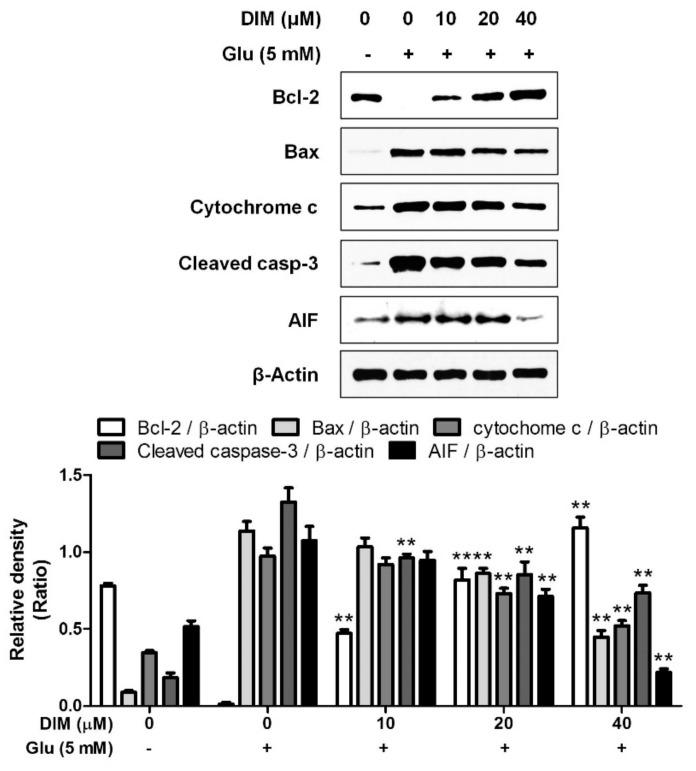
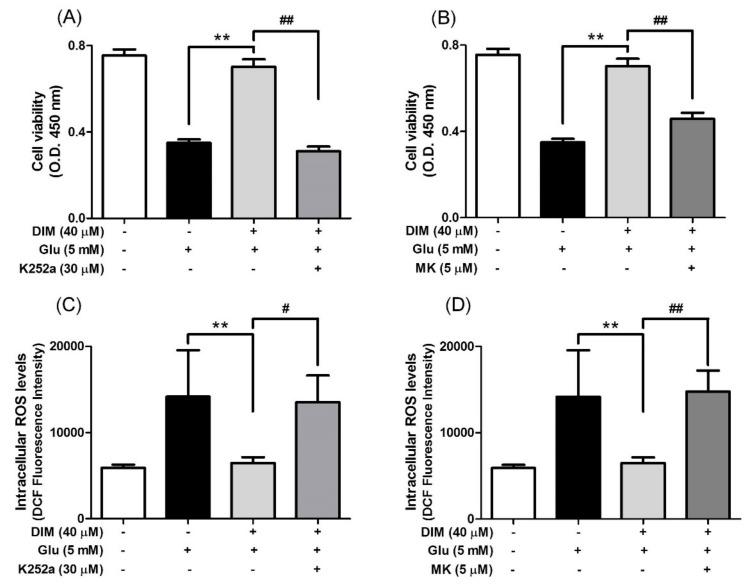
3,3'-Diindolylmethane (DIM), a metabolite of indole-3-carbinol present in Brassicaceae vegetables, possesses various health-promoting effects. Nonetheless, the effect of DIM on neurodegenerative diseases has not been elucidated clearly. In this study, we hypothesized DIM may protect neuronal cells against oxidative stress-induced apoptosis by promoting the formation of brain-derived neurotrophic factor (BDNF) and antioxidant enzymes through stabilizing the activation of the tropomyosin-related kinase receptor B (TrkB) cascade and we investigated the effect of DIM on oxidative stress-mediated neurodegenerative models. DIM protected neuronal cells against oxidative stress-induced apoptosis by regulating the expression of apoptosis-related proteins in glutamate-treated HT-22 cells. Additionally, DIM improved the expression of BDNF and antioxidant enzymes, such as heme oxygenase-1, glutamate-cysteine ligase catalytic subunit, and NAD(P)H quinine oxidoreductase-1, by promoting the activation of the TrkB/protein kinase B (Akt) pathway in the cells. Consistent with in vitro studies, DIM attenuated memory impairment by protecting hippocampal neuronal cells against oxidative damage in scopolamine-treated mice. Conclusionally, DIM exerted neuroprotective and antioxidant actions through the activation of both BDNF production and antioxidant enzyme formation in accordance with the TrkB/Akt pathway in neuronal cells. Such an effect of DIM may provide information for the application of DIM in the prevention of and therapy for neurodegenerative diseases.
3,3'-二吲哚甲烷(DIM)是十字花科蔬菜中存在的吲哚 - 3 - 甲醇的一种代谢产物,具有多种促进健康的作用。然而,DIM对神经退行性疾病的影响尚未得到明确阐明。在本研究中,我们假设DIM可能通过稳定原肌球蛋白相关激酶受体B(TrkB)级联反应的激活来促进脑源性神经营养因子(BDNF)和抗氧化酶的形成,从而保护神经元细胞免受氧化应激诱导的凋亡,并且我们研究了DIM对氧化应激介导的神经退行性模型的影响。DIM通过调节谷氨酸处理的HT - 22细胞中凋亡相关蛋白的表达,保护神经元细胞免受氧化应激诱导的凋亡。此外,DIM通过促进细胞中TrkB/蛋白激酶B(Akt)途径的激活,提高了BDNF和抗氧化酶的表达,如血红素加氧酶 - 1、谷氨酸 - 半胱氨酸连接酶催化亚基和NAD(P)H醌氧化还原酶 - 1。与体外研究一致,DIM通过保护东莨菪碱处理的小鼠海马神经元细胞免受氧化损伤,减轻了记忆障碍。总之,DIM通过激活神经元细胞中BDNF的产生和抗氧化酶的形成,并符合TrkB/Akt途径,发挥了神经保护和抗氧化作用。DIM的这种作用可能为DIM在神经退行性疾病的预防和治疗中的应用提供信息。




 Zotero 插件