
肿瘤特异性 hNQO1 响应性生物相容性萘酰亚胺提供快速荧光开启和增强的酶亲和力。
Cancer-Specific hNQO1-Responsive Biocompatible Naphthalimides Providing a Rapid Fluorescent Turn-On with an Enhanced Enzyme Affinity.
机构信息
Department of Chemistry, Sookmyung Women's University, Seoul 04310, Korea.
Department of Life Sciences, Korea University, Seoul 02841, Korea.
出版信息
Sensors (Basel). 2019 Dec 20;20(1):53. doi: 10.3390/s20010053.
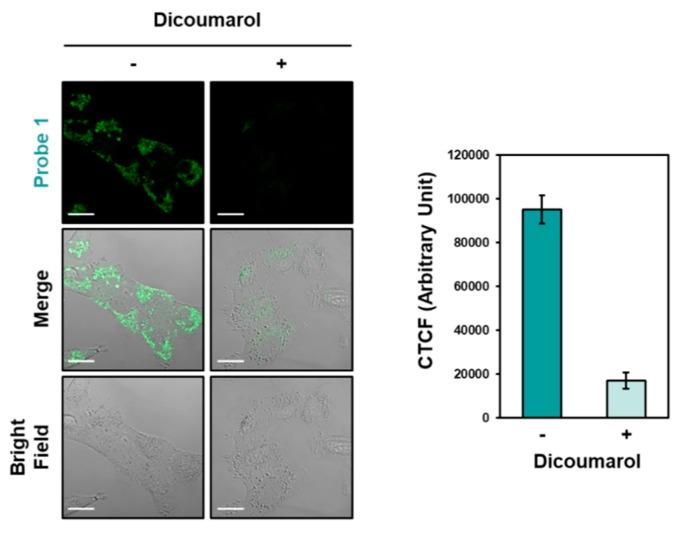
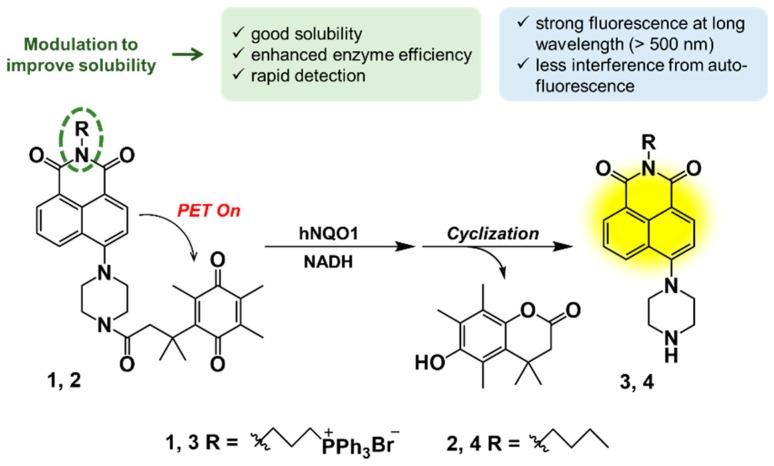
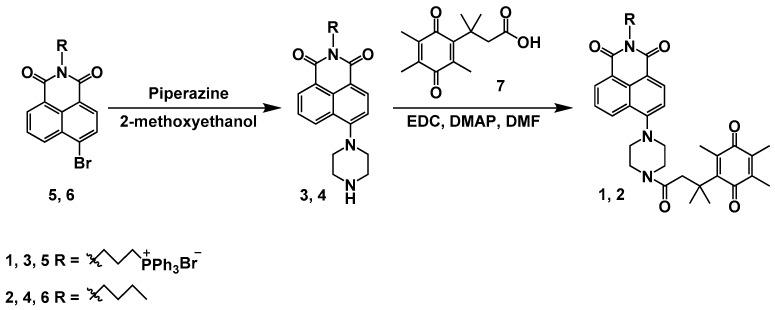
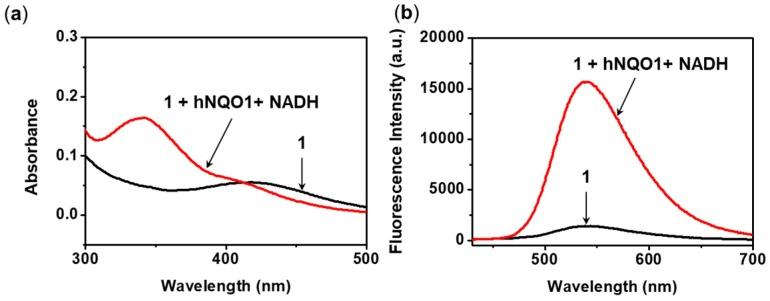
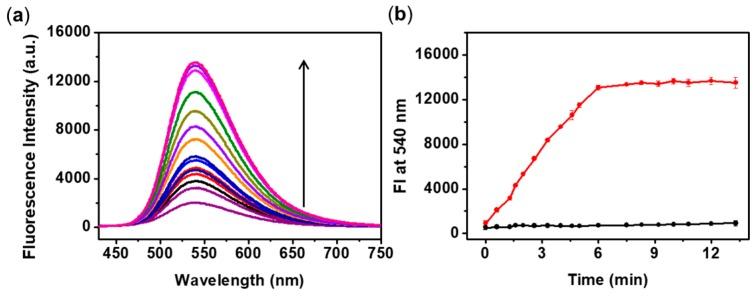
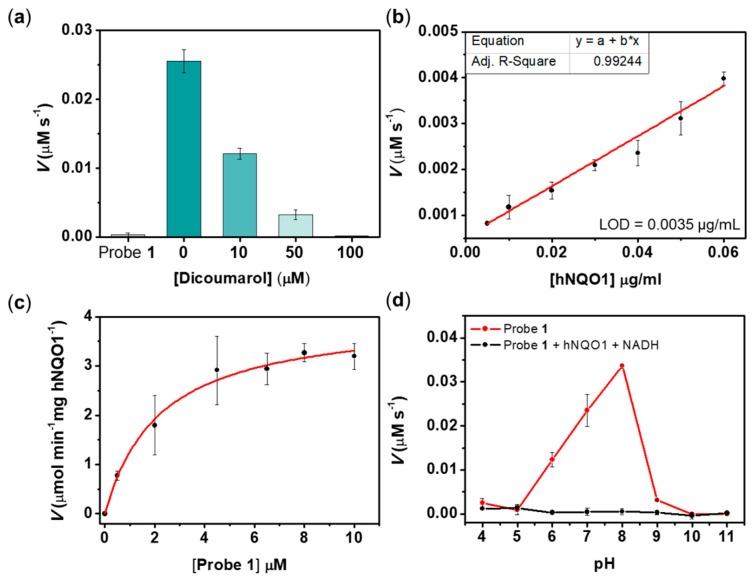
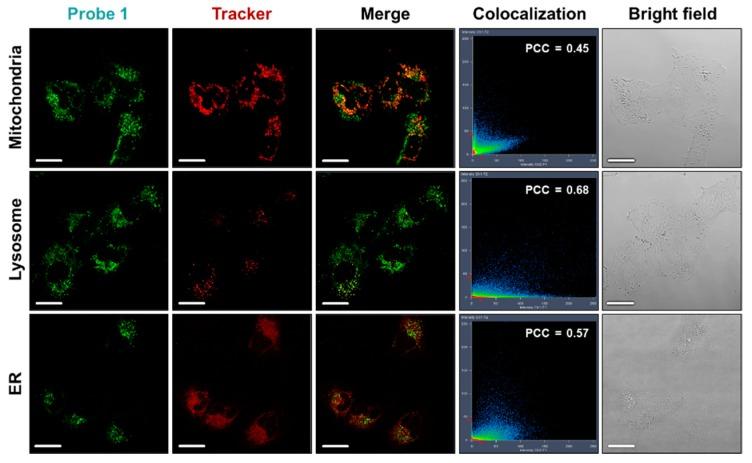
Human NAD(P)H:quinone oxidoreductase 1 (hNQO1) is overexpressed in cancer cells and associated with the drug resistance factor of cancer. The objective of this work is the development of fluorescent probes for the efficient detection of hNQO1 activity in cancer cells, which can be employed for the cancer diagnosis and therapeutic agent development. Herein, we report naphthalimide-based fluorescent probes and that can detect hNQO1. For hNQO1 activity, the probes showed a significant fluorescence increase at 540 nm. In addition, probe , the naphthalimide containing a triphenylphosphonium salt, showed an enhanced enzyme efficiency and rapid detection under a physiological condition. The detection ability of probe was superior to that of other previously reported probes. Moreover, probe was less cytotoxic during the cancer cell imaging and readily provided a strong fluorescence in hNQO1-overexpressed cancer cells (A549). We proposed that probe can be used to detect hNQO1 expression in live cells and it will be applied to develop the diagnosis and customized treatment of hNQO1-related disease.
人醌氧化还原酶 1(hNQO1)在癌细胞中过度表达,并与癌细胞的耐药因子有关。本工作的目的是开发用于有效检测癌细胞中 hNQO1 活性的荧光探针,可用于癌症诊断和治疗剂的开发。在此,我们报告了基于萘酰亚胺的荧光探针 和 ,可用于检测 hNQO1。对于 hNQO1 活性,探针在 540nm 处显示出显著的荧光增强。此外,探针 ,其中含有三苯基膦盐的萘酰亚胺,在生理条件下显示出增强的酶效率和快速检测。探针 的检测能力优于其他先前报道的探针。此外,探针 在癌细胞成像过程中的细胞毒性较小,并且易于在 hNQO1 过表达的癌细胞(A549)中提供强荧光。我们提出探针 可用于检测活细胞中的 hNQO1 表达,并将其应用于开发与 hNQO1 相关疾病的诊断和定制治疗。


 Zotero 插件