
一种从人乳和牛乳中分离外泌体的方法。
A Method for the Isolation of Exosomes from Human and Bovine Milk.
作者信息
Vaswani Kanchan, Mitchell Murray D, Holland Olivia J, Qin Koh Yong, Hill Rebecca J, Harb Tracy, Davies Peter S W, Peiris Hassendrini
机构信息
Institute of Health and Biomedical Innovation-Centre for Children's Health Research, Faculty of Health, Queensland University of Technology, Brisbane, Queensland 4029, Australia.
University of Queensland Centre for Clinical Research, Faculty of Medicine, The University of Queensland, Brisbane, Queensland 4029, Australia.
出版信息
J Nutr Metab. 2019 Dec 3;2019:5764740. doi: 10.1155/2019/5764740. eCollection 2019.
SCOPE
Milk provides a natural means of nutrient supply to infants. Exosomes are an important component of milk that are not only being studied for their promise in translational medicine but also in infant nutrition. They also play important roles in intercellular communication and immune function in mammary glands and are able to transfer their materials to the recipient. Therefore, the isolation of high-quality exosomes is an important aspect of exosome research.
METHODS AND RESULTS
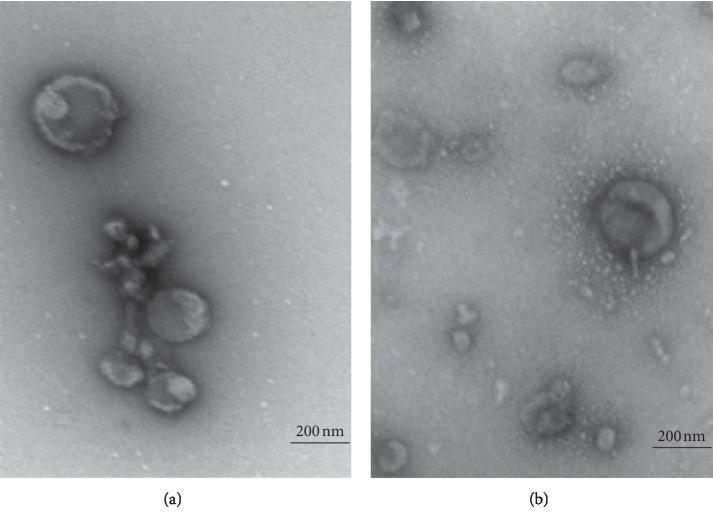
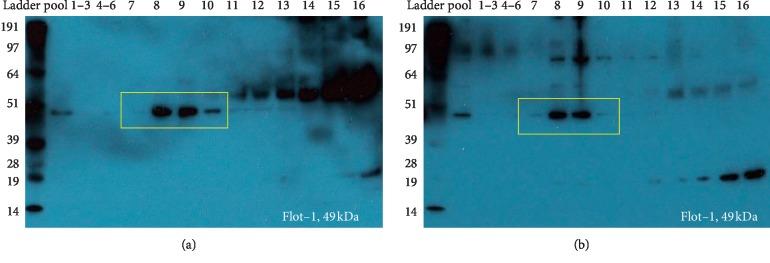
This study is a technical study, which provides a detailed methodology for the isolation and enrichment of exosomes from milk. In this study, we evaluate the suitability of using the exosome enrichment method that we have recently published for bovine milk, on human milk. We initially isolated extracellular vesicles from human and bovine milk on a fresh set of samples, using ultracentrifugation, and then exosomes were subsequently enriched via size exclusion chromatography (SEC). Following isolation and enrichment, exosomes from both species were characterized by particle concentration (nanoparticle tracking analysis, NTA), morphology (transmission electron microscopy, TEM), and the presence of exosomal markers (immunoblotting and mass spectrometry using information dependant acquisition (IDA)). The key exosomal characteristics of spherical/donut-shaped morphology, the presence of exosomal markers, e.g., FLOT-1 and the tetraspanins, CD9 and CD81), and particle concentration were confirmed in both human and bovine milk exosomes.
CONCLUSION
We conclude that our robust exosome enrichment method, previously published for bovine milk, is suitable for use on human milk.
范围
母乳为婴儿提供了一种天然的营养供应方式。外泌体是母乳的重要组成部分,不仅因其在转化医学中的前景受到研究,也在婴儿营养方面受到关注。它们在乳腺的细胞间通讯和免疫功能中也发挥着重要作用,并且能够将其物质传递给受体。因此,分离高质量的外泌体是外泌体研究的一个重要方面。
方法与结果
本研究是一项技术研究,它提供了从母乳中分离和富集外泌体的详细方法。在本研究中,我们评估了我们最近发表的用于牛乳的外泌体富集方法对人乳的适用性。我们最初使用超速离心法从一组新鲜的人乳和牛乳样本中分离细胞外囊泡,然后通过尺寸排阻色谱法(SEC)进一步富集外泌体。在分离和富集之后,通过颗粒浓度(纳米颗粒跟踪分析,NTA)、形态(透射电子显微镜,TEM)以及外泌体标志物的存在情况(免疫印迹和使用信息依赖采集(IDA)的质谱分析)对两种来源的外泌体进行表征。人乳和牛乳外泌体均证实了具有球形/甜甜圈形形态、存在外泌体标志物(例如FLOT-1以及四跨膜蛋白CD9和CD81)以及颗粒浓度等关键外泌体特征。
结论
我们得出结论,我们之前发表的用于牛乳的强大外泌体富集方法适用于人乳。


 Zotero 插件