
R251K 取代病毒蛋白 PB2 增加了欧亚类禽 H1N1 猪流感病毒的病毒复制和致病性。
The R251K Substitution in Viral Protein PB2 Increases Viral Replication and Pathogenicity of Eurasian Avian-like H1N1 Swine Influenza Viruses.
机构信息
College of Veterinary Medicine, South China Agricultural University, Guangzhou 510462, China.
Key Laboratory of Zoonosis Prevention and Control of Guangdong Province, South China Agricultural University, Guangzhou 510462, China.
出版信息
Viruses. 2020 Jan 2;12(1):52. doi: 10.3390/v12010052.
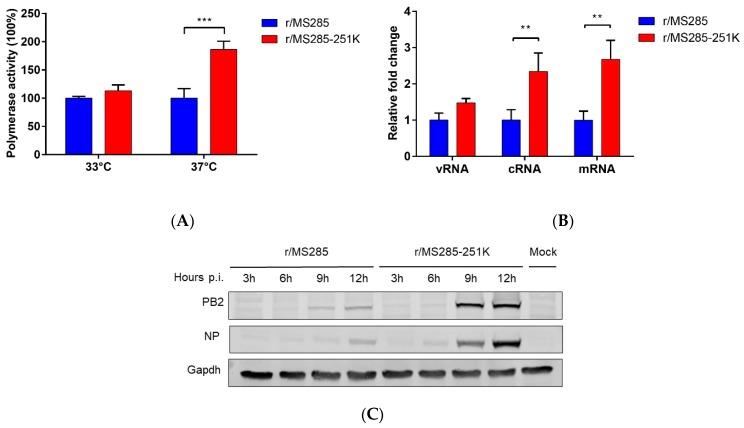
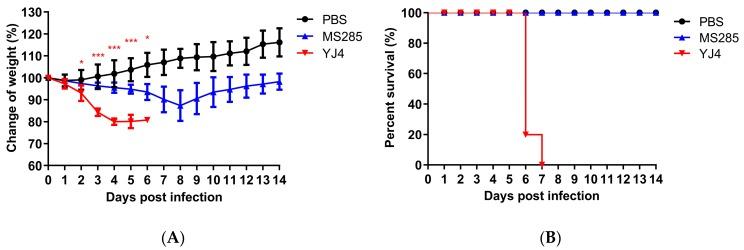
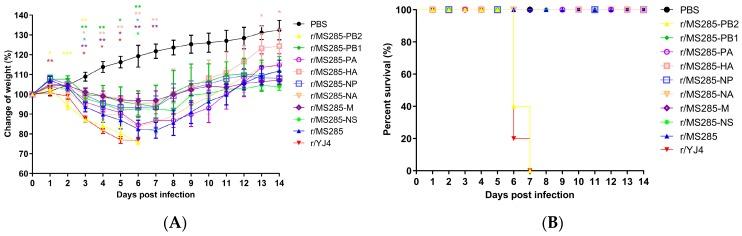
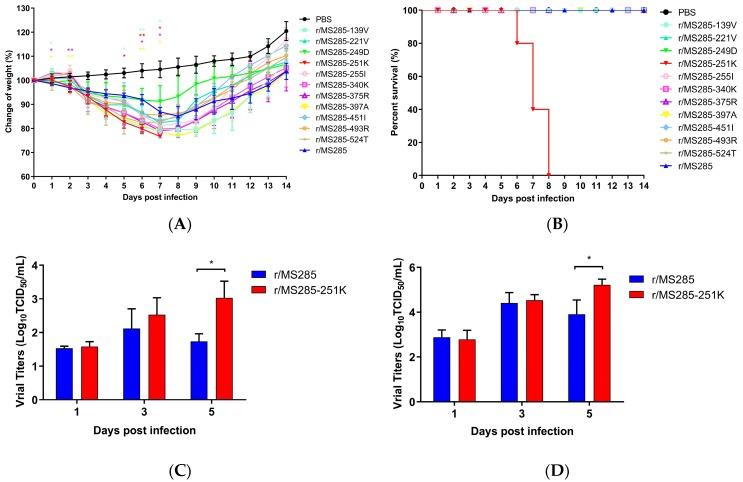
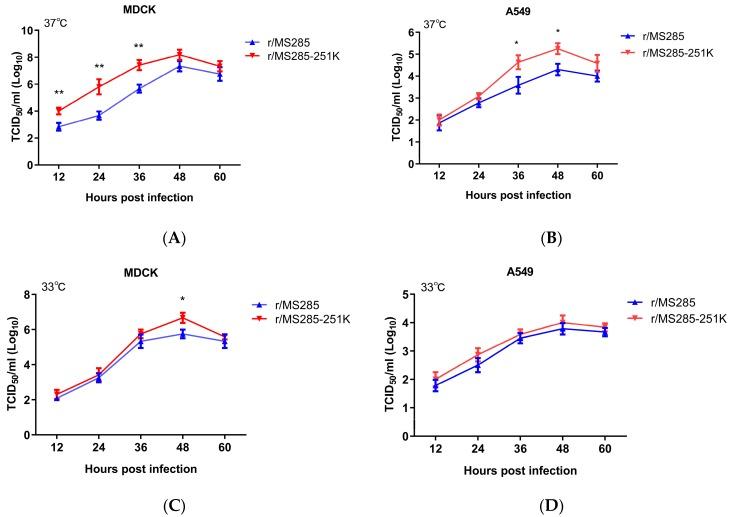
The Eurasian avian-like swine (EA) H1N1 virus has affected the Chinese swine industry, and human infection cases have been reported occasionally. However, little is known about the pathogenic mechanism of EA H1N1 virus. In this study, we compared the mouse pathogenicity of A/swine/Guangdong/YJ4/2014 (YJ4) and A/swine/Guangdong/MS285/2017 (MS285) viruses, which had similar genotype to A/Hunan/42443/2015 (HuN-like). None of the mice inoculated with 10 TCID of YJ4 survived at 7 days post infection, while the survival rate of the MS285 group was 100%. Therefore, a series of single fragment reassortants in MS285 background and two rescued wild-type viruses were generated by using the reverse genetics method, and the pathogenicity analysis revealed that the gene contributed to the high virulence of YJ4 virus. Furthermore, there were 11 amino acid differences in PB2 between MS285 and YJ4 identified by sequence alignment, and 11 single amino acid mutant viruses were generated in the MS285 background. We found that the R251K mutation significantly increased the virulence of MS285 in mice, contributed to high polymerase activity and enhanced viral genome transcription and replication. These results indicate that PB2-R251K contributes to the virulence of the EA H1N1 virus and provide new insight into future molecular epidemiological surveillance strategies.
欧亚类猪流感(EA)H1N1 病毒已对中国的养猪业产生影响,并且偶尔会有人类感染病例的报告。然而,对于 EA H1N1 病毒的致病机制知之甚少。在这项研究中,我们比较了具有与 A/Hunan/42443/2015(HuN 样)相似基因型的 A/swine/Guangdong/YJ4/2014(YJ4)和 A/swine/Guangdong/MS285/2017(MS285)病毒对小鼠的致病性。感染 10 TCID 的 YJ4 的小鼠在感染后 7 天内无一存活,而 MS285 组的存活率为 100%。因此,我们使用反向遗传学方法生成了一系列在 MS285 背景下的单片段重配体以及两种拯救的野生型病毒,并通过致病性分析发现 基因有助于 YJ4 病毒的高毒力。此外,通过序列比对在 MS285 和 YJ4 之间发现 PB2 中有 11 个氨基酸差异,并在 MS285 背景下生成了 11 个单氨基酸突变病毒。我们发现 PB2-R251K 突变显著增加了 MS285 在小鼠中的毒力,有助于提高聚合酶活性并增强病毒基因组的转录和复制。这些结果表明 PB2-R251K 有助于 EA H1N1 病毒的毒力,并为未来的分子流行病学监测策略提供了新的见解。
 Zotero 插件