
差异表达 MicroRNAs 在负透镜诱导近视豚鼠代谢过程中的调控作用。
Regulatory roles of differentially expressed MicroRNAs in metabolic processes in negative Lens-induced myopia Guinea pigs.
机构信息
Shandong Provincial Key Laboratory of Integrated Traditional Chinese and Western Medicine for Prevention and Therapy of Ocular Diseases, Key Laboratory of Integrated Traditional Chinese and Western Medicine for Prevention and Therapy of Ocular Diseases in Universities of Shandong; Eye Institute of Shandong University of Traditional Chinese Medicine, No. 48#, Yingxiongshan Road, Jinan, 250002, China.
Affiliated Eye Hospital of Shandong University of Traditional Chinese Medicine, No. 48#, Yingxiongshan Road, Jinan, 250002, China.
出版信息
BMC Genomics. 2020 Jan 6;21(1):13. doi: 10.1186/s12864-020-6447-x.
BACKGROUND
Myopia is one of the most common vision defects worldwide. microRNAs can regulate the target gene expression, influencing the development of diseases.
RESULTS
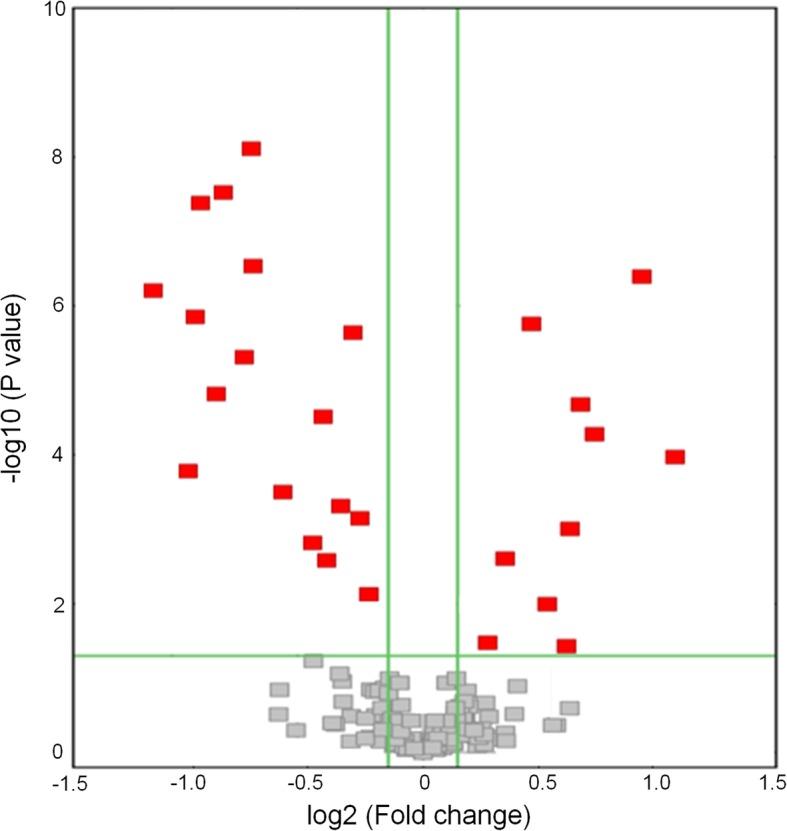
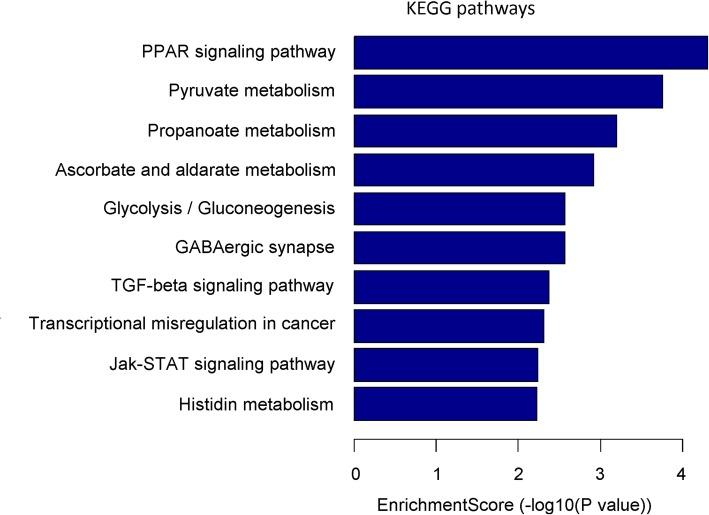
To investigate the alterations of microRNA profiling in negative lens-induced myopia (NLIM) guinea pigs and to explore the regulatory role of microRNAs in the occurrence and the development of myopia, we first established the NLIM guinea pig model after induction for 2 weeks. Further, we isolated sclera to purify total messenger RNA (mRNA) in both NLIM and NLIM fellow sclera. Using next generation sequencing technique and bioinformatics analysis, we identified the differentially expressed microRNAs in NLIM guinea pigs, performed the bioinformatics annotation for the differentially expressed microRNAs, and validated the expression of differentially expressed microRNAs. As a result, we successfully established an NLIM model in guinea pigs, identified 27 differentially expressed microRNAs in NLIM guinea pig sclera, including 10 upregulated and 17 downregulated microRNAs. The KEGG annotation showed the main signaling pathways were closely associated with PPAR signaling, pyruvate and propanoate metabolisms, and TGF-beta signaling pathways.
CONCLUSIONS
Our findings indicate that the development of myopia is mainly involved in the disorder of metabolic processes in NLIM guinea pigs. The PPAR signaling, pyruvate and propanoate metabolism pathways may play roles in the development of myopia.
背景
近视是全球最常见的视力缺陷之一。microRNAs 可以调控靶基因的表达,影响疾病的发生。
结果
为了研究负透镜诱导性近视(NLIM)豚鼠中 microRNA 谱的变化,并探讨 microRNAs 在近视发生和发展中的调控作用,我们首先在诱导 2 周后建立了 NLIM 豚鼠模型。进一步,我们从 NLIM 和 NLIM 对侧眼的巩膜中分离出总信使 RNA(mRNA)以进行纯化。利用下一代测序技术和生物信息学分析,我们鉴定了 NLIM 豚鼠中差异表达的 microRNAs,对差异表达的 microRNAs 进行了生物信息学注释,并验证了差异表达 microRNAs 的表达。结果,我们成功地在豚鼠中建立了 NLIM 模型,鉴定出 NLIM 豚鼠巩膜中 27 个差异表达的 microRNAs,包括 10 个上调和 17 个下调的 microRNAs。KEGG 注释显示,主要信号通路与 PPAR 信号、丙酮酸和丙酸代谢以及 TGF-β信号通路密切相关。
结论
我们的研究结果表明,近视的发展主要涉及 NLIM 豚鼠代谢过程的紊乱。PPAR 信号、丙酮酸和丙酸代谢途径可能在近视的发展中发挥作用。






 Zotero 插件