
老年恒河猴背外侧前额皮质神经元内经典补体级联反应起始 C1q 蛋白。
Classical complement cascade initiating C1q protein within neurons in the aged rhesus macaque dorsolateral prefrontal cortex.
机构信息
Department of Neuroscience, Yale University School of Medicine, 333 Cedar St., New Haven, CT, 06511, USA.
Department of Psychiatry, Yale University School of Medicine, New Haven, USA.
出版信息
J Neuroinflammation. 2020 Jan 6;17(1):8. doi: 10.1186/s12974-019-1683-1.
BACKGROUND
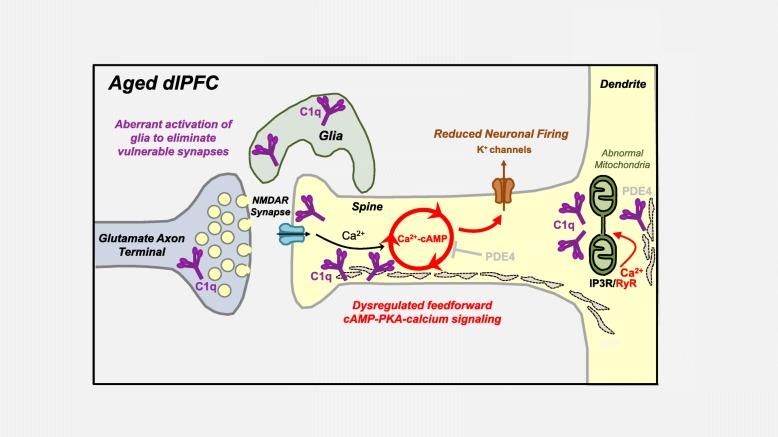
Cognitive impairment in schizophrenia, aging, and Alzheimer's disease is associated with spine and synapse loss from the dorsolateral prefrontal cortex (dlPFC) layer III. Complement cascade signaling is critical in driving spine loss and disease pathogenesis. Complement signaling is initiated by C1q, which tags synapses for elimination. C1q is thought to be expressed predominately by microglia, but its expression in primate dlPFC has never been examined. The current study assayed C1q levels in aging primate dlPFC and rat medial PFC (mPFC) and used immunoelectron microscopy (immunoEM), immunoblotting, and co-immunoprecipitation (co-IP) to reveal the precise anatomical distribution and interactions of C1q.
METHODS
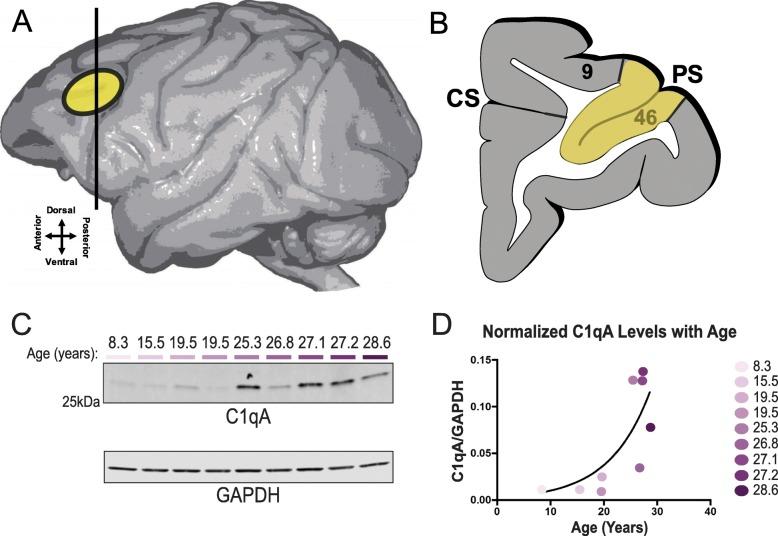
Age-related changes in C1q levels in rhesus macaque dlPFC and rat mPFC were examined using immunoblotting. High-spatial resolution immunoEM was used to interrogate the subcellular localization of C1q in aged macaque layer III dlPFC and aged rat layer III mPFC. co-IP techniques quantified protein-protein interactions for C1q and proteins associated with excitatory and inhibitory synapses in macaque dlPFC.
RESULTS
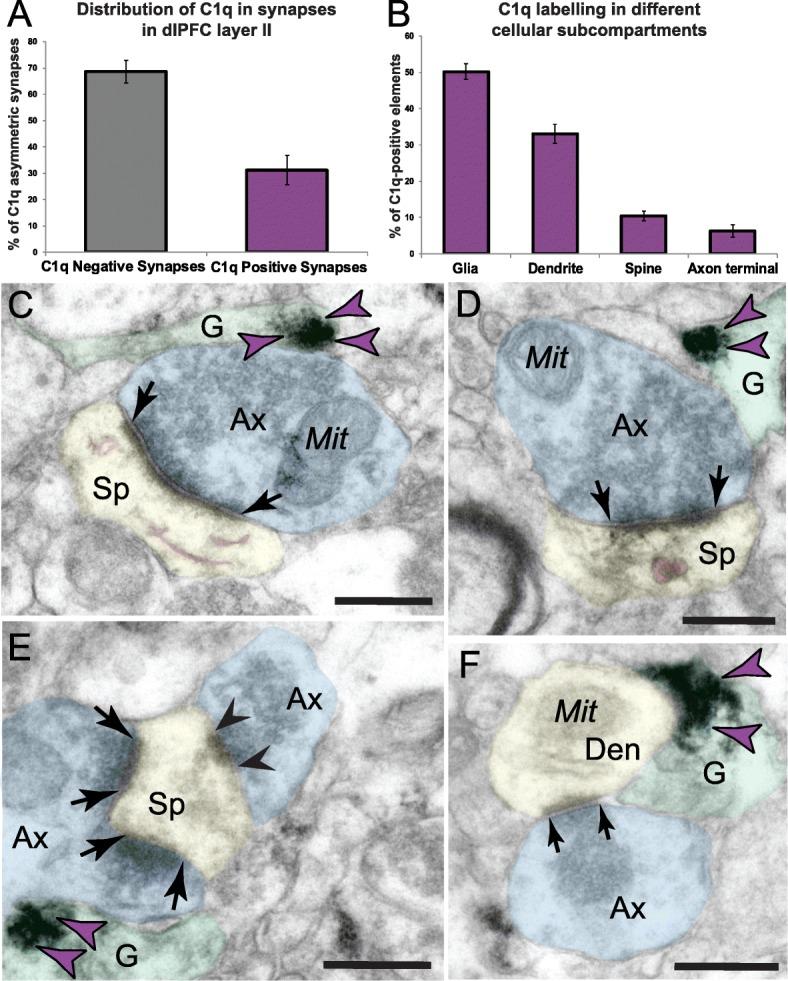
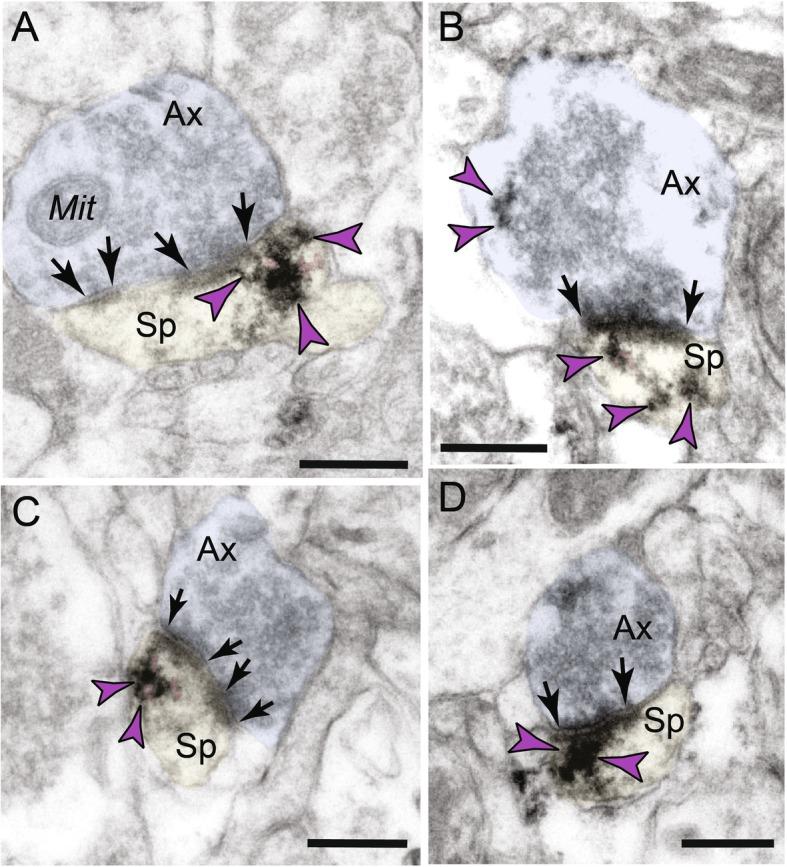
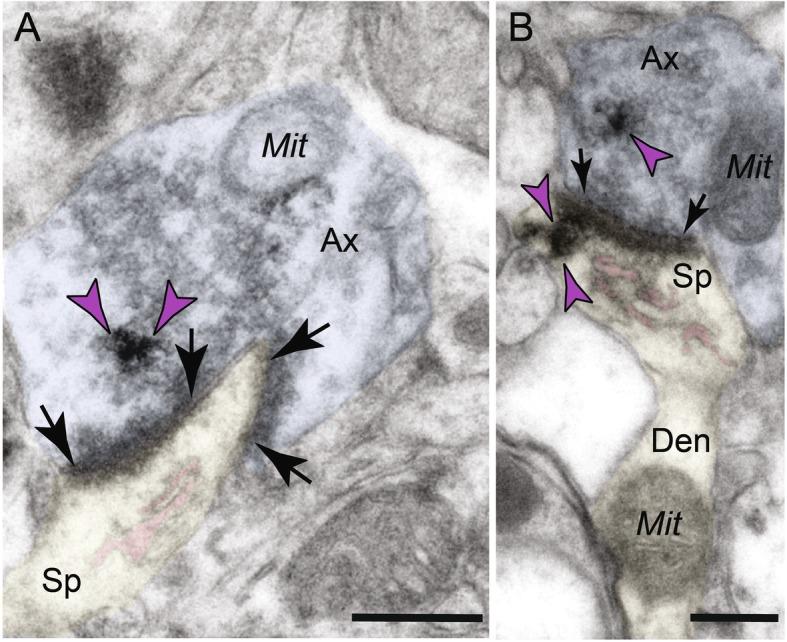
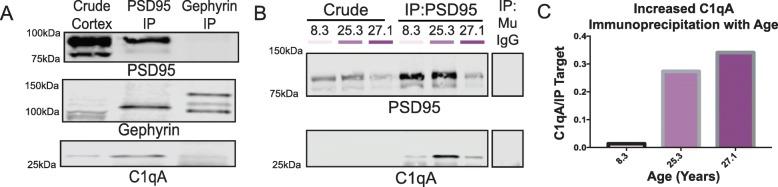
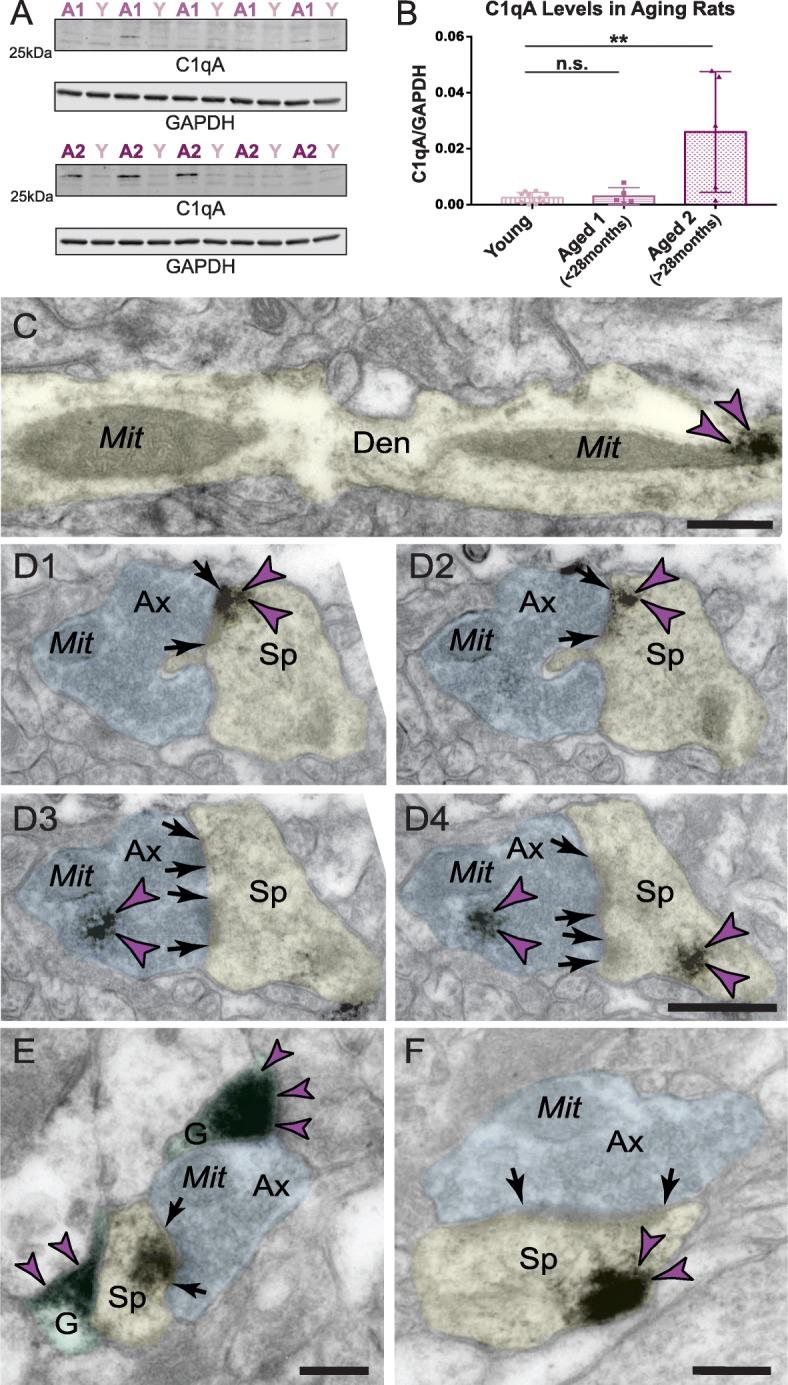
C1q levels were markedly increased in the aged macaque dlPFC. Ultrastructural localization found the expected C1q localization in glia, including those ensheathing synapses, but also revealed extensive localization within neurons. C1q was found near synapses, within terminals and in spines, but was also observed in dendrites, often near abnormal mitochondria. Similar analyses in aging rat mPFC corroborated the findings in rhesus macaques. C1q protein increasingly associated with PSD95 with age in macaque, consistent with its synaptic localization as evidenced by EM.
CONCLUSIONS
These findings reveal novel, intra-neuronal distribution patterns for C1q in the aging primate cortex, including evidence of C1q in dendrites. They suggest that age-related changes in the dlPFC may increase C1q expression and synaptic tagging for glial phagocytosis, a possible mechanism for age-related degeneration.
背景
精神分裂症、衰老和阿尔茨海默病患者的认知障碍与背外侧前额叶皮层(dlPFC)III 层的脊柱和突触丢失有关。补体级联信号在驱动脊柱丢失和疾病发病机制方面至关重要。补体信号由 C1q 启动,C1q 标记突触以进行消除。C1q 被认为主要由小胶质细胞表达,但它在灵长类动物 dlPFC 中的表达从未被检测到。本研究检测了衰老灵长类动物 dlPFC 和大鼠内侧前额叶皮层(mPFC)中 C1q 的水平,并使用免疫电子显微镜(immunoEM)、免疫印迹和免疫共沉淀(co-IP)来揭示 C1q 的精确解剖分布和相互作用。
方法
使用免疫印迹检测恒河猴 dlPFC 和大鼠 mPFC 中 C1q 水平随年龄的变化。使用高空间分辨率 immunoEM 检测老年猕猴 III 层 dlPFC 和老年大鼠 III 层 mPFC 中 C1q 的亚细胞定位。co-IP 技术量化了 C1q 与兴奋性和抑制性突触相关蛋白在猕猴 dlPFC 中的蛋白-蛋白相互作用。
结果
C1q 水平在老年猕猴 dlPFC 中显著增加。超微结构定位发现 C1q 预期的在胶质细胞中的定位,包括那些包裹突触的胶质细胞,但也在神经元内发现了广泛的定位。C1q 位于突触附近、末梢和棘突内,但也观察到在树突内,通常靠近异常线粒体。在衰老大鼠 mPFC 中的类似分析证实了恒河猴的发现。在猕猴中,C1q 蛋白随着年龄的增长与 PSD95 结合越来越多,这与 EM 证据一致,表明其突触定位。
结论
这些发现揭示了 C1q 在衰老灵长类动物皮层中的新的、神经元内分布模式,包括 C1q 在树突内的证据。它们表明 dlPFC 中的年龄相关变化可能会增加 C1q 的表达和突触标记,以进行小胶质细胞吞噬,这可能是与年龄相关退化的一种机制。

 Zotero 插件