
SLMP53-1 通过依赖 p53 的方式调节葡萄糖代谢和血管生成抑制肿瘤细胞生长。
SLMP53-1 Inhibits Tumor Cell Growth through Regulation of Glucose Metabolism and Angiogenesis in a P53-Dependent Manner.
机构信息
LAQV/REQUIMTE, Laboratόrio de Microbiologia, Departamento de Ciências Biolόgicas, Faculdade de Farmácia, Universidade do Porto, 4050-313 Porto, Portugal.
Research Institute for Medicines (iMed.ULisboa), Faculty of Pharmacy, Universidade de Lisboa, 1649-003 Lisboa, Portugal.
出版信息
Int J Mol Sci. 2020 Jan 17;21(2):596. doi: 10.3390/ijms21020596.
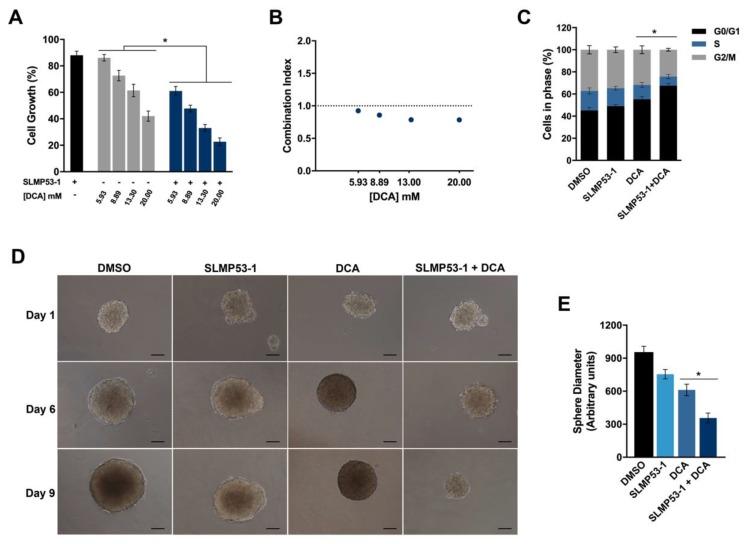
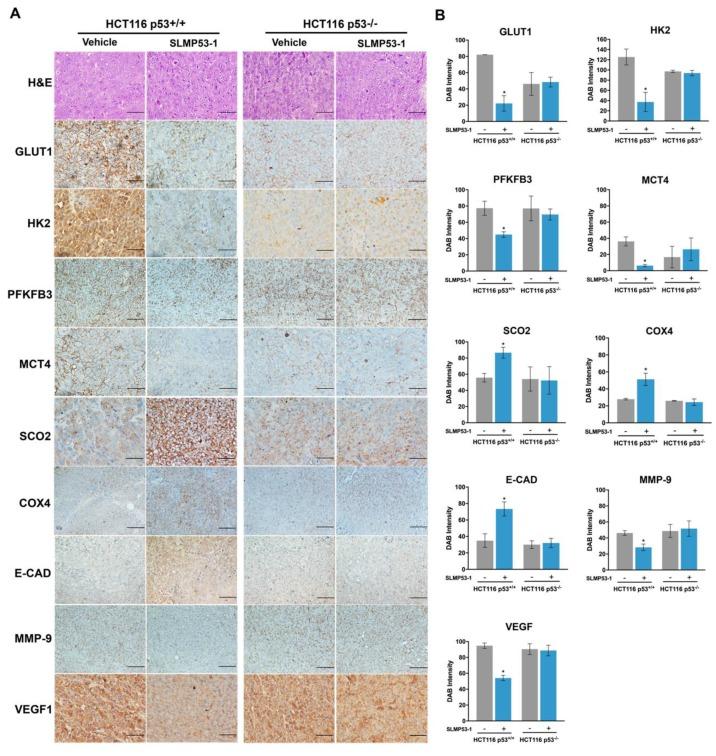
The Warburg effect is an emerging hallmark of cancer, which has the tumor suppressor p53 as its major regulator. Herein, we unveiled that p53 activation by ()-tryptophanol-derived oxazoloisoindolinone (SLMP53-1) mediated the reprograming of glucose metabolism in cancer cells and xenograft human tumor tissue, interfering with angiogenesis and migration. Particularly, we showed that SLMP53-1 regulated glycolysis by downregulating glucose transporter 1 (GLUT1), hexokinase-2 (HK2), and phosphofructokinase-2 isoform 6-phosphofructo-2-kinase/fructose-2,6-biphosphatase-3 (PFKFB3) (key glycolytic enzymes), while upregulating the mitochondrial markers synthesis of cytochrome oxidase 2 (SCO2), cytochrome oxidase subunit 4 (COX4), and OXPHOS mitochondrial complexes. SLMP53-1 also downregulated the monocarboxylate transporter 4 (MCT4), causing the subsequent reduction of lactate export by cancer cells. Besides the acidification of the extracellular environment, SLMP53-1 further increased E-cadherin and reduced metalloproteinase-9 (MMP-9) expression levels in both cancer cells and xenograft human tumor tissue, which suggested the interference of SLMP53-1 in extracellular matrix remodeling and epithelial-to-mesenchymal transition. Consistently, SLMP53-1 depleted angiogenesis, decreasing endothelial cell tube formation and vascular endothelial growth factor (VEGF) expression levels. SLMP53-1 also exhibited synergistic growth inhibitory activity in combination with the metabolic modulator dichloroacetic acid. These data reinforce the promising application of the p53-activating agent SLMP53-1 in cancer therapy, by targeting p53-mediated pathways of growth and dissemination.
沃伯格效应是癌症的一个新兴标志,其主要调节因子是肿瘤抑制因子 p53。在此,我们揭示了()-色氨酸衍生的恶唑并异吲哚啉酮(SLMP53-1)激活 p53,可介导癌细胞和异种移植人肿瘤组织葡萄糖代谢的重编程,干扰血管生成和迁移。特别是,我们表明 SLMP53-1 通过下调葡萄糖转运蛋白 1 (GLUT1)、己糖激酶-2 (HK2) 和磷酸果糖激酶-2 同工型 6-磷酸果糖-2-激酶/果糖-2,6-二磷酸酶-3 (PFKFB3)(关键糖酵解酶)来调节糖酵解,同时上调线粒体标志物细胞色素氧化酶 2 (SCO2)、细胞色素氧化酶亚基 4 (COX4) 和 OXPHOS 线粒体复合物的合成。SLMP53-1 还下调单羧酸转运蛋白 4 (MCT4),导致癌细胞随后减少乳酸的外排。除了细胞外环境的酸化外,SLMP53-1 还进一步增加了癌细胞和异种移植人肿瘤组织中 E-钙黏蛋白的表达水平,降低了基质金属蛋白酶-9 (MMP-9) 的表达水平,表明 SLMP53-1 干扰了细胞外基质重塑和上皮-间充质转化。一致地,SLMP53-1 耗尽血管生成,减少内皮细胞管形成和血管内皮生长因子 (VEGF) 的表达水平。SLMP53-1 与代谢调节剂二氯乙酸联合使用也表现出协同的生长抑制活性。这些数据通过靶向 p53 介导的生长和扩散途径,强化了激活 p53 的 SLMP53-1 在癌症治疗中的应用前景。

 Zotero 插件