
多中心、双盲、随机、假刺激对照的 10 kHz 高频脊髓刺激治疗慢性神经性腰痛的研究(MODULATE-LBP):研究方案。
Multicentre, double-blind, randomised, sham-controlled trial of 10 khz high-frequency spinal cord stimulation for chronic neuropathic low back pain (MODULATE-LBP): a trial protocol.
机构信息
Pain Management & Neuromodulation Centre, St Thomas' Hospital, Westminster Bridge Road, SE1 7EH, London, UK.
Guys & St. Thomas NHS Foundation Trust, London, UK.
出版信息
Trials. 2020 Jan 28;21(1):111. doi: 10.1186/s13063-019-3831-4.
INTRODUCTION
Chronic neuropathic low back pain (CNLBP) is a debilitating condition in which established medical treatments seldom alleviate symptoms. Evidence demonstrates that high-frequency 10 kHz spinal cord stimulation (SCS) reduces pain and improves health-related quality of life in patients with failed back surgery syndrome (FBSS), but evidence of this effect is limited in individuals with CNLBP who have not had surgery. The aim of this multicentre randomised trial is to assess the clinical and cost-effectiveness of 10 kHz SCS for this population.
METHODS
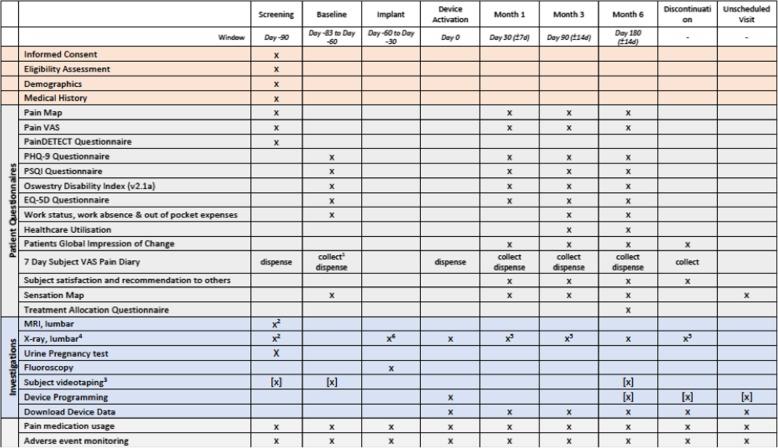
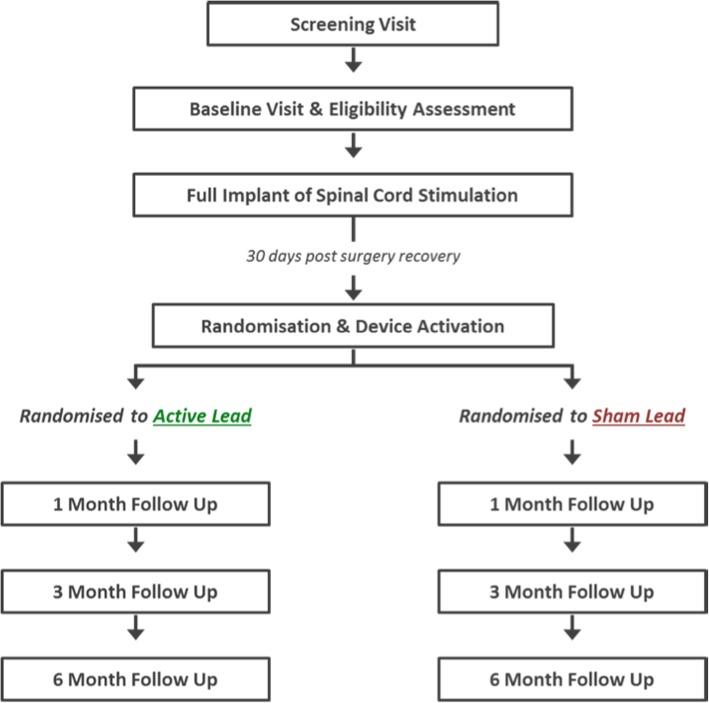
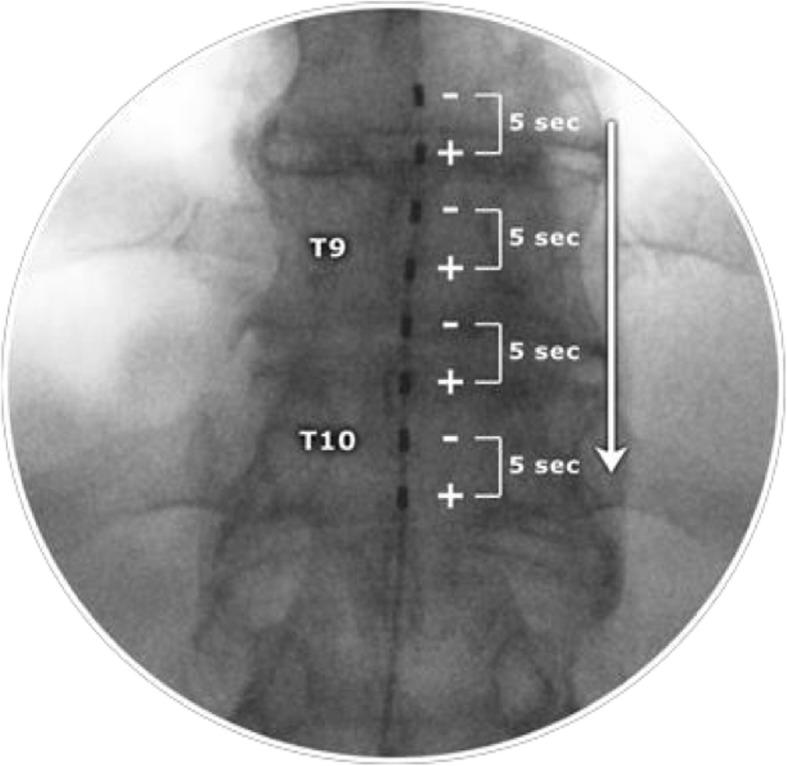
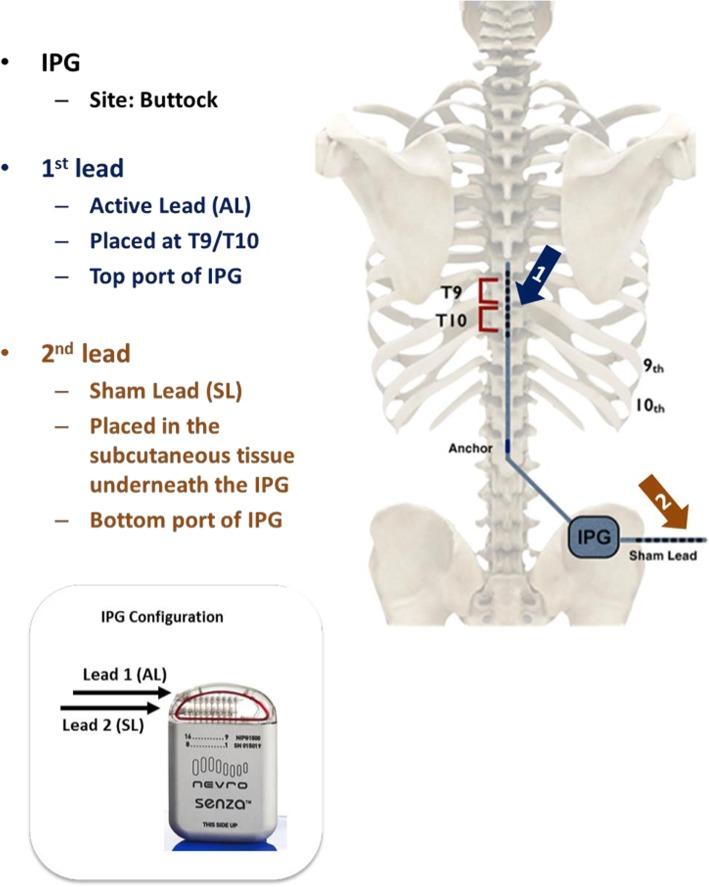
This is a multicentre, double-blind, randomised, sham-controlled trial with a parallel economic evaluation. A total of 96 patients with CNLBP who have not had spinal surgery will be implanted with an epidural lead and a sham lead outside the epidural space without a screening trial. Patients will be randomised 1:1 to 10 kHz SCS plus usual care (intervention group) or to sham 10 kHz SCS plus usual care (control group) after receiving the full implant. The SCS devices will be programmed identically using a cathodal cascade. Participants will use their handheld programmer to alter the intensity of the stimulation as per routine practice. The primary outcome will be a 7-day daily pain diary. Secondary outcomes include the Oswestry Disability Index, complications, EQ-5D-5 L, and health and social care costs. Outcomes will be assessed at baseline (pre-randomisation) and at 1 month, 3 months and 6 months after device activation. The primary analyses will compare primary and secondary outcomes between groups at 6 months, while adjusting for baseline outcome scores. Incremental cost per quality-adjusted life year (QALY) will be calculated at 6 months and over the lifetime of the patient.
DISCUSSION
The outcomes of this trial will inform clinical practice and healthcare policy on the role of high-frequency 10 kHz SCS for use in patients with CNLBP who have not had surgery.
TRIAL REGISTRATION
Clinicaltrials.gov, NCT03470766. Registered on 20 March 2018.
DISCLAIMER
The views expressed here are those of the authors and not necessarily those of the NHS, the NIHR or the Department of Health. The NIHR had no role in the study design, writing of the manuscript or the decision to submit for publication.
ROLES AND RESPONSIBILITIES
AK, SP, DP, SW, RST, AC, SE, LM, RD and JF all contributed to the trial design and to securing trial funding. AK, JR, SP, DP, and SE are involved in the recruitment, the intervention and the follow-up. SW will perform data collection and analysis. RST will be responsible for the statistical analysis, and RD will be responsible for the health economic analysis. All authors read and approved the final manuscript.
简介
慢性神经性腰痛(CNLBP)是一种使人虚弱的疾病,其既定的医疗方法很少能缓解症状。有证据表明,高频 10 kHz 脊髓刺激(SCS)可减轻失败性脊柱手术后综合征(FBSS)患者的疼痛并改善其生活质量,但在未接受手术的 CNLBP 患者中,这种效果的证据有限。本多中心随机试验旨在评估高频 10 kHz SCS 对该人群的临床和成本效益。
方法
这是一项多中心、双盲、随机、假对照试验,并进行平行的经济评估。共有 96 名未接受过脊柱手术的 CNLBP 患者将接受硬膜外导联和硬膜外空间外的假导联植入,无需进行筛选试验。在接受完整植入物后,患者将以 1:1 的比例随机分为 10 kHz SCS 加常规护理(干预组)或假 10 kHz SCS 加常规护理(对照组)。SCS 设备将使用阴极级联以相同的方式编程。参与者将根据常规实践使用手持编程器来改变刺激的强度。主要结局将是为期 7 天的每日疼痛日记。次要结局包括 Oswestry 残疾指数、并发症、EQ-5D-5 L 和健康及社会护理成本。在设备激活后 1 个月、3 个月和 6 个月时评估基线(随机前)和基线后结局。主要分析将在 6 个月时比较两组的主要和次要结局,同时调整基线结局评分。将在 6 个月时和患者的终生计算每增加一个质量调整生命年(QALY)的增量成本。
讨论
该试验的结果将为高频 10 kHz SCS 在未接受手术的 CNLBP 患者中的使用提供临床实践和医疗保健政策依据。
试验注册
Clinicaltrials.gov,NCT03470766。于 2018 年 3 月 20 日注册。
免责声明
这里表达的观点是作者的观点,不一定是英国国家卫生服务体系、国家卫生与保健研究所或英国卫生部的观点。国家卫生与保健研究所对研究设计、手稿撰写或提交出版没有任何作用。
作用和责任
AK、SP、DP、SW、RST、AC、SE、LM、RD 和 JF 均为试验设计和试验资金提供了贡献。AK、JR、SP、DP 和 SE 参与了招募、干预和随访。SW 将进行数据收集和分析。RST 将负责统计分析,RD 将负责健康经济分析。所有作者均阅读并批准了最终手稿。
 Zotero 插件