
对特定阶段后代威胁的灵活反应。
Flexible responses to stage-specific offspring threats.
作者信息
Britton Sarah, Ballentine Barbara
机构信息
Western Carolina University Cullowhee North Carolina.
University of Arizona Tucson Arizona.
出版信息
Ecol Evol. 2019 Dec 21;10(1):93-103. doi: 10.1002/ece3.5832. eCollection 2020 Jan.
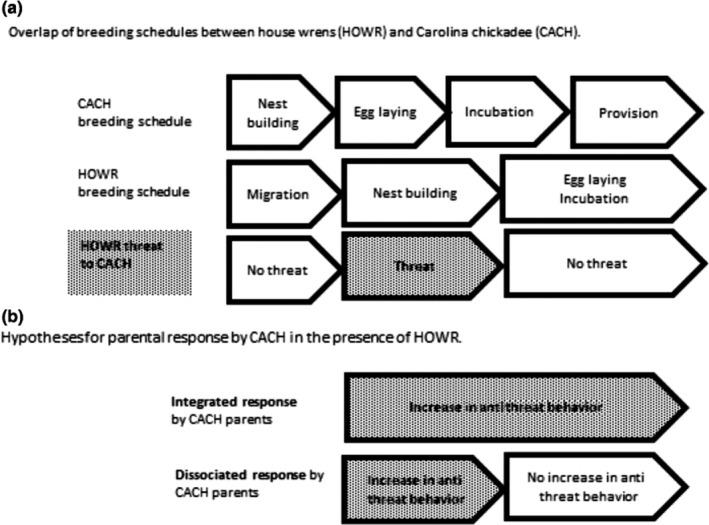
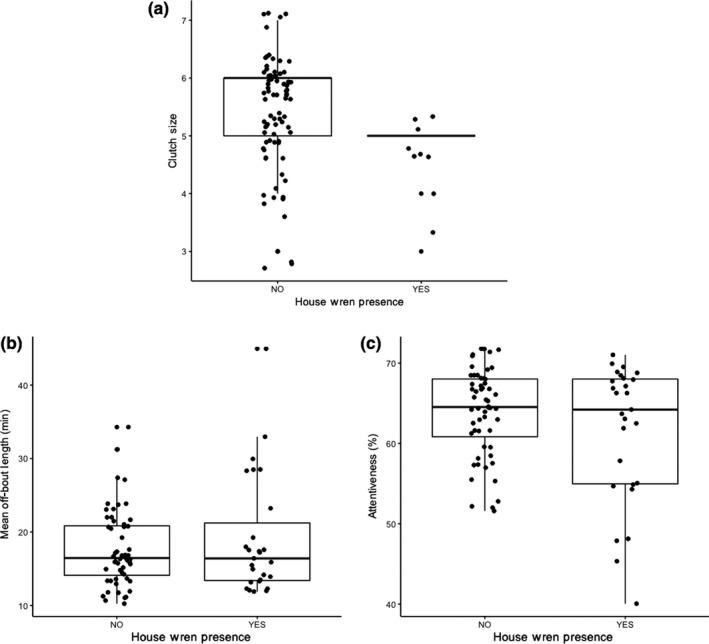
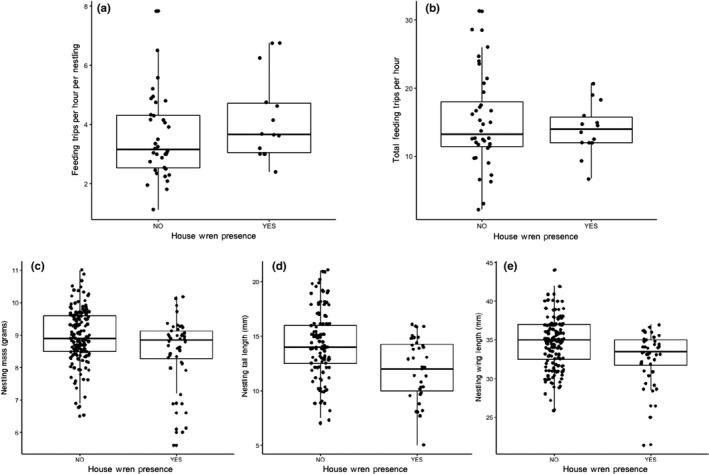
When caring for their young, parents must compensate for threats to offspring survival in a manner that maximizes their lifetime reproductive success. In birds, parents respond to offspring threats by altering reproductive strategies throughout the breeding attempt. Because altered reproductive strategies are costly, when threats to offspring are limited, parents should exhibit a limited response. However, it is unclear if response to offspring threat is the result of an integrated set of correlated changes throughout the breeding attempt or if responses are a flexible set of dissociable changes that are stage-specific. We test these hypotheses in a system where house wrens () compete for nesting cavities with Carolina chickadees () by usurping and destroying their nests during the early stage of the breeding attempt (the egg stage). Due to the specificity of the house wren threat, we can test whether parental responses to an offspring threat show flexibility and stage specificity or if parental strategies are an integrated and persistent response. We monitored nests in a natural population to compare life history traits of chickadees nesting in boxes that were in the presence of house wrens to chickadees nesting in boxes that did not overlap with house wrens. Carolina chickadees that nested near house wrens laid significantly smaller clutch sizes (early change in reproductive strategy) but did not alter nestling provisioning or nestling stage length (late change in reproductive strategy), suggesting that chickadees respond in a flexible and stage-specific manner to the threat of house wrens. By responding only when a threat is highest, parents minimize the cost of antithreat responses. Our study suggests that parents can respond in subtle and nuanced ways to offspring threats in the environment and specifically alter reproductive behaviors at the appropriate stage.
在照顾幼崽时,父母必须以一种能使其终身繁殖成功率最大化的方式来应对后代生存面临的威胁。在鸟类中,父母会在整个繁殖过程中通过改变繁殖策略来应对后代面临的威胁。由于改变繁殖策略代价高昂,当对后代的威胁有限时,父母的反应应该也有限。然而,尚不清楚对后代威胁的反应是整个繁殖过程中一系列相互关联变化的综合结果,还是一系列灵活且可分离的、具有阶段特异性的变化。我们在一个家鹪鹩()与卡罗来纳山雀()竞争筑巢洞穴的系统中检验这些假设,家鹪鹩会在繁殖尝试的早期阶段(产卵期)篡夺并破坏卡罗来纳山雀的巢穴。由于家鹪鹩威胁的特殊性,我们可以检验父母对后代威胁的反应是否具有灵活性和阶段特异性,或者父母的策略是否是一种综合且持续的反应。我们监测了一个自然种群中的巢穴,以比较在有或没有家鹪鹩的巢箱中筑巢的山雀的生活史特征。在靠近家鹪鹩处筑巢的卡罗来纳山雀产卵量显著减少(繁殖策略的早期变化),但并未改变雏鸟的食物供应或雏鸟期的长度(繁殖策略的后期变化),这表明山雀对家鹪鹩的威胁以一种灵活且具有阶段特异性的方式做出反应。通过仅在威胁最大时做出反应,父母将应对威胁的成本降至最低。我们的研究表明,父母能够以微妙而细致的方式应对环境中后代面临的威胁,并在适当阶段具体改变繁殖行为。

 Zotero 插件