
载于白蛋白中的肿瘤靶向化疗和光动力疗法用于增强抗肿瘤疗效。
Tumor Targeting Chemo- and Photodynamic Therapy Packaged in Albumin for Enhanced Anti-Tumor Efficacy.
机构信息
College of Chemical Engineering, Qingdao University of Science and Technology, Qingdao, Shandong 266042, People's Republic of China.
College of Chemistry, Fuzhou University, Fuzhou, Fujian 350118, People's Republic of China.
出版信息
Int J Nanomedicine. 2020 Jan 13;15:151-167. doi: 10.2147/IJN.S227144. eCollection 2020.
PURPOSE
Combination therapy for tumors is an important and promising strategy to improve therapeutic efficiency. This study aims at combining tumor targeting, chemo-, and photodynamic therapies to improve the anti-tumor performance.
PATIENTS AND METHODS
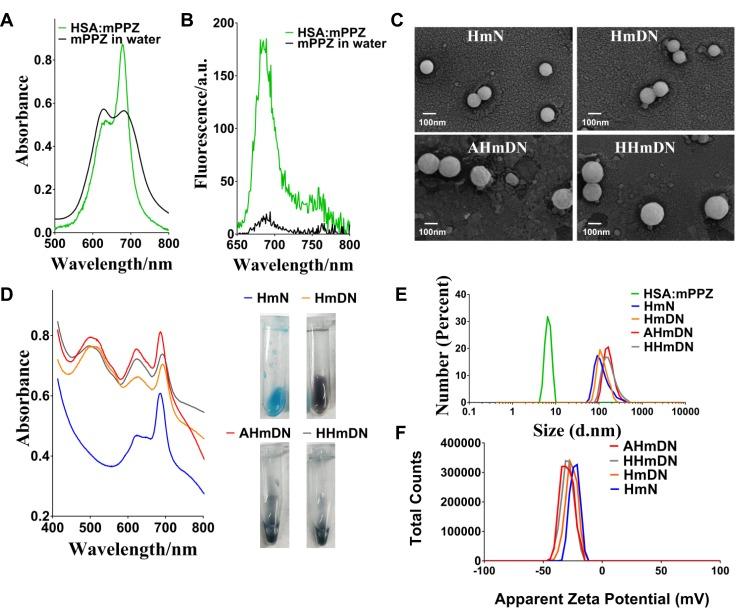
Human serum albumin (HSA), as a nontoxic and biodegradable drug carrier, was used to load hydrophobic photosensitizers (mono-substituted β-4-pyridyloxy phthalocyanine zinc, mPPZ) by a dilution-incubation-purification (DIP) strategy to form molecular complex HSA:mPPZ. This complex was cross-linked as nanoparticles, and then chemotherapy drug doxorubicin (DOX) was adsorbed into the nanoparticles to achieve combined photodynamic therapy and chemotherapy. Next, the surface of the obtained composite was modified by a tumor surface receptor (urokinase receptor) targeting agent (ATF-HSA) using a noncovalent method to obtain the final product (ATF-HSA@HSA:mPPZ:DOX nanoparticles, AHmDN).
RESULTS
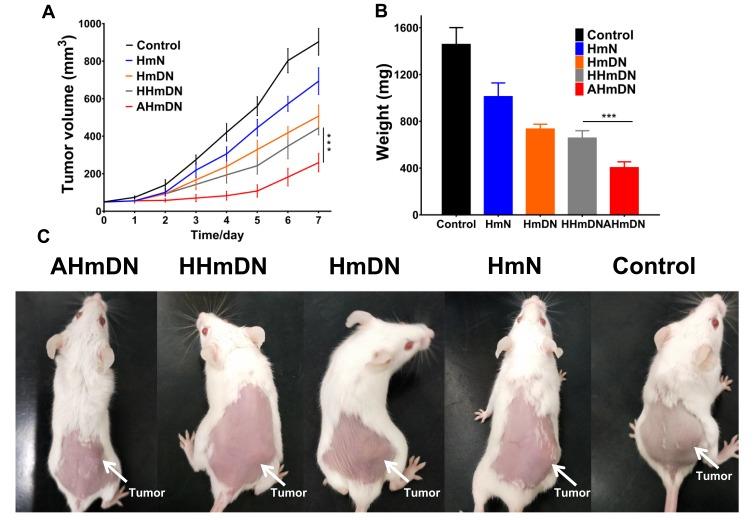
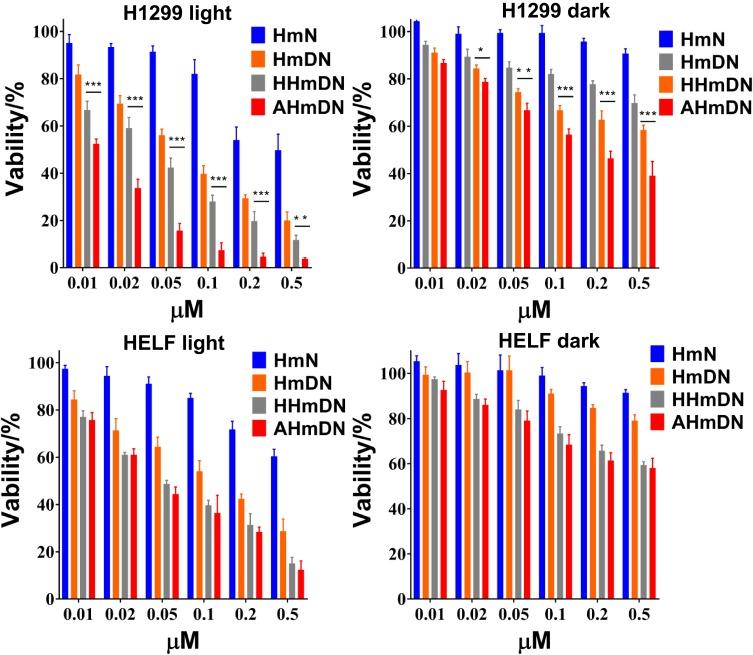
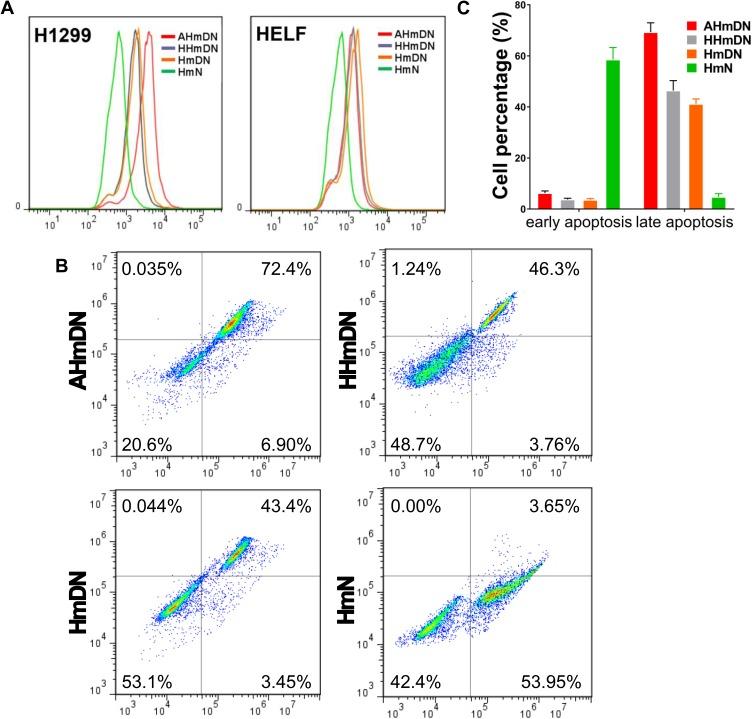
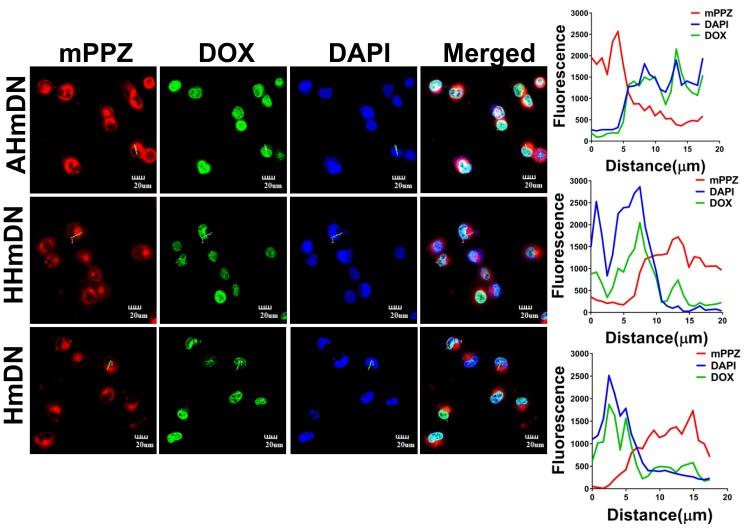
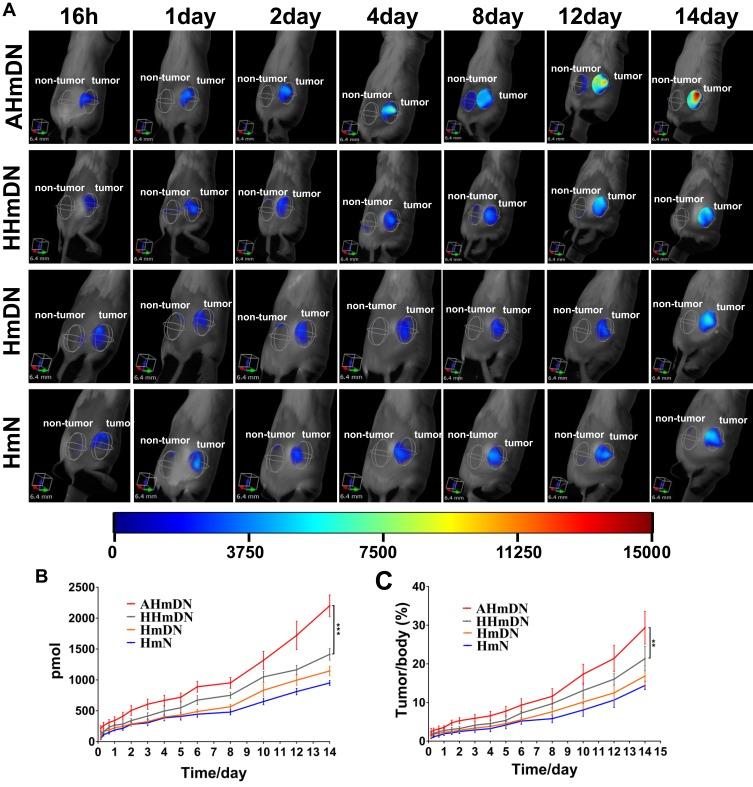
AHmDN exhibited strong stability, remarkable cytotoxicity and higher uptake to tumor cells. Cell imaging analysis indicated that DOX was separated from AHmDN and uniformly distributed in cell nucleus while mPPZ localized in cytoplasm. The PDT activity of all the samples had been confirmed by the detection of intracellular ROS. In animal experiments, AHmDN was demonstrated to have a prominent tumor-targeting effect using a 3D imaging system. In addition, the enhanced antitumor effect of AHmDN in tumor-bearing mice was also been observed. Importantly, the tumor-targeting effect of such nanoparticles lasted for about 14 days after one injection.
CONCLUSION
These albumin nanoparticles with combined functions of tumor targeting, chemotherapy and photodynamic therapy can highly enhance the anti-tumor effect. This drug delivery system can be applied to package other hydrophobic photosensitizers and chemotherapy drugs for improving therapeutic efficacy to tumors.
目的
肿瘤联合治疗是提高治疗效果的一种重要且有前景的策略。本研究旨在结合肿瘤靶向、化学和光动力疗法来提高抗肿瘤性能。
患者和方法
人血清白蛋白(HSA)作为一种无毒和可生物降解的药物载体,通过稀释-孵育-纯化(DIP)策略来负载疏水性光敏剂(单取代β-4-吡啶氧基邻苯二甲腈锌,mPPZ),形成分子复合物 HSA:mPPZ。该复合物交联形成纳米颗粒,然后将化疗药物阿霉素(DOX)吸附到纳米颗粒中,实现光动力治疗和化疗的联合。接下来,使用非共价方法通过肿瘤表面受体(尿激酶受体)靶向剂(ATF-HSA)对所得复合物的表面进行修饰,得到最终产物(ATF-HSA@HSA:mPPZ:DOX 纳米颗粒,AHmDN)。
结果
AHmDN 表现出很强的稳定性、显著的细胞毒性和更高的肿瘤细胞摄取率。细胞成像分析表明,DOX 从 AHmDN 中分离出来并均匀分布在细胞核中,而 mPPZ 则定位于细胞质中。通过检测细胞内 ROS 证实了所有样品的 PDT 活性。在动物实验中,使用 3D 成像系统证实了 AHmDN 具有显著的肿瘤靶向作用。此外,还观察到 AHmDN 在荷瘤小鼠中的抗肿瘤作用增强。重要的是,一次注射后,这些纳米颗粒的肿瘤靶向作用可持续约 14 天。
结论
这些具有肿瘤靶向、化疗和光动力治疗联合功能的白蛋白纳米颗粒可以显著增强抗肿瘤效果。这种药物递送系统可以用于包装其他疏水性光敏剂和化疗药物,以提高对肿瘤的治疗效果。

 Zotero 插件