
利用光片荧光显微镜研究小鼠视网膜细胞在空间和时间上的行为。
Mouse retinal cell behaviour in space and time using light sheet fluorescence microscopy.
机构信息
Center for Vascular Biology Research and Department of Pathology, Beth Israel Deaconess Medical Center, Harvard Medical School, Boston, United States.
The Beijer Laboratory, Department of Immunology, Genetics and Pathology, Uppsala University, Uppsala, Sweden.
出版信息
Elife. 2020 Feb 19;9:e49779. doi: 10.7554/eLife.49779.
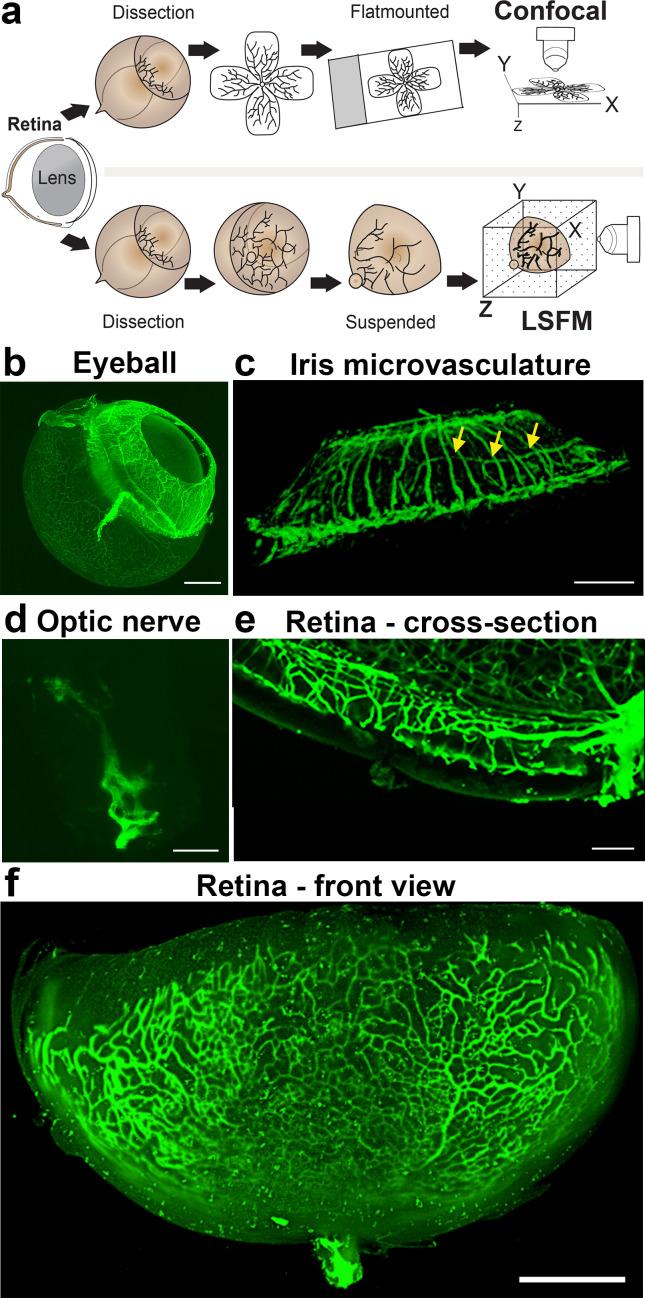
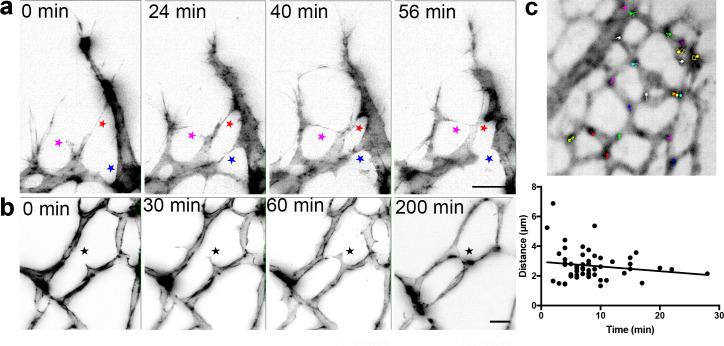
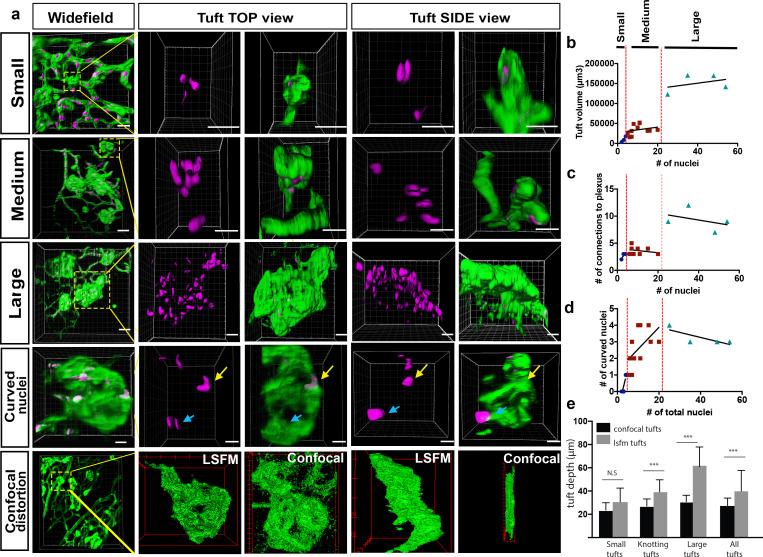
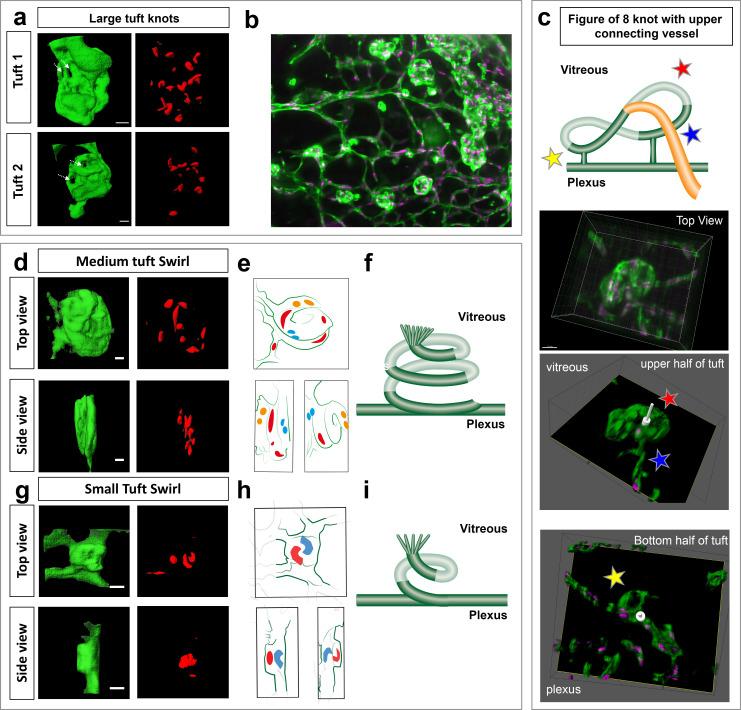
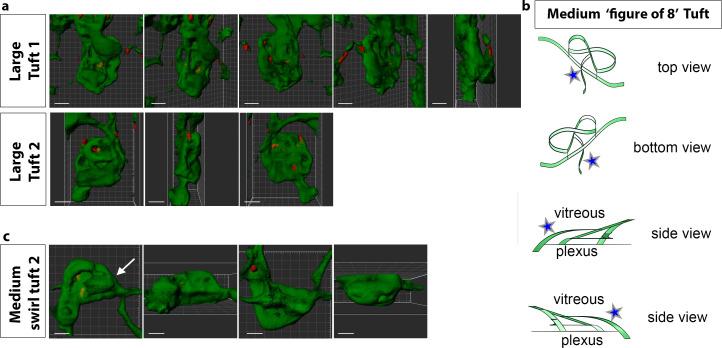
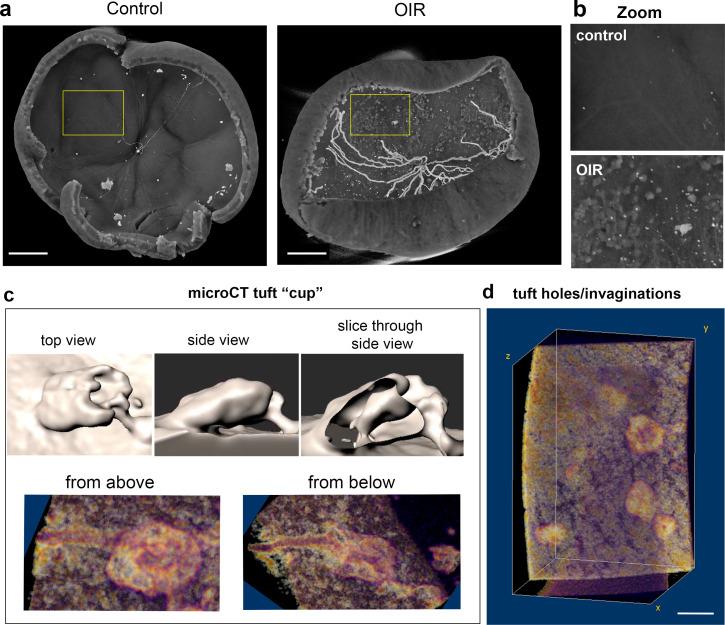
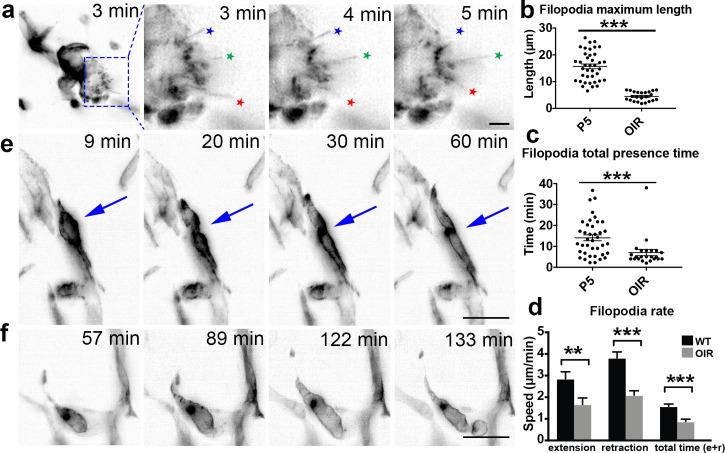
As the general population ages, more people are affected by eye diseases, such as retinopathies. It is therefore critical to improve imaging of eye disease mouse models. Here, we demonstrate that 1) rapid, quantitative 3D and 4D (time lapse) imaging of cellular and subcellular processes in the mouse eye is feasible, with and without tissue clearing, using light-sheet fluorescent microscopy (LSFM); 2) flat-mounting retinas for confocal microscopy significantly distorts tissue morphology, confirmed by quantitative correlative LSFM-Confocal imaging of vessels; 3) LSFM readily reveals new features of even well-studied eye disease mouse models, such as the oxygen-induced retinopathy (OIR) model, including a previously unappreciated 'knotted' morphology to pathological vascular tufts, abnormal cell motility and altered filopodia dynamics when live-imaged. We conclude that quantitative 3D/4D LSFM imaging and analysis has the potential to advance our understanding of the eye, in particular pathological, neurovascular, degenerative processes.
随着人口老龄化,越来越多的人受到眼病的影响,如视网膜病变。因此,提高眼病小鼠模型的成像质量至关重要。在这里,我们证明了:1)使用光片荧光显微镜(LSFM),无论是否进行组织透明化处理,均可快速、定量地对小鼠眼内的细胞和亚细胞过程进行 3D 和 4D(延时)成像;2)视网膜平铺用于共聚焦显微镜会显著扭曲组织形态,通过对血管进行定量相关的 LSFM-共聚焦成像得到证实;3)LSFM 可以轻松揭示即使是研究得很好的眼病小鼠模型的新特征,例如氧诱导的视网膜病变(OIR)模型,包括以前未被注意到的病理性血管丛的“打结”形态、异常的细胞运动和活细胞成像时丝状伪足动力学的改变。我们得出结论,定量 3D/4D LSFM 成像和分析有可能促进我们对眼睛的理解,特别是病理性、神经血管、退行性过程。



 Zotero 插件