
南非 HVTN 100 中健康 HIV 阴性成人 12 个月加强免疫后的安全性和免疫应答:ALVAC-HIV(vCP2438)和二价 C 亚型 gp120/MF59 疫苗的随机双盲安慰剂对照试验。
Safety and immune responses after a 12-month booster in healthy HIV-uninfected adults in HVTN 100 in South Africa: A randomized double-blind placebo-controlled trial of ALVAC-HIV (vCP2438) and bivalent subtype C gp120/MF59 vaccines.
机构信息
Perinatal HIV Research Unit, Faculty of Health Sciences, University of the Witwatersrand, Johannesburg, South Africa.
Vaccine and Infectious Disease Division, Fred Hutchinson Cancer Research Center, Seattle, Washington, United States of America.
出版信息
PLoS Med. 2020 Feb 24;17(2):e1003038. doi: 10.1371/journal.pmed.1003038. eCollection 2020 Feb.
BACKGROUND
HVTN 100 evaluated the safety and immunogenicity of an HIV subtype C pox-protein vaccine regimen, investigating a 12-month booster to extend vaccine-induced immune responses.
METHODS AND FINDINGS
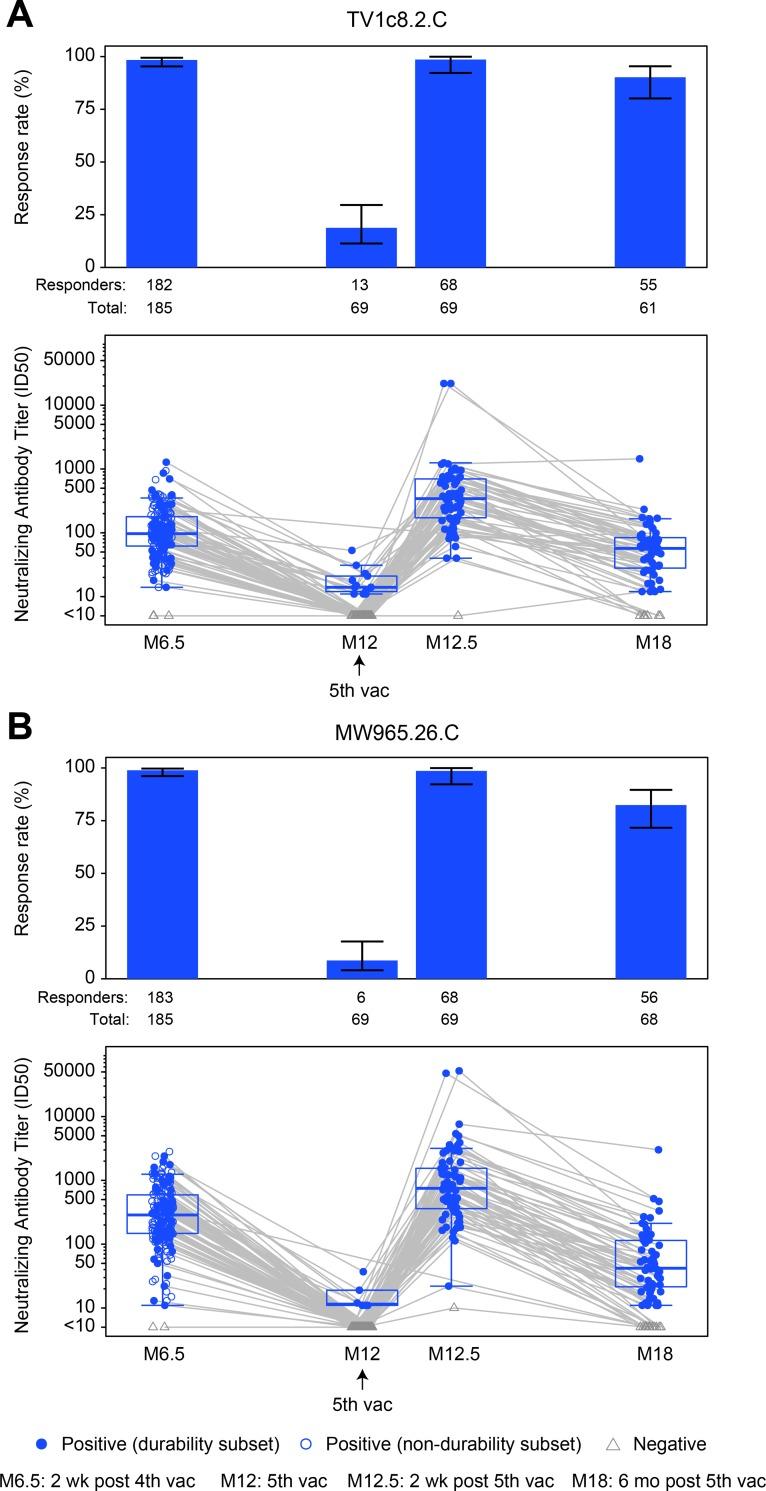
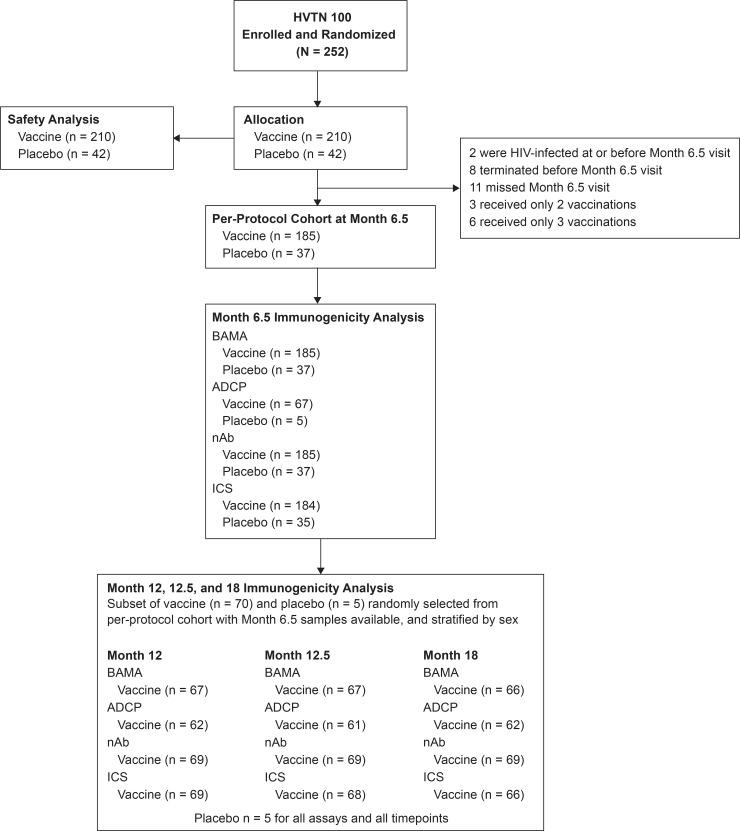
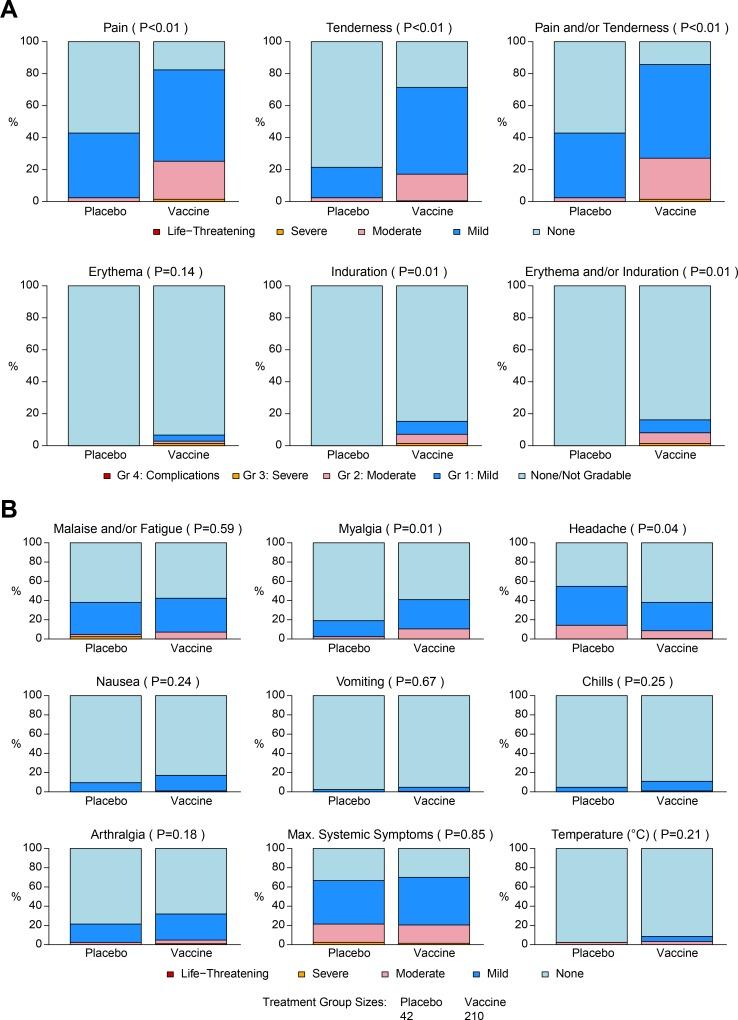
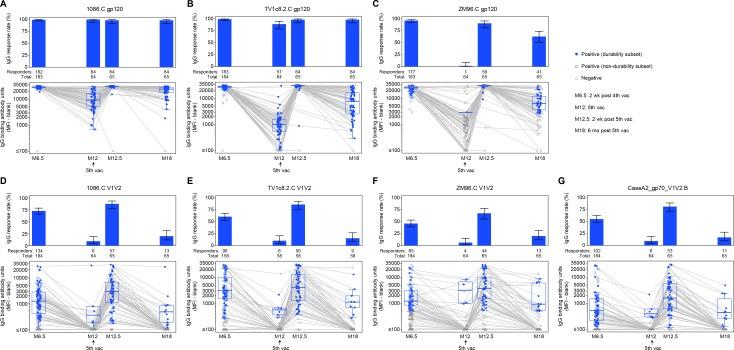
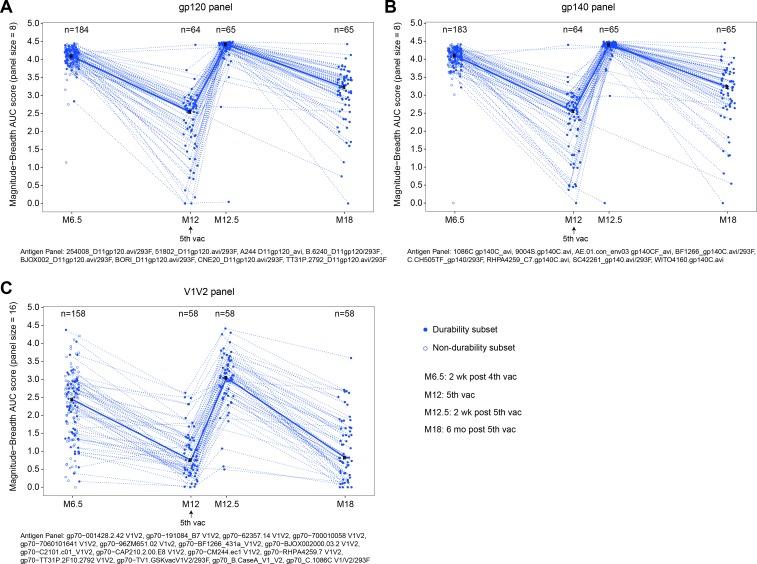
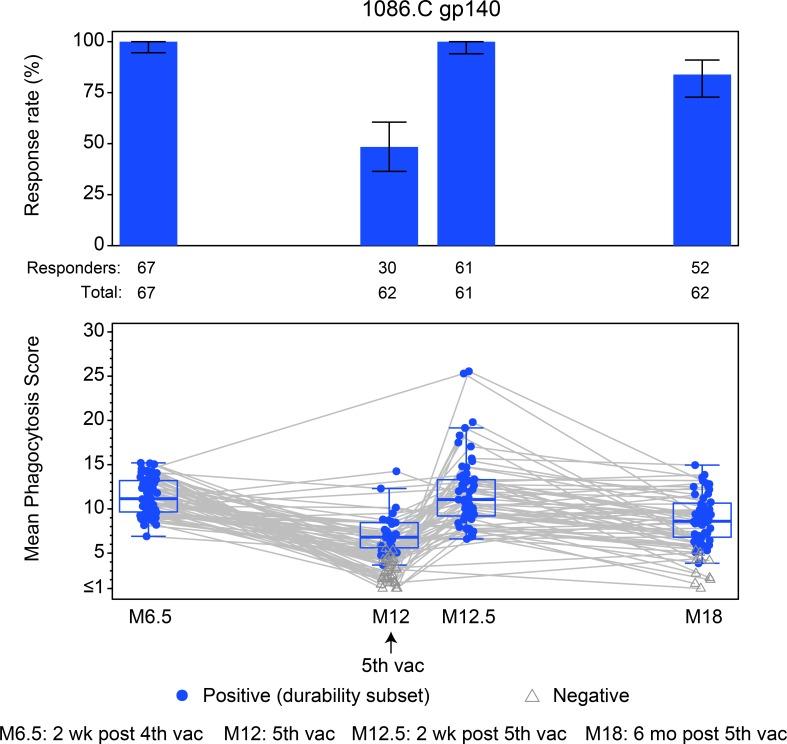
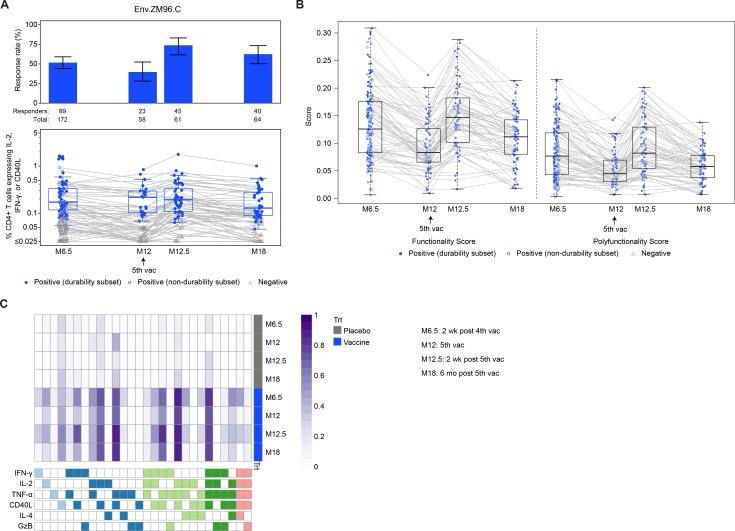
A phase 1-2 randomized double-blind placebo-controlled trial enrolled 252 participants (210 vaccine/42 placebo; median age 23 years; 43% female) between 9 February 2015 and 26 May 2015. Vaccine recipients received ALVAC-HIV (vCP2438) alone at months 0 and 1 and with bivalent subtype C gp120/MF59 at months 3, 6, and 12. Antibody (IgG, IgG3 binding, and neutralizing) and CD4+ T-cell (expressing interferon-gamma, interleukin-2, and CD40 ligand) responses were evaluated at month 6.5 for all participants and at months 12, 12.5, and 18 for a randomly selected subset. The primary analysis compared IgG binding antibody (bAb) responses and CD4+ T-cell responses to 3 vaccine-matched antigens at peak (month 6.5 versus 12.5) and durability (month 12 versus 18) timepoints; IgG responses to CaseA2_gp70_V1V2.B, a primary correlate of risk in RV144, were also compared at these same timepoints. Secondary and exploratory analyses compared IgG3 bAb responses, IgG bAb breadth scores, neutralizing antibody (nAb) responses, antibody-dependent cellular phagocytosis, CD4+ polyfunctionality responses, and CD4+ memory sub-population responses at the same timepoints. Vaccines were generally safe and well tolerated. During the study, there were 2 deaths (both in the vaccine group and both unrelated to study products). Ten participants became HIV-infected during the trial, 7% (3/42) of placebo recipients and 3% (7/210) of vaccine recipients. All 8 serious adverse events were unrelated to study products. Less waning of immune responses was seen after the fifth vaccination than after the fourth, with higher antibody and cellular response rates at month 18 than at month 12: IgG bAb response rates to 1086.C V1V2, 21.0% versus 9.7% (difference = 11.3%, 95% CI = 0.6%-22.0%, P = 0.039), and ZM96.C V1V2, 21.0% versus 6.5% (difference = 14.5%, 95% CI = 4.1%-24.9%, P = 0.004). IgG bAb response rates to all 4 primary V1V2 antigens were higher 2 weeks after the fifth vaccination than 2 weeks after the fourth vaccination: 87.7% versus 75.4% (difference = 12.3%, 95% CI = 1.7%-22.9%, P = 0.022) for 1086.C V1V2, 86.0% versus 63.2% (difference = 22.8%, 95% CI = 9.1%-36.5%, P = 0.001) for TV1c8.2.C V1V2, 67.7% versus 44.6% (difference = 23.1%, 95% CI = 10.4%-35.7%, P < 0.001) for ZM96.C V1V2, and 81.5% versus 60.0% (difference = 21.5%, 95% CI = 7.6%-35.5%, P = 0.002) for CaseA2_gp70_V1V2.B. IgG bAb response rates to the 3 primary vaccine-matched gp120 antigens were all above 90% at both peak timepoints, with no significant differences seen, except a higher response rate to ZM96.C gp120 at month 18 versus month 12: 64.5% versus 1.6% (difference = 62.9%, 95% CI = 49.3%-76.5%, P < 0.001). CD4+ T-cell response rates were higher at month 18 than month 12 for all 3 primary vaccine-matched antigens: 47.3% versus 29.1% (difference = 18.2%, 95% CI = 2.9%-33.4%, P = 0.021) for 1086.C, 61.8% versus 38.2% (difference = 23.6%, 95% CI = 9.5%-37.8%, P = 0.001) for TV1.C, and 63.6% versus 41.8% (difference = 21.8%, 95% CI = 5.1%-38.5%, P = 0.007) for ZM96.C, with no significant differences seen at the peak timepoints. Limitations were that higher doses of gp120 were not evaluated, this study was not designed to investigate HIV prevention efficacy, and the clinical significance of the observed immunological effects is uncertain.
CONCLUSIONS
In this study, a 12-month booster of subtype C pox-protein vaccines restored immune responses, and slowed response decay compared to the 6-month vaccination.
TRIAL REGISTRATION
ClinicalTrials.gov NCT02404311. South African National Clinical Trials Registry (SANCTR number: DOH--27-0215-4796).
背景
HVTN 100 评估了 HIV 亚型 C 痘病毒蛋白疫苗方案的安全性和免疫原性,研究了 12 个月的加强针以延长疫苗诱导的免疫反应。
方法和发现
一项 1 期-2 期随机、双盲、安慰剂对照试验招募了 252 名参与者(210 名疫苗/42 名安慰剂;中位年龄 23 岁;43%为女性),招募时间为 2015 年 2 月 9 日至 2015 年 5 月 26 日。疫苗接种者在 0 月和 1 月单独接受 ALVAC-HIV(vCP2438),在 3 月、6 月和 12 月接受双价亚型 C gp120/MF59。所有参与者在第 6.5 个月评估抗体(IgG、IgG3 结合抗体和中和抗体)和 CD4+T 细胞(表达干扰素-γ、白细胞介素-2 和 CD40 配体)反应,随机选择的亚组在第 12、12.5 和 18 个月评估。主要分析比较了 3 种疫苗匹配抗原在峰值(第 6.5 个月与第 12.5 个月)和耐久性(第 12 个月与第 18 个月)时间点的结合抗体(bAb)反应和 CD4+T 细胞反应;还比较了在同一时间点对 CaseA2_gp70_V1V2.B 的 IgG 反应,CaseA2_gp70_V1V2.B 是 RV144 中主要的风险相关因素。次要和探索性分析比较了 IgG3 bAb 反应、IgG bAb 广度评分、中和抗体(nAb)反应、抗体依赖性细胞吞噬作用、CD4+多效性反应和 CD4+记忆亚群反应在同一时间点的情况。疫苗通常是安全和耐受良好的。在研究期间,有 2 人死亡(均在疫苗组,且均与研究产品无关)。10 名参与者在试验期间感染了 HIV,安慰剂组为 7%(3/42),疫苗组为 3%(7/210)。所有 8 例严重不良事件均与研究产品无关。与第四次接种相比,第五次接种后免疫反应的衰减较少,第 18 个月的抗体和细胞反应率高于第 12 个月:1086.C V1V2 的 IgG bAb 反应率为 21.0%比 9.7%(差异=11.3%,95%CI=0.6%-22.0%,P=0.039),ZM96.C V1V2 的 IgG bAb 反应率为 21.0%比 6.5%(差异=14.5%,95%CI=4.1%-24.9%,P=0.004)。第五次接种后两周,所有 4 种主要 V1V2 抗原的 IgG bAb 反应率均高于第四次接种后两周:1086.C V1V2 的 IgG bAb 反应率为 87.7%比 75.4%(差异=12.3%,95%CI=1.7%-22.9%,P=0.022),TV1c8.2.C V1V2 的 IgG bAb 反应率为 86.0%比 63.2%(差异=22.8%,95%CI=9.1%-36.5%,P=0.001),ZM96.C V1V2 的 IgG bAb 反应率为 67.7%比 44.6%(差异=23.1%,95%CI=10.4%-35.7%,P<0.001),CaseA2_gp70_V1V2.B 的 IgG bAb 反应率为 81.5%比 60.0%(差异=21.5%,95%CI=7.6%-35.5%,P=0.002)。三种主要疫苗匹配的 gp120 抗原的 IgG bAb 反应率在峰值时间点均高于 90%,除了 ZM96.C gp120 在第 18 个月的反应率高于第 12 个月外,没有观察到显著差异:64.5%比 1.6%(差异=62.9%,95%CI=49.3%-76.5%,P<0.001)。与第 12 个月相比,所有三种主要疫苗匹配抗原的 CD4+T 细胞反应率在第 18 个月均升高:1086.C 的 CD4+T 细胞反应率为 47.3%比 29.1%(差异=18.2%,95%CI=2.9%-33.4%,P=0.021),TV1.C 的 CD4+T 细胞反应率为 61.8%比 38.2%(差异=23.6%,95%CI=9.5%-37.8%,P=0.001),ZM96.C 的 CD4+T 细胞反应率为 63.6%比 41.8%(差异=21.8%,95%CI=5.1%-38.5%,P=0.007),但在峰值时间点没有观察到显著差异。局限性在于没有评估更高剂量的 gp120,本研究不是为了研究 HIV 预防功效而设计的,观察到的免疫效应的临床意义尚不确定。
结论
在这项研究中,12 个月的 C 型痘病毒蛋白疫苗加强针恢复了免疫反应,并与 6 个月的疫苗接种相比减缓了反应的衰减。
试验注册
ClinicalTrials.gov NCT02404311. 南非国家临床试验登记处(SANCTR 编号:DOH--27-0215-4796)。

 Zotero 插件