
miR-15 抑制物通过靶向 NLRX1 调控 NLRP3 炎性小体保护 H9c2 细胞对抗柯萨奇病毒 B3 诱导的心肌损伤。
Inhibition of microRNA-15 protects H9c2 cells against CVB3-induced myocardial injury by targeting NLRX1 to regulate the NLRP3 inflammasome.
机构信息
1Laboratory Dept., Second Hospital of Shanxi Medical University, Taiyuan, 030001 Shanxi China.
2Laboratory Dept., Shaanxi Provincial People's Hospital, No. 256, West Youyi Road, Xi'an, 710068 Shaanxi province China.
出版信息
Cell Mol Biol Lett. 2020 Feb 19;25:6. doi: 10.1186/s11658-020-00203-2. eCollection 2020.
BACKGROUND
Viral myocarditis (VMC) is a type of cardiac inflammation that is generally caused by coxsackievirus B3 (CVB3) infection. Several MicroRNAs (miRNAs) are known to play crucial roles in VMC pathogenesis. MiR-15 is reportedly associated with myocardial injury, inflammatory responses and viral infection. Whether miR-15 affects the occurrence and development of VMC remains largely unknown. The roles of miR-15 and their underlying mechanisms in CVB3-stimulated H9c2 cells were assessed in this study.
METHODS
We infected H9c2 cells with CVB3 to establish a VMC cellular model. We then determined the effects of miR-15 inhibition on three cardiomyocyte injury markers: lactate dehydrogenase (LDH), creatine kinase-MB (CK-MB) and cardiac troponin-I (cTn-I). The impact on CVB3-induced cell apoptosis and pro-inflammatory cytokines was also investigated. The effects of miR-15 inhibition on NLRP3 inflammasome activation were also assessed. The target relationship between miR-15 and NOD-like receptor X1 (NLRX1) was determined using a luciferase reporter assay.
RESULTS
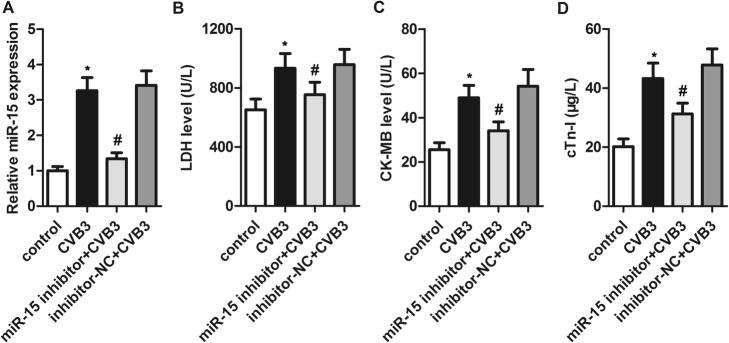
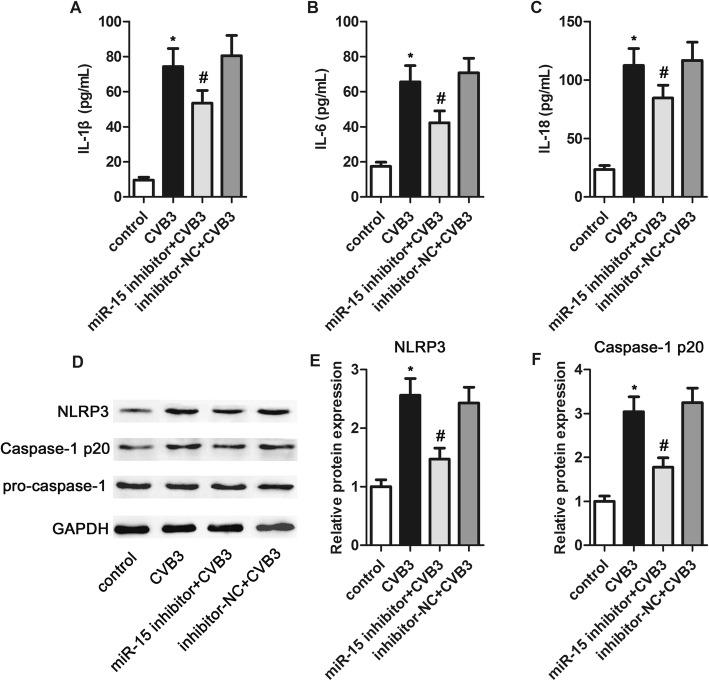
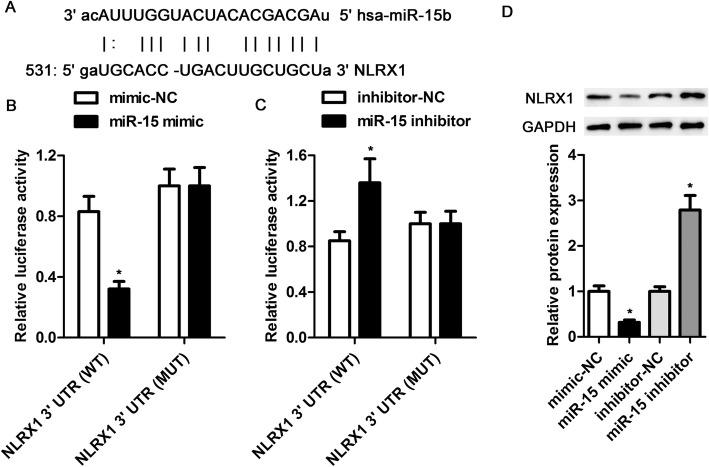
MiR-15 expression was significantly upregulated in H9c2 cells after CVB3 infection. Inhibition of miR-15 significantly decreased the CVB3-induced levels of LDH, CK-MB and cTn-I. It also elevated cell viability, reduced CVB3-induced cell apoptosis and decreased the generation of the interleukins IL-1β, IL-6 and IL-18. Furthermore, we determined that miR-15 inhibition suppressed NLRP3 inflammasome activation by downregulating NLRP3 and caspase-1 p20 expression. We found a direct target relationship between miR-15 and NLRX1. Additionally, inhibition of NLRX1 reversed the protective effects of miR-15 inhibition against CVB3-induced myocardial cell injury by regulating the NLRP3 inflammasome.
CONCLUSION
Our results indicate that miR-15 inhibition alleviates CVB3-induced myocardial inflammation and cell injury. This may be partially due to NLRX1-mediated NLRP3 inflammasome inactivation.
背景
病毒性心肌炎(VMC)是一种心脏炎症,通常由柯萨奇病毒 B3(CVB3)感染引起。有几种 MicroRNAs(miRNAs)被认为在 VMC 发病机制中发挥关键作用。据报道,miR-15 与心肌损伤、炎症反应和病毒感染有关。miR-15 是否影响 VMC 的发生和发展仍知之甚少。本研究评估了 miR-15 及其在 CVB3 刺激的 H9c2 细胞中的潜在机制。
方法
我们用 CVB3 感染 H9c2 细胞建立 VMC 细胞模型。然后,我们测定了 miR-15 抑制对三种心肌损伤标志物(乳酸脱氢酶(LDH)、肌酸激酶-MB(CK-MB)和心肌肌钙蛋白 I(cTn-I))的影响。还研究了其对 CVB3 诱导的细胞凋亡和促炎细胞因子的影响。还评估了 miR-15 抑制对 NLRP3 炎性小体激活的影响。通过荧光素酶报告基因测定确定 miR-15 与 NOD 样受体 X1(NLRX1)之间的靶关系。
结果
CVB3 感染后 H9c2 细胞中 miR-15 的表达明显上调。miR-15 抑制显著降低了 CVB3 诱导的 LDH、CK-MB 和 cTn-I 水平。它还提高了细胞活力,降低了 CVB3 诱导的细胞凋亡并减少了白细胞介素 IL-1β、IL-6 和 IL-18 的产生。此外,我们确定 miR-15 抑制通过下调 NLRP3 和 caspase-1 p20 表达抑制 NLRP3 炎性小体激活。我们发现 miR-15 与 NLRX1 之间存在直接的靶关系。此外,抑制 NLRX1 通过调节 NLRP3 炎性小体逆转了 miR-15 抑制对 CVB3 诱导的心肌细胞损伤的保护作用。
结论
我们的结果表明,miR-15 抑制减轻了 CVB3 诱导的心肌炎症和细胞损伤。这可能部分是由于 NLRX1 介导的 NLRP3 炎性小体失活所致。



 Zotero 插件