
家禽养殖场是造成药物环境污染的潜在源头。
Poultry Farms as a Potential Source of Environmental Pollution by Pharmaceuticals.
机构信息
Department of Environmental Toxicology, Faculty of Health Sciences with Institute of Maritime and Tropical Medicine, Medical University of Gdansk, Debowa 23A St., 80-204 Gdańsk, Poland.
Department of Pharmaceutical Chemistry, Faculty of Pharmacy, Medical University of Gdansk, Hallera 107 St., 80-416 Gdansk, Poland.
出版信息
Molecules. 2020 Feb 25;25(5):1031. doi: 10.3390/molecules25051031.
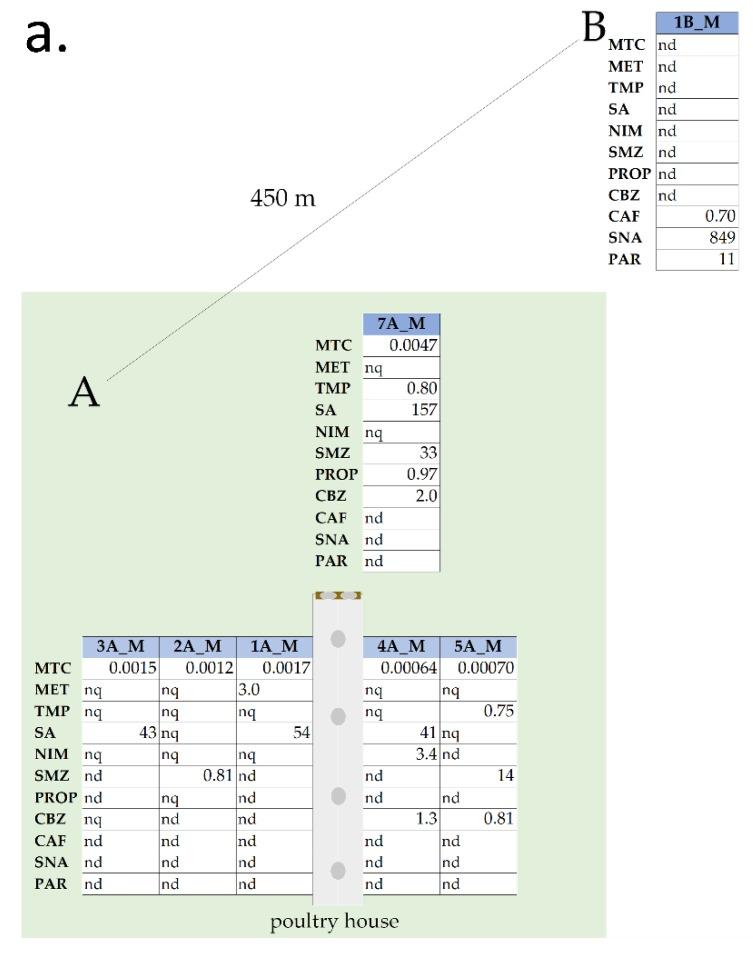
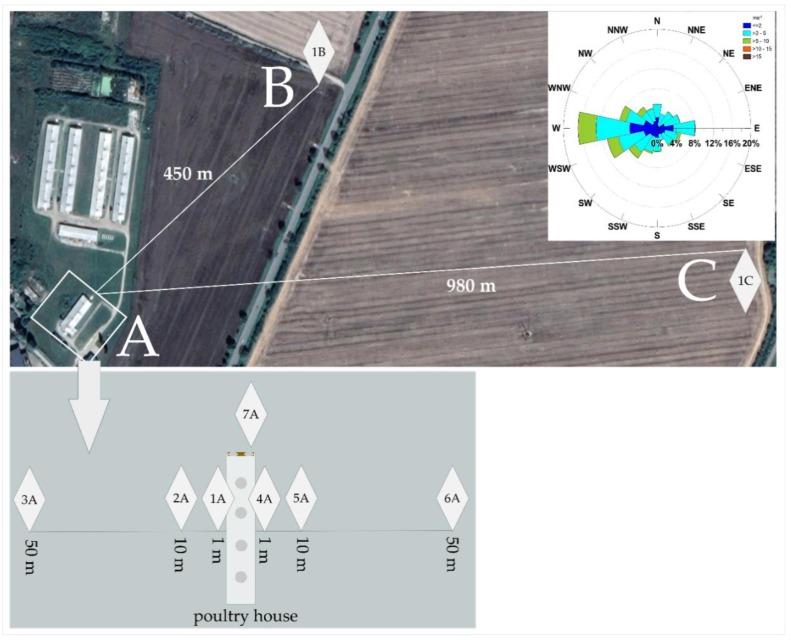
Industrial poultry breeding is associated with the need to increase productivity while maintaining low meat prices. Little is known about its impact on the environment of soil pollution by pharmaceuticals. Breeders routinely use veterinary pharmaceuticals for therapeutic and preventive purposes. The aim of this work was to determine the influence of mass breeding of hens on the soil contamination with 26 pharmaceuticals and caffeine. During two seasons-winter and summer 2019-15 soil samples were collected. Liquid extraction was used to isolate analytes from samples. Extracts were analyzed using ultra-high performance liquid chromatography coupled with tandem mass spectrometry detection (UPLC-MS/MS). The results showed the seasonal changes in pharmaceutical presence in analyzed soil samples. Ten pharmaceuticals (metoclopramide, sulphanilamide, salicic acid, metoprolol, sulphamethazine, nimesulide, carbamazepine, trimethoprim, propranolol, and paracetamol) and caffeine were determined in soil samples collected in March, and five pharmaceuticals (metoclopramide, sulphanilamide, sulphamethazine, carbamazepine, sulfanilamid) in soil samples collected in July. The highest concentrations were observed for sulphanilamide, in a range from 746.57 ± 15.61 ng/g d.w to 3518.22 ± 146.05 ng/g d.w. The level of bacterial resistance to antibiotics did not differ between samples coming from intensive breeding farm surroundings and the reference area, based on antibiotic resistance of 85 random bacterial isolates.
工业家禽养殖需要提高生产力,同时保持低肉类价格。然而,其对土壤中药物污染的环境影响却鲜为人知。养殖户经常出于治疗和预防目的而使用兽医药物。本工作旨在确定大规模养殖母鸡对 26 种药物和咖啡因污染土壤的影响。在 2019 年冬季和夏季两个季节,采集了 15 个土壤样本。采用液相萃取法从样品中分离分析物。使用超高效液相色谱-串联质谱检测法(UPLC-MS/MS)对提取物进行分析。结果表明,在所分析的土壤样本中,药物的存在具有季节性变化。在 3 月采集的土壤样本中检测到 10 种药物(甲氧氯普胺、磺胺、水杨酸、美托洛尔、磺胺嘧啶、尼美舒利、卡马西平、甲氧苄啶、普萘洛尔和扑热息痛)和咖啡因,在 7 月采集的土壤样本中检测到 5 种药物(甲氧氯普胺、磺胺、磺胺嘧啶、卡马西平、磺胺)。磺胺的浓度最高,范围为 746.57±15.61ng/g dw 至 3518.22±146.05ng/g dw。基于 85 个随机细菌分离株的抗生素耐药性,来自密集养殖农场周围环境和参考区域的样本的细菌对抗生素的耐药性没有差异。
 Zotero 插件