
人类中外群父权的高比率表明了人类生殖策略的多样性。
High rate of extrapair paternity in a human population demonstrates diversity in human reproductive strategies.
机构信息
University of California, Los Angeles, Los Angeles, CA, USA.
University of Missouri, Columbia, MO, USA.
出版信息
Sci Adv. 2020 Feb 19;6(8):eaay6195. doi: 10.1126/sciadv.aay6195. eCollection 2020 Feb.
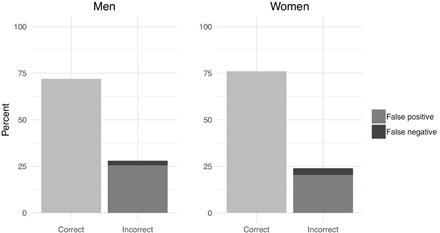
Among nonhuman species, social monogamy is rarely accompanied by complete fidelity. Evolutionary theory predicts that the rate of extrapair paternity (EPP) should vary according to socioecological conditions. In humans, however, geneticists contend that EPP is negligible and relatively invariable. This conclusion is based on a limited set of studies, almost all of which describe European-descent groups. Using a novel, double-blind method designed in collaboration with a community of Himba pastoralists, we find that the rate of EPP in this population is 48%, with 70% of couples having at least one EPP child. Both men and women were very accurate at detecting cases of EPP. These data suggest that the range of variation in EPP across human populations is substantially greater than previously thought. We further show that a high rate of EPP can be accompanied by high paternity confidence, which highlights the importance of disaggregating EPP from the notion of "cuckoldry."
在非人类物种中,社交一夫一妻制很少伴随着完全的忠诚。进化理论预测,婚外亲子(EPP)的比率应该根据社会生态条件而变化。然而,遗传学家认为 EPP 可以忽略不计,而且相对不变。这一结论基于一组有限的研究,几乎所有这些研究都描述了欧洲血统群体。我们使用一种新颖的、与辛巴游牧民族合作设计的双盲方法,发现该人群中 EPP 的比率为 48%,其中 70%的夫妇至少有一个 EPP 孩子。男性和女性在检测 EPP 案例时都非常准确。这些数据表明,EPP 在人类群体中的变化范围比以前认为的要大得多。我们进一步表明,高比率的 EPP 可以伴随着高的亲权信心,这突出了将 EPP 与“戴绿帽子”的概念区分开来的重要性。

 Zotero 插件