
高灵敏度的丙酮酸传感器揭示了线粒体丙酮酸载体 MPC 的代谢途径调节作用。
A highly responsive pyruvate sensor reveals pathway-regulatory role of the mitochondrial pyruvate carrier MPC.
机构信息
Centro de Estudios Científicos-CECs, Valdivia, Chile.
Universidad Austral de Chile, Valdivia, Chile.
出版信息
Elife. 2020 Mar 6;9:e53917. doi: 10.7554/eLife.53917.
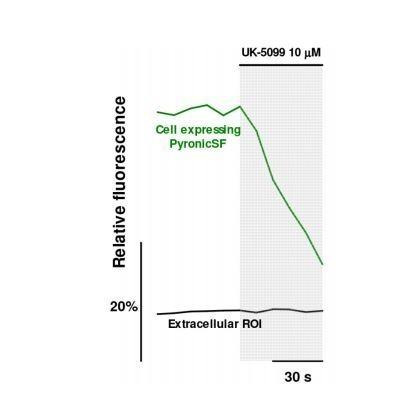
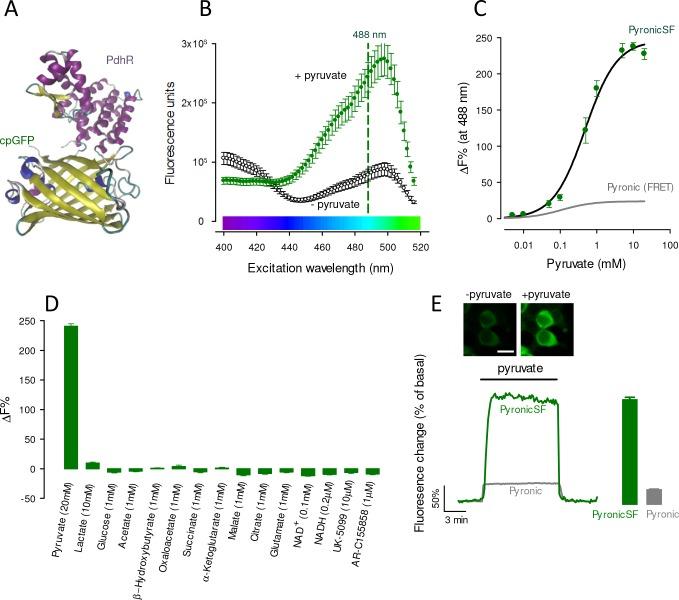
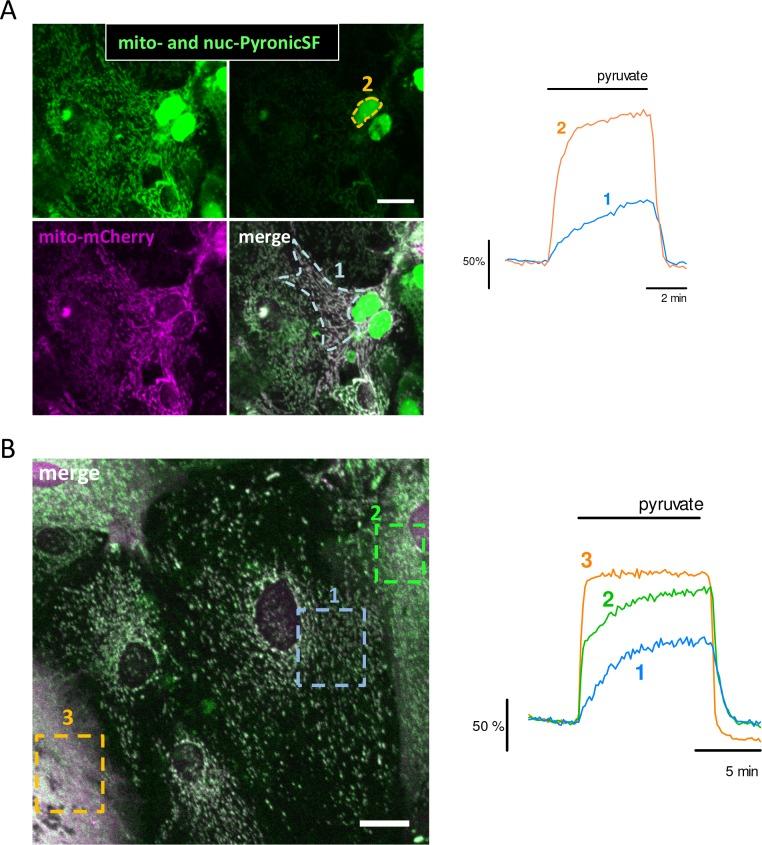
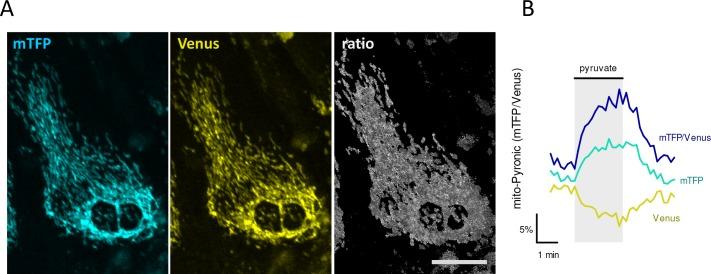
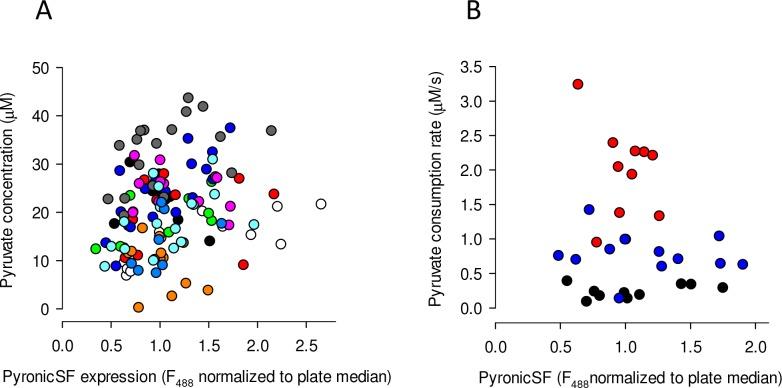
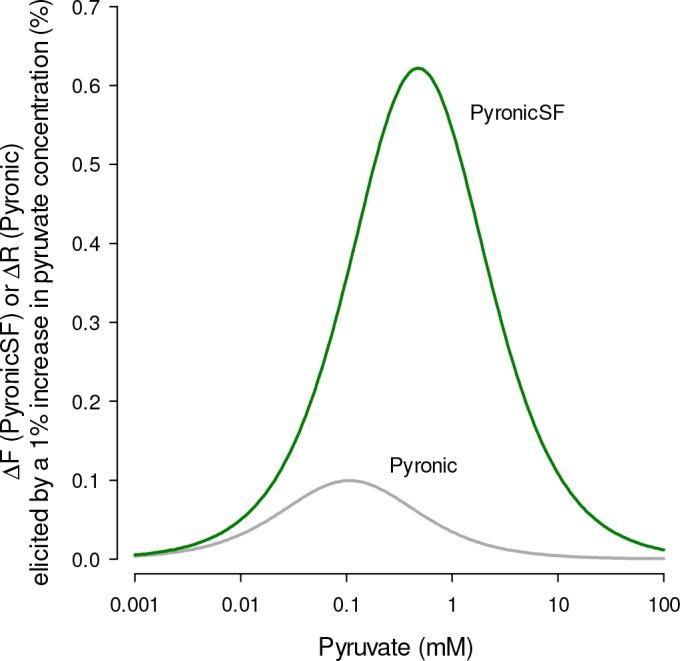
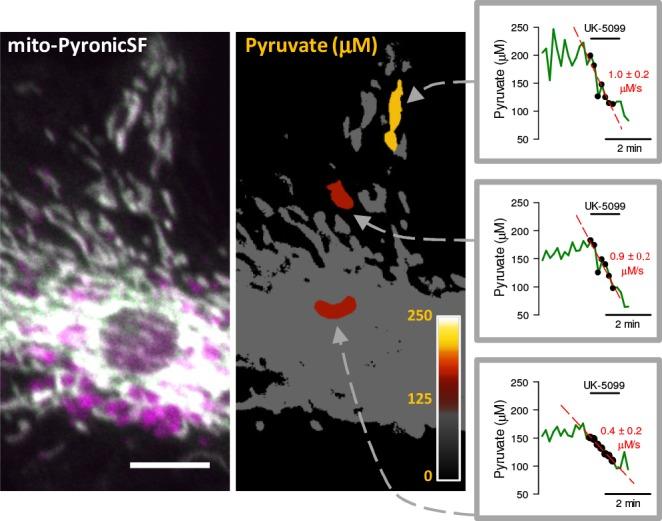
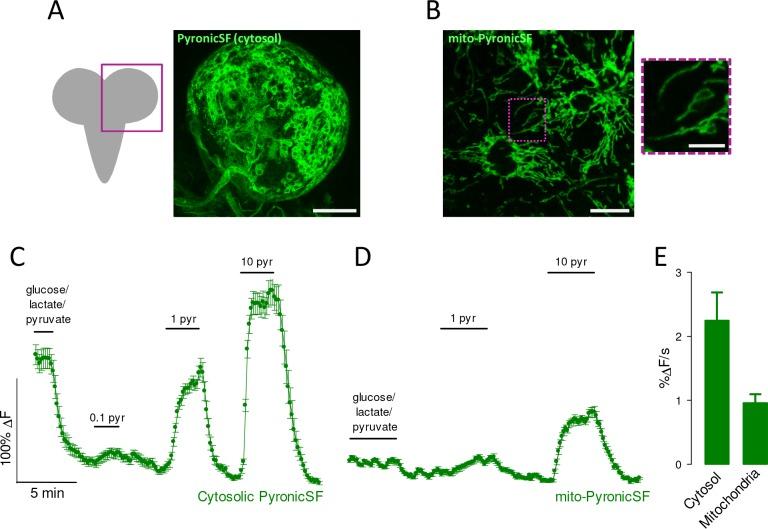
Mitochondria generate ATP and building blocks for cell growth and regeneration, using pyruvate as the main substrate. Here we introduce PyronicSF, a user-friendly GFP-based sensor of improved dynamic range that enables real-time subcellular quantitation of mitochondrial pyruvate transport, concentration and flux. We report that cultured mouse astrocytes maintain mitochondrial pyruvate in the low micromolar range, below cytosolic pyruvate, which means that the mitochondrial pyruvate carrier MPC is poised to exert ultrasensitive control on the balance between respiration and anaplerosis/gluconeogenesis. The functionality of the sensor in living tissue is demonstrated in the brain of larvae. Mitochondrial subpopulations are known to coexist within a given cell, which differ in their morphology, mobility, membrane potential, and vicinity to other organelles. The present tool can be used to investigate how mitochondrial diversity relates to metabolism, to study the role of MPC in disease, and to screen for small-molecule MPC modulators.
线粒体利用丙酮酸作为主要底物生成 ATP 和细胞生长与再生所需的构建模块。在此,我们介绍了 PyronicSF,这是一种基于 GFP 的易用型传感器,具有改进的动态范围,可实时对线粒体丙酮酸转运、浓度和通量进行亚细胞定量。我们报告称,培养的小鼠星形胶质细胞将线粒体丙酮酸维持在低微摩尔范围内,低于胞质内丙酮酸,这意味着线粒体丙酮酸载体(MPC)能够对呼吸作用和三羧酸循环/糖异生之间的平衡进行超灵敏的控制。该传感器在幼虫大脑中的活体组织中的功能得到了证明。已知在给定的细胞内存在线粒体亚群,它们在形态、流动性、膜电位和与其他细胞器的接近程度上存在差异。目前的工具可用于研究线粒体多样性与代谢之间的关系,研究 MPC 在疾病中的作用,并筛选小分子 MPC 调节剂。






 Zotero 插件