
非吸烟青年使用电子烟与日后吸烟有关联吗?一项系统评价与荟萃分析。
Is e-cigarette use in non-smoking young adults associated with later smoking? A systematic review and meta-analysis.
作者信息
Khouja Jasmine N, Suddell Steph F, Peters Sarah E, Taylor Amy E, Munafò Marcus R
机构信息
MRC Integrative Epidemiology Unit, University of Bristol, Bristol, UK
Department of Population Health Sciences, Bristol Medical School, University of Bristol, Bristol, UK.
出版信息
Tob Control. 2020 Mar 10;30(1):8-15. doi: 10.1136/tobaccocontrol-2019-055433.
OBJECTIVE
The aim of this review was to investigate whether e-cigarette use compared with non-use in young non-smokers is associated with subsequent cigarette smoking.
DATA SOURCES
PubMed, Embase, Web of Science, Wiley Cochrane Library databases, and the 2018 Society for Research on Nicotine and Tobacco and Society for Behavioural Medicine conference abstracts.
STUDY SELECTION
All studies of young people (up to age 30 years) with a measure of e-cigarette use prior to smoking and an outcome measure of smoking where an OR could be calculated were included (excluding reviews and animal studies).
DATA EXTRACTION
Independent extraction was completed by multiple authors using a preprepared extraction form.
DATA SYNTHESIS
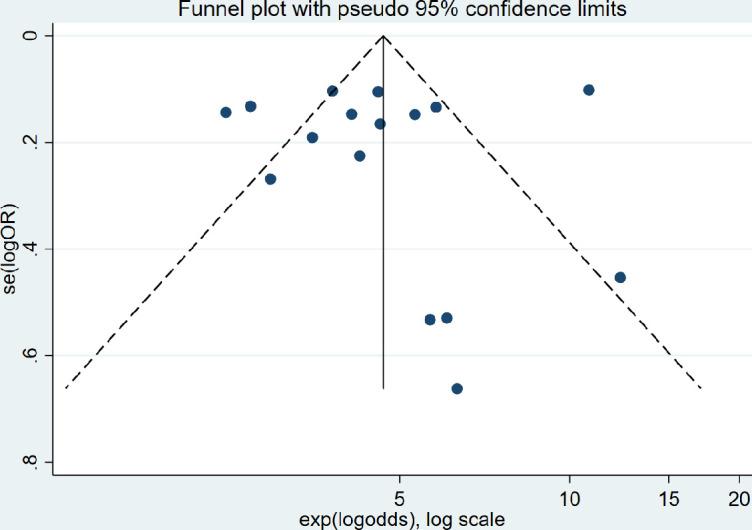
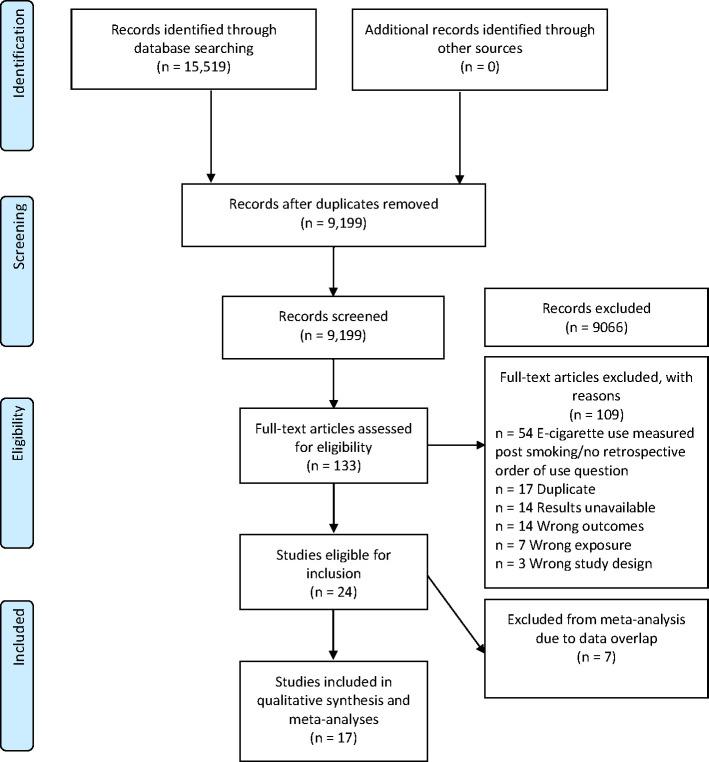
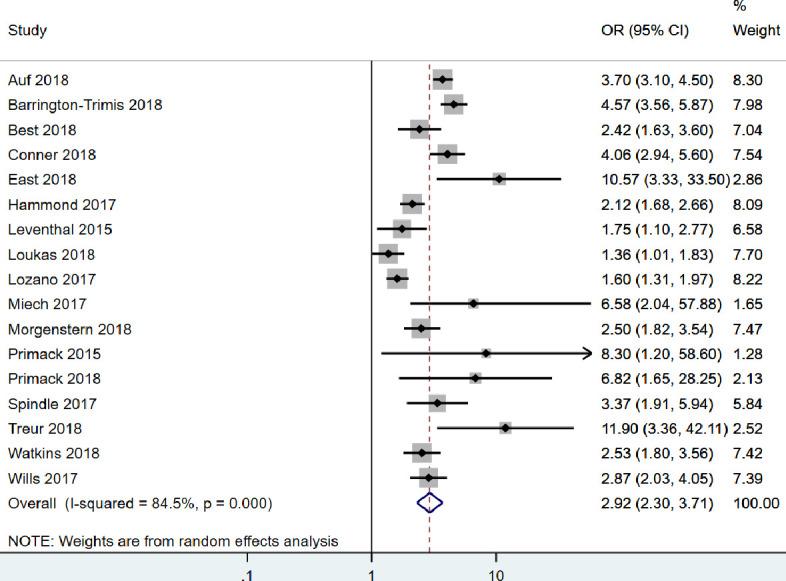
Of 9199 results, 17 studies were included in the meta-analysis. There was strong evidence for an association between e-cigarette use among non-smokers and later smoking (OR: 4.59, 95% CI: 3.60 to 5.85) when the results were meta-analysed in a random-effects model. However, there was high heterogeneity ( =88%).
CONCLUSIONS
Although the association between e-cigarette use among non-smokers and subsequent smoking appears strong, the available evidence is limited by the reliance on self-report measures of smoking history without biochemical verification. None of the studies included negative controls which would provide stronger evidence for whether the association may be causal. Much of the evidence also failed to consider the nicotine content of e-liquids used by non-smokers meaning it is difficult to make conclusions about whether nicotine is the mechanism driving this association.
目的
本综述旨在调查与不使用电子烟的年轻非吸烟者相比,使用电子烟是否与随后吸烟有关。
数据来源
PubMed、Embase、科学网、威利科克伦图书馆数据库,以及2018年尼古丁与烟草研究协会和行为医学协会会议摘要。
研究选择
纳入所有针对30岁及以下年轻人的研究,这些研究在吸烟前对电子烟使用情况进行了测量,并对吸烟情况进行了结果测量,且可以计算比值比(排除综述和动物研究)。
数据提取
由多名作者使用预先准备好的提取表独立完成数据提取。
数据综合分析
在9199项结果中,有17项研究纳入了荟萃分析。当采用随机效应模型对结果进行荟萃分析时,有强有力的证据表明非吸烟者使用电子烟与后来吸烟之间存在关联(比值比:4.59,95%置信区间:3.60至5.85)。然而,异质性很高(I² =88%)。
结论
尽管非吸烟者使用电子烟与随后吸烟之间似乎存在很强的关联,但现有证据受到依赖吸烟史自我报告测量方法而无生化验证这一因素限制。没有一项研究纳入阴性对照,而阴性对照可为该关联是否可能具有因果关系提供更有力的证据。许多证据也未考虑非吸烟者使用的电子烟液中的尼古丁含量,这意味着难以就尼古丁是否是驱动这种关联的机制得出结论。

 Zotero 插件