
ZupT 促进艰难梭菌对宿主介导的营养免疫的耐药性。
ZupT Facilitates Clostridioides difficile Resistance to Host-Mediated Nutritional Immunity.
机构信息
Department of Pathology and Laboratory Medicine, Perelman School of Medicine, University of Pennsylvania, Philadelphia, Pennsylvania, USA.
Division of Protective Immunity, Children's Hospital of Philadelphia, Philadelphia, Pennsylvania, USA.
出版信息
mSphere. 2020 Mar 11;5(2):e00061-20. doi: 10.1128/mSphere.00061-20.
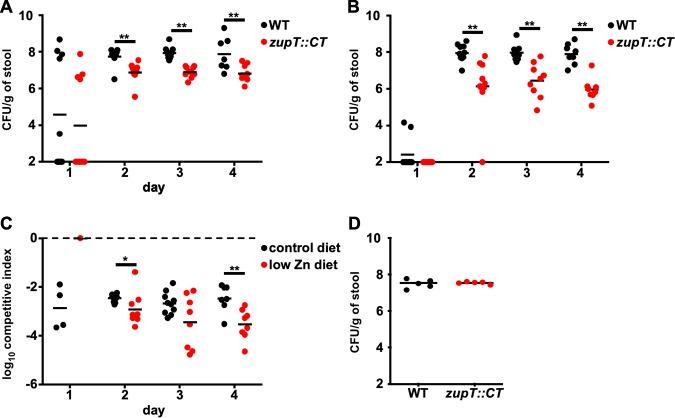
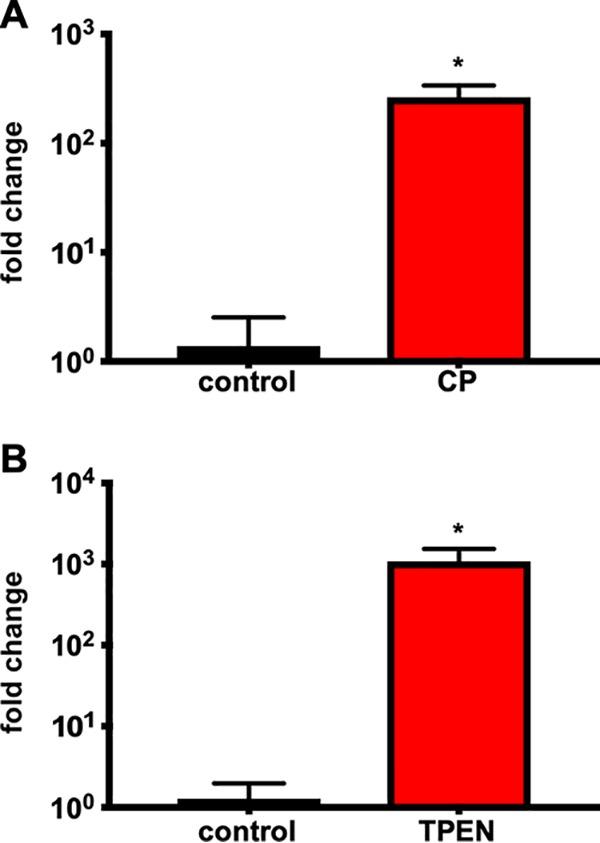
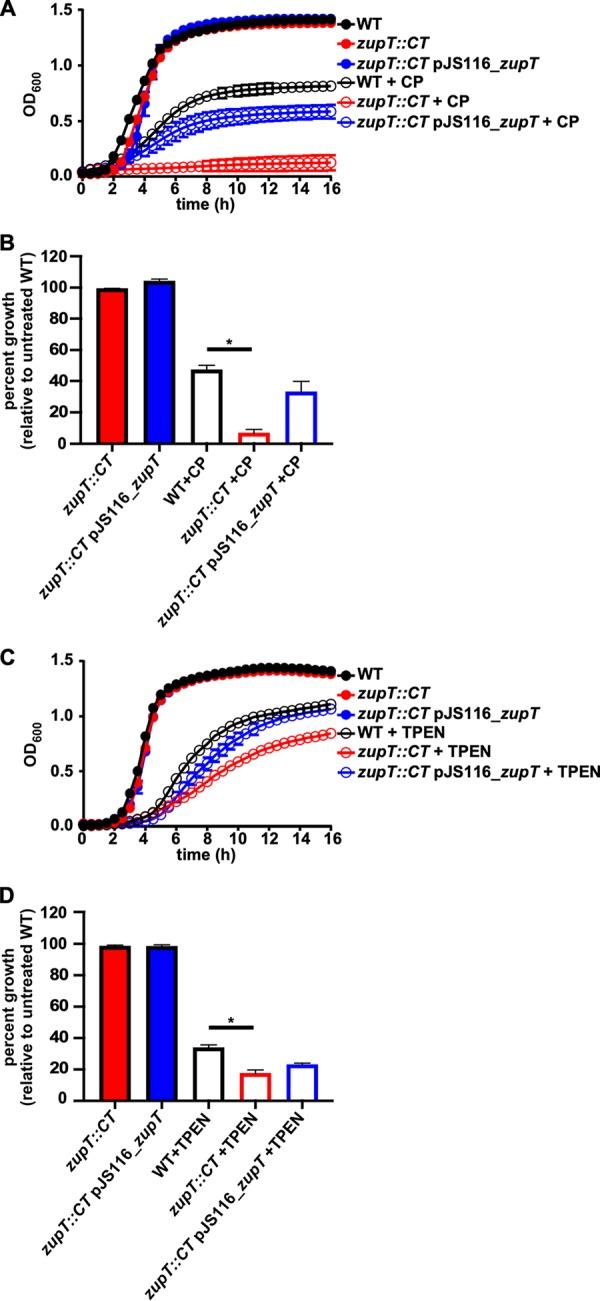
is a spore-forming bacterium that causes severe colitis and is a major public health threat. During infection, toxin production results in damage to the epithelium and a hyperinflammatory response. The immune response to CDI leads to robust neutrophil infiltration at the sight of infection and the deployment of numerous antimicrobials. One of the most abundant host immune factors associated with CDI is calprotectin, a metal-chelating protein with potent antimicrobial activity. Calprotectin is essential to the innate immune response to and increasing levels of calprotectin correlate with disease severity in both adults and children with CDI. The fact that persists in the presence of high levels of calprotectin suggests that this organism may deploy strategies to compete with this potent antimicrobial factor for essential nutrient metals during infection. In this report, we demonstrate that a putative zinc (Zn) transporter, ZupT, is employed by to survive calprotectin-mediated metal limitation. ZupT is highly expressed in the presence of calprotectin and is required to protect against calprotectin-dependent growth inhibition. When competing against wild-type , mutants show a defect in colonization and persistence in a murine model of infection. Together these data demonstrate that utilizes a metal import system to combat nutritional immunity during CDI and suggest that strategies targeting nutrient acquisition in may have therapeutic potential. During infection, pathogenic organisms must acquire essential transition metals from the host environment. Through the process of nutritional immunity, the host employs numerous strategies to restrict these key nutrients from invading pathogens. In this study, we describe a mechanism by which the important human pathogen resists transition-metal limitation by the host. We report that utilizes a zinc transporter, ZupT, to compete with the host protein calprotectin for nutrient zinc. Inactivation of this transporter in renders this important pathogen sensitive to host-mediated metal restriction and confers a fitness disadvantage during infection. Our study demonstrates that targeting nutrient metal transport proteins in is a potential avenue for therapeutic development.
艰难梭菌是一种产芽孢的细菌,可引起严重的结肠炎,是主要的公共卫生威胁。在感染过程中,毒素的产生会导致上皮损伤和过度炎症反应。对 CDI 的免疫反应导致感染部位大量中性粒细胞浸润,并部署了许多抗菌药物。与 CDI 相关的最丰富的宿主免疫因子之一是钙卫蛋白,一种具有强大抗菌活性的金属螯合蛋白。钙卫蛋白对 的先天免疫反应至关重要,并且钙卫蛋白水平的升高与成人和儿童 CDI 患者的疾病严重程度相关。在高水平钙卫蛋白存在的情况下,艰难梭菌仍然存在的事实表明,该生物体可能在感染期间部署策略,与这种有效的抗菌因子竞争必需营养金属。在本报告中,我们证明了一种假定的锌(Zn)转运蛋白 ZupT 被 用来在钙卫蛋白介导的金属限制下存活。在钙卫蛋白存在的情况下,ZupT 高度表达,并且需要保护 免受钙卫蛋白依赖性生长抑制。当与野生型 竞争时, 突变体在感染的小鼠模型中显示出定植和持续存在的缺陷。这些数据共同表明, 利用金属导入系统在 CDI 期间对抗营养免疫,并表明靶向 的营养获取的策略可能具有治疗潜力。在感染过程中,病原体必须从宿主环境中获取必需的过渡金属。通过营养免疫过程,宿主采用了许多策略来限制这些关键营养素进入病原体。在这项研究中,我们描述了重要的人类病原体 如何通过宿主抵抗过渡金属限制的机制。我们报告称, 利用锌转运蛋白 ZupT 与宿主蛋白钙卫蛋白竞争营养锌。 中该转运蛋白的失活使这种重要的病原体对宿主介导的金属限制敏感,并在感染过程中赋予适应性劣势。我们的研究表明,靶向 中的营养金属转运蛋白是治疗开发的潜在途径。

 Zotero 插件