
特应性皮炎中神经酰胺、鞘氨醇和它们的水平改变与皮肤屏障功能、疾病严重程度和局部细胞因子环境有关。
Altered Levels of Sphingosine, Sphinganine and Their Ceramides in Atopic Dermatitis Are Related to Skin Barrier Function, Disease Severity and Local Cytokine Milieu.
机构信息
Department of Dermatology and Venereology, University Hospital Center, Zagreb and University of Zagreb School of Medicine, 10000 Zagreb, Croatia.
Laboratory for Analytical Chemistry, Department of Chemistry and Biochemistry, Faculty of Food Technology and Biotechnology, University of Zagreb, 10000 Zagreb, Croatia.
出版信息
Int J Mol Sci. 2020 Mar 13;21(6):1958. doi: 10.3390/ijms21061958.
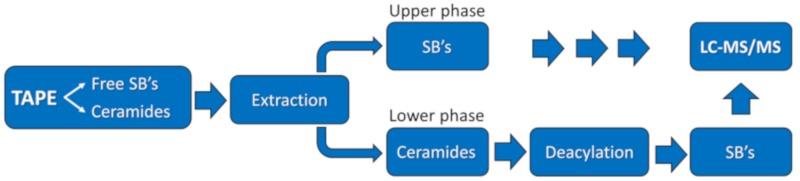
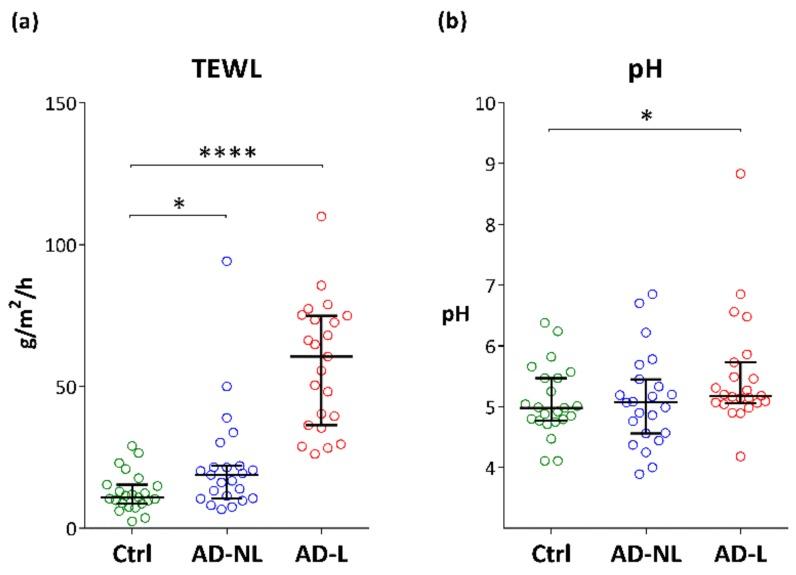
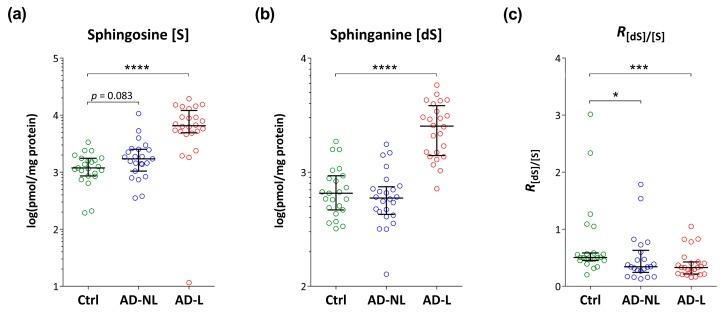
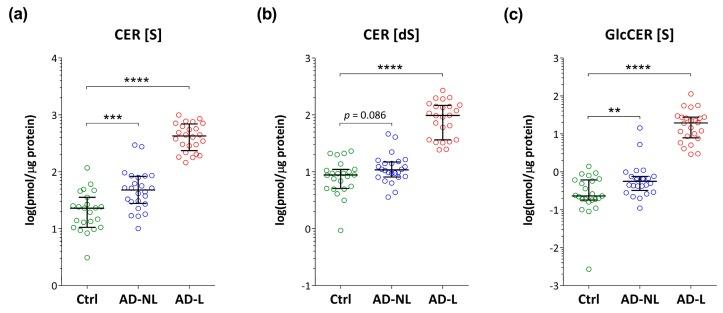
Dysfunctional skin barrier plays a key role in the pathophysiology of atopic dermatitis (AD), a common inflammatory skin disease. Altered composition of ceramides is regarded as a major cause of skin barrier dysfunction, however it is not clear whether these changes are intrinsic or initiated by inflammation and aberrant immune response in AD. This study investigated the levels of free sphingoid bases (SBs) sphingosine and sphinganine and their ceramides and glucosylceramide in the stratum corneum (SC) and related them to skin barrier function, disease severity and local cytokine milieu. Ceramides were measured in healthy skin, and lesional and non-lesional skin of AD patients by a novel method based on deacylation of ceramides which were subsequently determined as corresponding sphingoid bases by using liquid chromatography-tandem mass spectrometry (LC-MS/MS). The cytokine levels were determined by multiplex immunoassay. Atopic skin showed increased levels of most investigated markers, predominantly in lesional skin. The largest difference in respect to healthy skin was found for glucosylceramide with respective median values of 0.23 (IQR 0.18-0.61), 0.56 (IQR 0.32-0.76) and 19.32 (IQR 7.86-27.62) pmol/g protein for healthy, non-lesional and lesional skin. The levels of investigated ceramide markers were correlated with disease severity (scoring atopic dermatitis, SCORAD) and skin barrier function (trans-epidermal water loss, TEWL) and furthermore with cytokines involved in innate, Th-1, and Th-2 immune response. Interestingly, the strongest association with SCORAD was found for sphinganine/sphingosine ratio ( = -0.69, < 0.001; non-lesional skin), emphasizing the importance of SBs in AD. The highest correlation with TEWL was found for glucosylceramide ( = 0.60, < 0.001), which was investigated for the first time in AD. Findings that the changes in SBs and ceramide levels were predominant in lesional skin and their association with disease severity and cytokine levels suggest an immune-system driven effect. a novel analysis method demonstrates a robust and simple approach that might facilitate wider use of lipid biomarkers in the clinics e.g., to monitor (immune) therapy or dissect disease endotypes.
皮肤屏障功能障碍在特应性皮炎(AD)的病理生理学中起着关键作用,AD 是一种常见的炎症性皮肤病。神经酰胺组成的改变被认为是皮肤屏障功能障碍的主要原因,但尚不清楚这些变化是内在的,还是 AD 中的炎症和异常免疫反应引起的。本研究调查了游离鞘氨醇碱基(SBs)神经酰胺和神经鞘氨醇,以及它们的神经酰胺和葡萄糖神经酰胺在角质层(SC)中的水平,并将其与皮肤屏障功能、疾病严重程度和局部细胞因子环境相关联。通过一种基于鞘氨醇碱基的新型去酰化方法,在健康皮肤、AD 患者的病变和非病变皮肤中测量了神经酰胺,随后通过液相色谱-串联质谱(LC-MS/MS)将其确定为相应的鞘氨醇碱基。细胞因子水平通过多重免疫测定法确定。特应性皮肤显示出大多数研究标记物的水平升高,主要是在病变皮肤中。与健康皮肤相比,葡萄糖神经酰胺的差异最大,其相应的中位值分别为 0.23(IQR 0.18-0.61)、0.56(IQR 0.32-0.76)和 19.32(IQR 7.86-27.62)pmol/g 蛋白用于健康、非病变和病变皮肤。研究的神经酰胺标志物的水平与疾病严重程度(特应性皮炎评分,SCORAD)和皮肤屏障功能(经表皮水分流失,TEWL)相关,并且与先天、Th1 和 Th2 免疫反应中涉及的细胞因子相关。有趣的是,与 SCORAD 相关性最强的是神经酰胺碱基的神经鞘氨醇/神经鞘氨醇比值( = -0.69,<0.001;非病变皮肤),这强调了 SBs 在 AD 中的重要性。与 TEWL 相关性最高的是葡萄糖神经酰胺( = 0.60,<0.001),这是首次在 AD 中进行的研究。发现 SBs 和神经酰胺水平的变化主要发生在病变皮肤中,它们与疾病严重程度和细胞因子水平相关,这表明存在免疫介导的影响。一种新的分析方法证明了一种强大而简单的方法,可能有助于在临床上更广泛地使用脂质生物标志物,例如监测(免疫)治疗或剖析疾病内型。



 Zotero 插件