
母亲乙肝病毒或丙肝病毒携带状态与子代的长期内分泌疾病——一项基于人群的队列研究
Maternal Hepatitis B Virus or Hepatitis C Virus Carrier Status and Long-Term Endocrine Morbidity of the Offspring-A Population-Based Cohort Study.
作者信息
Abu Freha Naim, Wainstock Tamar, Menachem Tzvi Najman, Sheiner Eyal
机构信息
The Institute of Gastroenterology and Hepatology, Soroka University Medical Center and the Faculty of Health Sciences, Ben-Gurion University of the Negev, Beer-Sheva 84101, Israel.
The Department of Public Health, Faculty of Health Sciences, Ben-Gurion University of the Negev, Beer-Sheva 84101, Israel.
出版信息
J Clin Med. 2020 Mar 14;9(3):796. doi: 10.3390/jcm9030796.
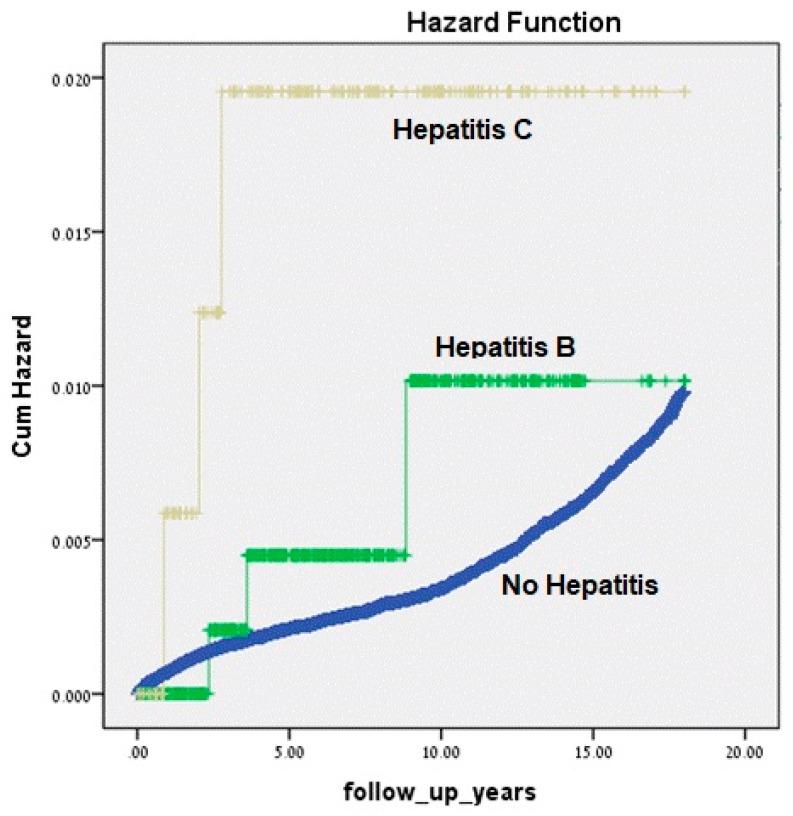
This study aimed to investigate the long-term effect of maternal hepatitis B virus (HBV) or hepatitis C virus (HCV) carrier status on offspring endocrine morbidity. A population-based cohort study included all singleton deliveries between the years 1991-2014 at the Soroka University Medical Center, Beer-Sheva, Southern Israel. The mothers were subdivided into three groups, HBV carriers, HCV carriers and non-carriers. Data regarding the long-term endocrine morbidity of their offspring were compared between the groups. The study included 242,905 (99.7%) non-carrying mothers, 591 (0.2%) mothers who were carriers for HBV and 186 (0.1%) mothers who were carriers for HCV. The Kaplan-Meier's survival curve demonstrated a significantly higher cumulative endocrine morbidity in children born to mothers with HCV (log-rank test, = 0.002). Specifically, higher rates of hypoglycemia were noted among the offspring born to mothers who were carriers of HCV (1.1%; = 0.001) compared with the offspring of mothers who were either carriers of HBV (0.2%) or non-carriers (0.1%). A Cox regression model controlled for maternal age, gestational age, maternal diabetes, hypertensive disorders of pregnancy, found maternal HCV carrier status to be independently associated with pediatric endocrine morbidity in the offspring (adjusted hazard ratio = 5.05, 95% CI: 1.625-15.695, = 0.005). Maternal HCV carrier status is an independent risk factor for long-term endocrine morbidity.
本研究旨在调查母亲乙型肝炎病毒(HBV)或丙型肝炎病毒(HCV)携带者状态对后代内分泌疾病的长期影响。一项基于人群的队列研究纳入了1991年至2014年期间在以色列南部贝尔谢巴的索罗卡大学医学中心出生的所有单胎婴儿。母亲们被分为三组,HBV携带者、HCV携带者和非携带者。比较了各组后代长期内分泌疾病的数据。该研究包括242,905名(99.7%)非携带者母亲、591名(0.2%)HBV携带者母亲和186名(0.1%)HCV携带者母亲。Kaplan-Meier生存曲线显示,HCV携带者母亲所生儿童的累积内分泌疾病发生率显著更高(对数秩检验,=0.002)。具体而言,与HBV携带者母亲(0.2%)或非携带者母亲(0.1%)的后代相比,HCV携带者母亲所生后代的低血糖发生率更高(1.1%;=0.001)。一个控制了母亲年龄、孕周、母亲糖尿病、妊娠期高血压疾病的Cox回归模型发现,母亲HCV携带者状态与后代儿童内分泌疾病独立相关(调整后的风险比=5.05,95%置信区间:1.625-15.695,=0.005)。母亲HCV携带者状态是长期内分泌疾病的独立危险因素。
 Zotero 插件