
乳清蛋白在肥胖受试者中的抑制食欲和 GLP-1 刺激作用与循环中特定氨基酸水平的升高有关。
The Appetite-Suppressant and GLP-1-Stimulating Effects of Whey Proteins in Obese Subjects are Associated with Increased Circulating Levels of Specific Amino Acids.
机构信息
Department of Clinical Sciences and Community Health, University of Milan, 20129 Milan, Italy.
Department of Medical Biotechnologies, University of Siena, 53100 Siena, Italy.
出版信息
Nutrients. 2020 Mar 15;12(3):775. doi: 10.3390/nu12030775.
UNLABELLED
The satiating effect of whey proteins depends upon their unique amino acid composition because there is no difference when comparing whey proteins or a mix of amino acids mimicking the amino acid composition of whey proteins. The specific amino acids underlying the satiating effect of whey proteins have not been investigated to date.
AIMS AND METHODS
The aim of the present study was to evaluate the appetite-suppressant effect of an isocaloric drink containing whey proteins or maltodextrins on appetite (satiety/hunger measured by a visual analogue scale or VAS), anorexigenic gastrointestinal peptides (circulating levels of glucagon-like peptide 1 (GLP-1) and peptide tyrosine tyrosine (PYY)) and amino acids (circulating levels of single, total [TAA] and branched-chain amino acids [BCAA]) in a cohort of obese female subjects ( = 8; age: 18.4 ± 3.1 years; body mass index, BMI: 39.2 ± 4.6 kg/m).
RESULTS
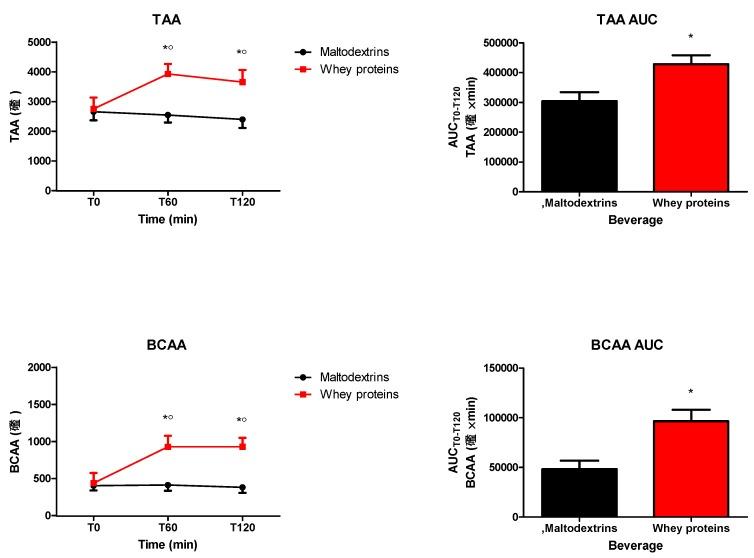
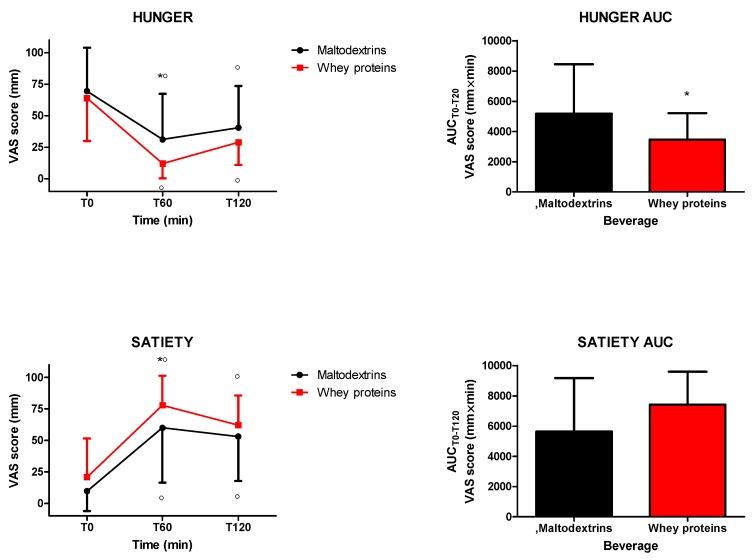
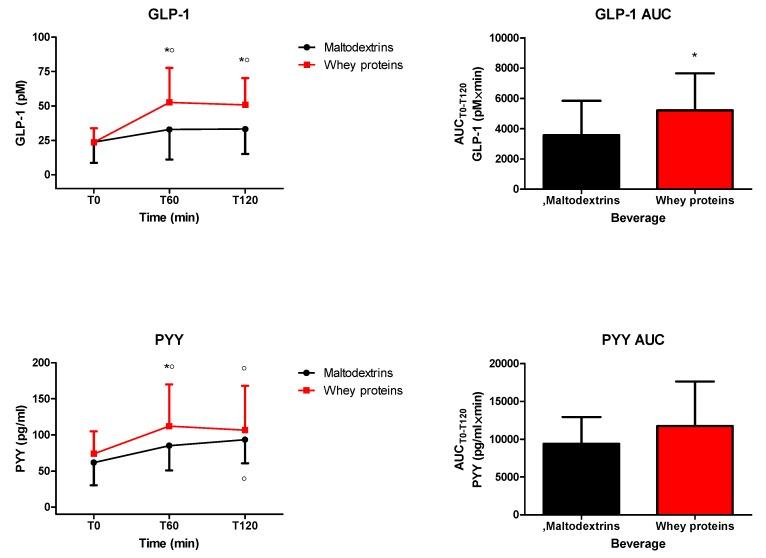
Each drink significantly increased satiety and decreased hunger, the effects being more evident with whey proteins than maltodextrins. Similarly, circulating levels of GLP-1, PYY and amino acids (TAA, BCAA and alanine, arginine, asparagine, citrulline, glutamine, hydroxyproline, isoleucine, histidine, leucine, lysine, methionine, ornithine, phenylalanine, proline, serine, threonine, tyrosine, and valine) were significantly higher with whey proteins than maltodextrins. In subjects administered whey proteins (but not maltodextrins), isoleucine, leucine, lysine, methionine, phenylalanine, proline, tyrosine, and valine were significantly correlated with hunger (negatively), satiety, and GLP-1 (positively).
CONCLUSIONS
Eight specific amino acids (isoleucine, leucine, lysine, methionine, phenylalanine, proline, tyrosine, and valine) were implicated in the appetite-suppressant and GLP-1-stimulating effects of whey proteins, which may be mediated by their binding with nutrient-sensing receptors expressed by L cells within the gastrointestinal wall. The long-term satiating effect of whey proteins and the effectiveness of a supplementation with these amino acids (i.e., as a nutraceutical intervention) administered during body weight reduction programs need to be further investigated.
目的和方法
本研究旨在评估含乳清蛋白或麦芽糊精的等热量饮料对食欲(通过视觉模拟量表或 VAS 测量饱腹感/饥饿感)、厌食性胃肠肽(循环中胰高血糖素样肽 1 (GLP-1) 和肽酪氨酸酪氨酸 (PYY) 的水平)和氨基酸(循环中单、总 [TAA] 和支链氨基酸 [BCAA] 的水平)的抑制作用在肥胖女性受试者(= 8;年龄:18.4 ± 3.1 岁;体重指数,BMI:39.2 ± 4.6 kg/m)。
结果
每种饮料均显著增加饱腹感并降低饥饿感,乳清蛋白的效果比麦芽糊精更明显。同样,循环中 GLP-1、PYY 和氨基酸(TAA、BCAA 和丙氨酸、精氨酸、天冬酰胺、瓜氨酸、谷氨酸、羟脯氨酸、异亮氨酸、组氨酸、亮氨酸、赖氨酸、蛋氨酸、鸟氨酸、苯丙氨酸、脯氨酸、丝氨酸、苏氨酸、酪氨酸和缬氨酸)的水平也明显高于麦芽糊精。在给予乳清蛋白的受试者中(而非麦芽糊精),异亮氨酸、亮氨酸、赖氨酸、蛋氨酸、苯丙氨酸、脯氨酸、酪氨酸和缬氨酸与饥饿感(负相关)、饱腹感和 GLP-1(正相关)显著相关。
结论
8 种特定氨基酸(异亮氨酸、亮氨酸、赖氨酸、蛋氨酸、苯丙氨酸、脯氨酸、酪氨酸和缬氨酸)与乳清蛋白的抑制食欲和刺激 GLP-1 作用有关,这可能是通过其与胃肠道壁 L 细胞表达的营养感应受体结合介导的。乳清蛋白的长期饱腹感作用以及在体重减轻计划期间补充这些氨基酸(即作为营养干预)的有效性需要进一步研究。
 Zotero 插件