
假基因衍生的长链非编码RNA及其在人类癌症中的miRNA海绵机制
Pseudogene-Derived lncRNAs and Their miRNA Sponging Mechanism in Human Cancer.
作者信息
Lou Weiyang, Ding Bisha, Fu Peifen
机构信息
Department of Breast Surgery, The First Affiliated Hospital, College of Medicine, Zhejiang University, Hangzhou, China.
Program of Innovative Cancer Therapeutics, Division of Hepatobiliary and Pancreatic Surgery, Department of Surgery, First Affiliated Hospital, College of Medicine, Zhejiang University, Hangzhou, China.
出版信息
Front Cell Dev Biol. 2020 Feb 28;8:85. doi: 10.3389/fcell.2020.00085. eCollection 2020.
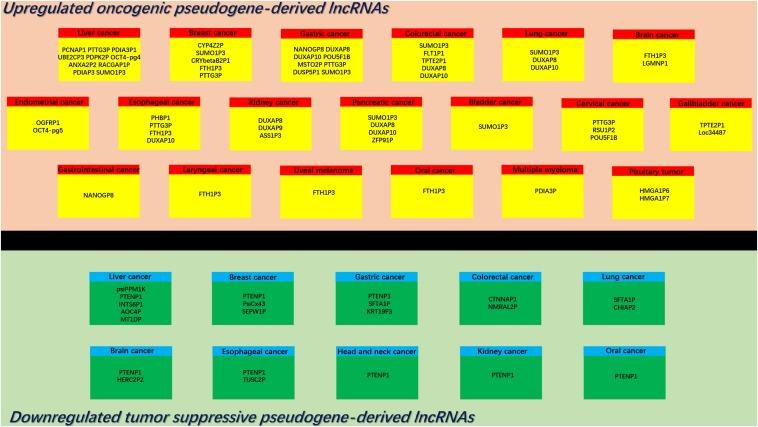
Pseudogenes, abundant in the human genome, are traditionally considered as non-functional "junk genes." However, recent studies have revealed that pseudogenes act as key regulators at DNA, RNA or protein level in diverse human disorders (including cancer), among which pseudogene-derived long non-coding RNA (lncRNA) transcripts are extensively investigated and has been reported to be frequently dysregulated in various types of human cancer. Growing evidence demonstrates that pseudogene-derived lncRNAs play important roles in cancer initiation and progression by serving as competing endogenous RNAs (ceRNAs) through competitively binding to shared microRNAs (miRNAs), thus affecting both their cognate genes and unrelated genes. Herein, we retrospect those current findings about expression, functions and potential ceRNA mechanisms of pseudogene-derived lncRNAs in human cancer, which may provide us with some crucial clues in developing potential targets for cancer therapy in the future.
假基因在人类基因组中大量存在,传统上被认为是无功能的“垃圾基因”。然而,最近的研究表明,假基因在多种人类疾病(包括癌症)中作为DNA、RNA或蛋白质水平的关键调节因子发挥作用,其中假基因衍生的长链非编码RNA(lncRNA)转录本受到广泛研究,并且据报道在各种类型的人类癌症中经常失调。越来越多的证据表明,假基因衍生的lncRNA通过作为竞争性内源RNA(ceRNA),竞争性结合共享的微小RNA(miRNA),从而影响其同源基因和非相关基因,在癌症的发生和发展中发挥重要作用。在此,我们回顾了目前关于假基因衍生lncRNA在人类癌症中的表达、功能和潜在ceRNA机制的研究结果,这可能为我们未来开发癌症治疗的潜在靶点提供一些关键线索。

 Zotero 插件