
微小RNA-30c在癌症进展中的作用。
Role of MicroRNA-30c in cancer progression.
作者信息
Han Wenyan, Cui Hongwei, Liang Junqing, Su Xiulan
机构信息
Laboratory of the Second Affiliated Hospital of Inner Mongolia Medical University.No.1 Yingfang Road, Huimin District, Hohhot, Inner Mongolia, China.
Clinical Medical Research Center of the Affiliated Hospital/Inner Mongolia Key Laboratory of Medical Cellular Biology, Inner Mongolia Medical University, Hohhot, 010050, Inner Mongolia, P.R. China.
出版信息
J Cancer. 2020 Feb 14;11(9):2593-2601. doi: 10.7150/jca.38449. eCollection 2020.
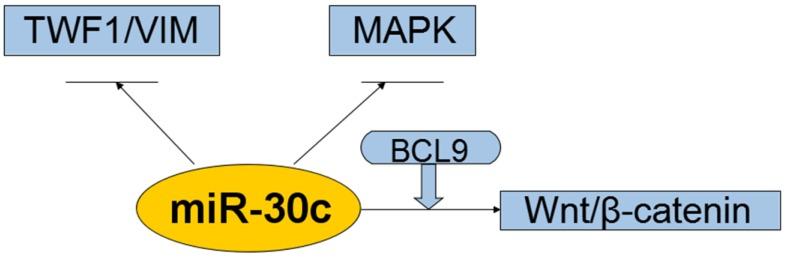
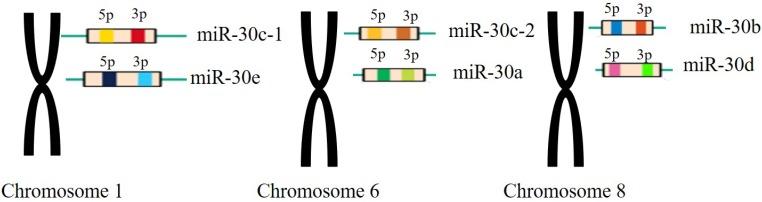
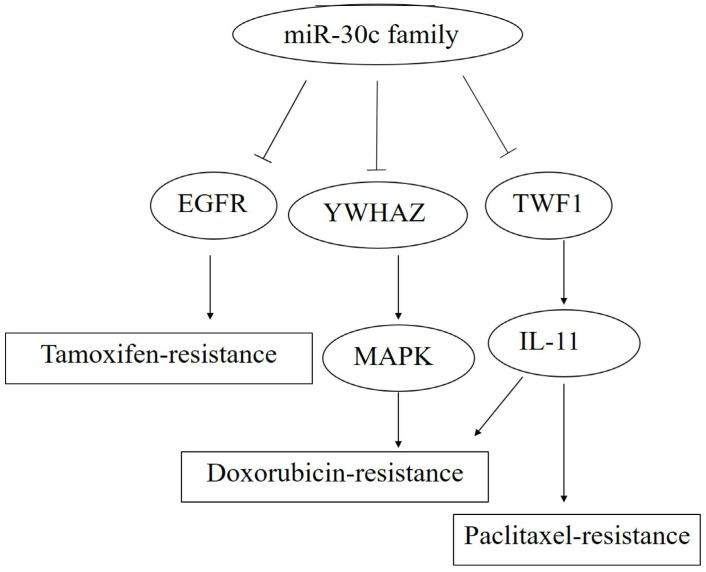
MicroRNAs (miRNAs or miRs) is a non-coding small RNA of a type of 18~24 nucleotide-regulated gene that has been discovered in recent years. It mainly degrades the target gene mRNA or inhibits its translation process through the complete or incomplete bindings with 3'UTR of target genes, followed by the regulation of individual development, apoptosis, proliferation, differentiation and other life activities through the post-transcriptional regulation. Among many miRNAs, the microRNA family, miR-30, plays diverse roles in these key process of neoplastic transformation, metastasis, and clinical outcomes in different cancer progression. As key member of miR-30, miR-30c is regulated by oncogenic transcription factors and cancer progression related genes. Recently, numerous studies have demonstrated that the aberrant expression of miR-30c was significantly associated with the majority of human cancer progression. In this review, the diverse roles of miR-30c in different cancer progression such as the cellular and molecular mechanisms, the potential applications in clinics were summarized to speculate the benefits of miR-30c over-expression in cancer treatment and prognosis.
微小RNA(miRNA或miR)是近年来发现的一类18至24个核苷酸的非编码小RNA,可调控基因。它主要通过与靶基因的3'UTR完全或不完全结合来降解靶基因mRNA或抑制其翻译过程,随后通过转录后调控来调节个体发育、细胞凋亡、增殖、分化等生命活动。在众多miRNA中,miR-30微小RNA家族在不同癌症进展的肿瘤转化、转移和临床结果等关键过程中发挥着多种作用。作为miR-30的关键成员,miR-30c受致癌转录因子和癌症进展相关基因的调控。最近,大量研究表明,miR-30c的异常表达与大多数人类癌症进展显著相关。在本综述中,总结了miR-30c在不同癌症进展中的多种作用,如细胞和分子机制、在临床中的潜在应用,以推测miR-30c过表达在癌症治疗和预后方面的益处。



 Zotero 插件