
新生小鼠和成年小鼠大脑解离,用于通过流式细胞术同时分析小胶质细胞、星形胶质细胞和浸润淋巴细胞。
Dissociation of neonatal and adult mice brain for simultaneous analysis of microglia, astrocytes and infiltrating lymphocytes by flow cytometry.
作者信息
Calvo Belén, Rubio Felipe, Fernández Miriam, Tranque Pedro
机构信息
Neuroglia Laboratory, Research Institute for Neurological Disorders (IDINE), Medical School, University of Castilla-La Mancha (UCLM), Albacete, Spain.
出版信息
IBRO Rep. 2020 Jan 13;8:36-47. doi: 10.1016/j.ibror.2019.12.004. eCollection 2020 Jun.
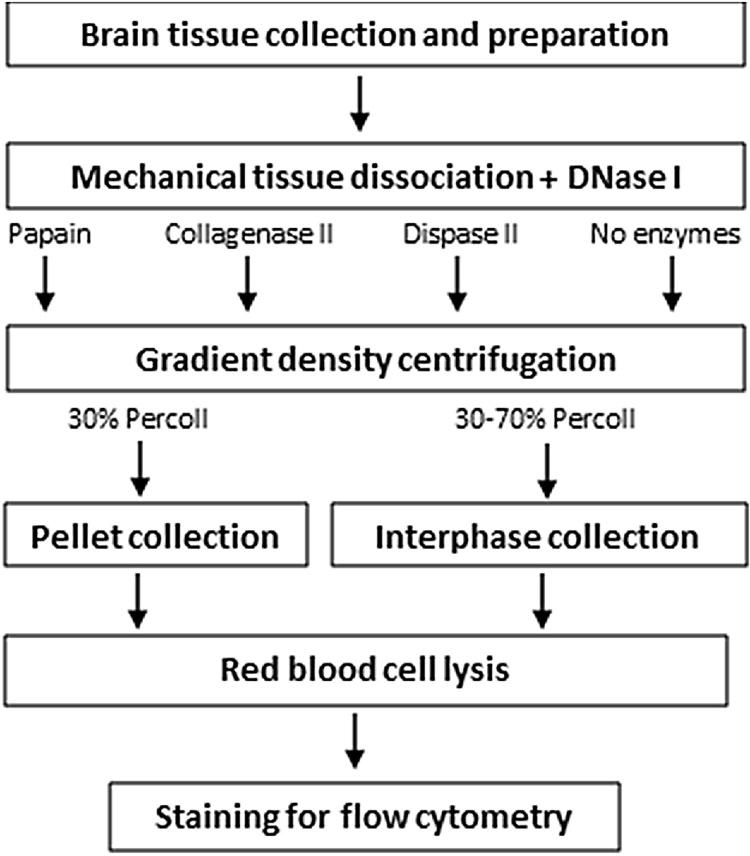
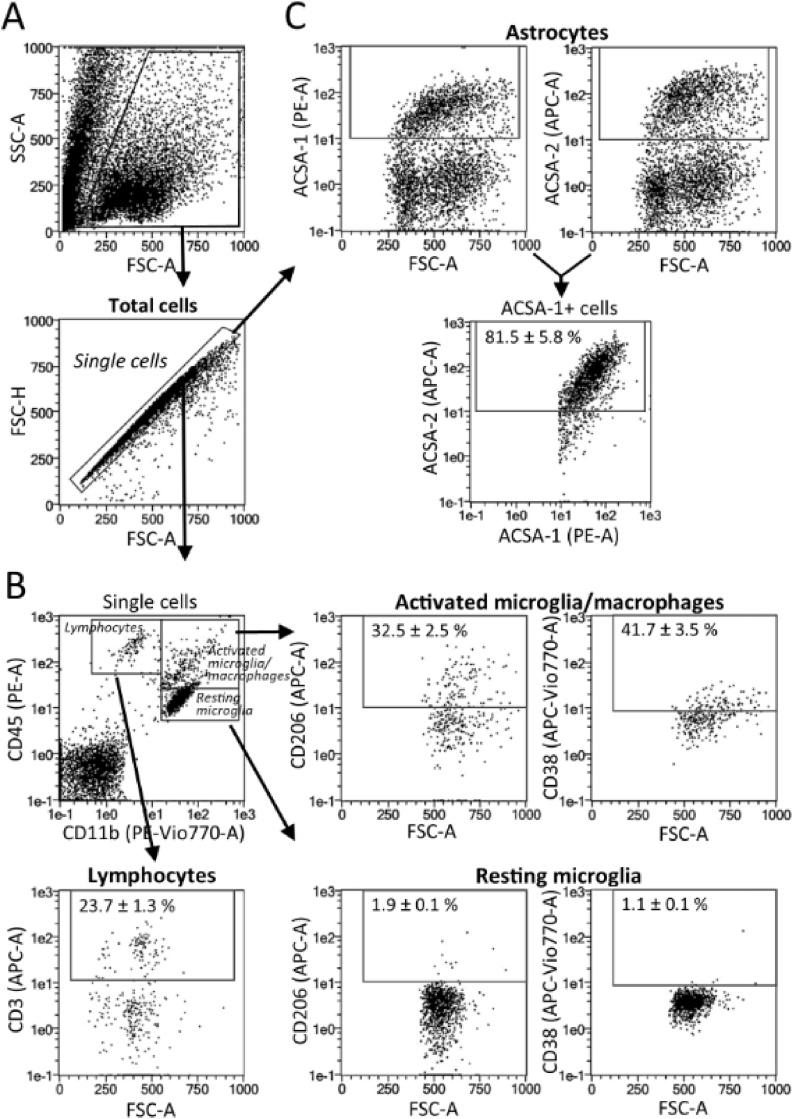
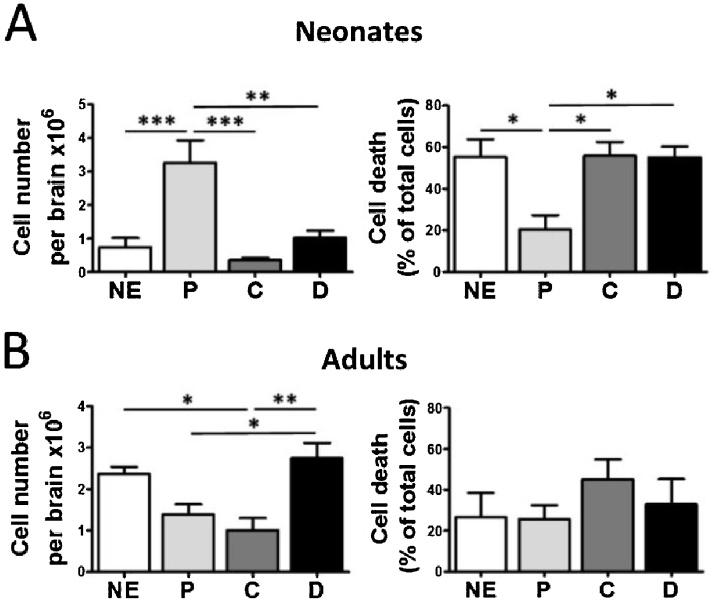
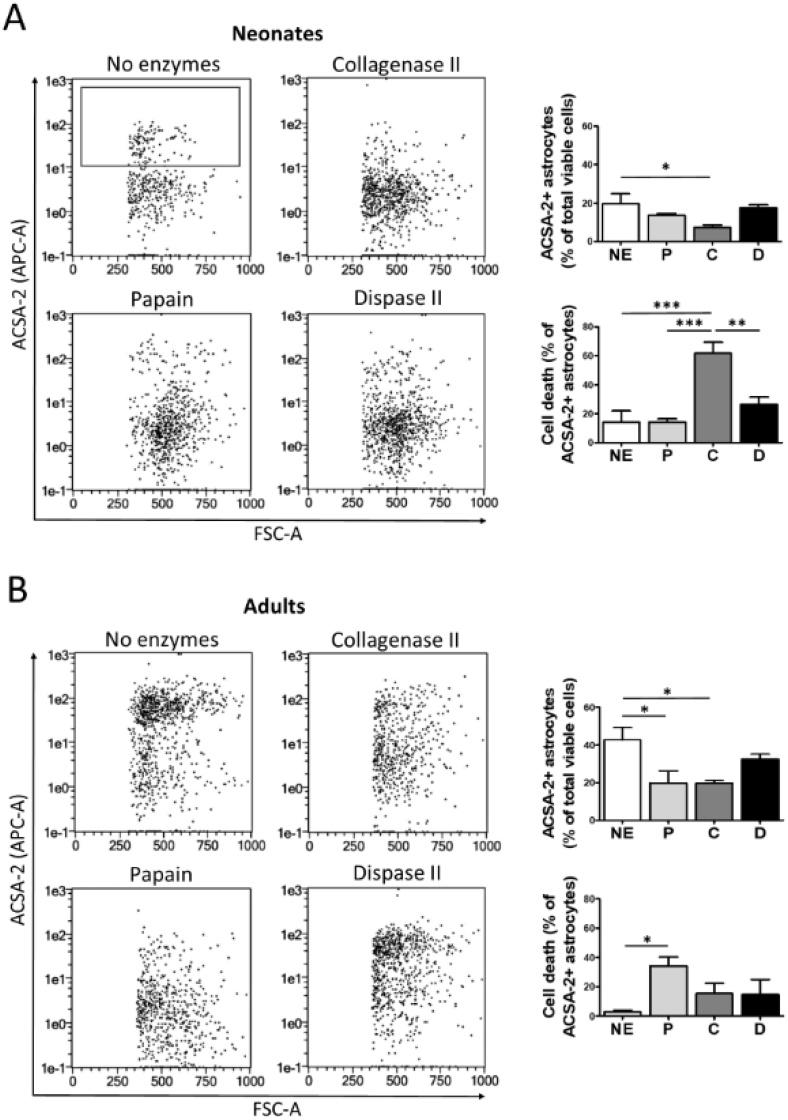
The technical difficulty to isolate microglia, astrocytes and infiltrating immune cells from mouse brain is nowadays a limiting factor in the study of neuroinflammation. Brain isolation requirements are cell-type and animal-age dependent, but current brain dissociation procedures are poorly standardized. This lack of comprehensive studies hampers the selection of optimized methodologies. Thus, we present here a comparative analysis of dissociation methods and Percoll-based separation to identify the most efficient procedure for the combined isolation of healthy microglia, astrocytes and infiltrated leukocytes; distinguishing neonatal and adult mouse brain. Gentle mechanical dissociation and DNase I incubation was supplemented with papain or collagenase II. Dispase II digestion was also used alone or in combination. In addition, cell separation efficiency of 30 % and 30-70 % Percoll gradients was compared. In these experiments, cell yield and integrity of freshly dissociated cells was measured by flow cytometry. We found that papain digestion in combination with dispase II followed by 30 % Percoll separation is the most balanced method to obtain a mixture of microglia, astrocytes and infiltrated immune cells; while addition of dispase II was not an advantage for neonatal brain. These dissociation conditions allowed flow cytometry detection of a slight glial activation triggered by sublethal LPS injection. In conclusion, the enzymes and Percoll density gradients tested here affected differently resting microglia, activated microglia/macrophages, astrocytes and infiltrated lymphocytes. Also, newborn and adult brain showed contrasting reactions to digestion. Our study highlights the strength of flow cytometry for the simultaneous analysis of neuroimmune cell populations once extraction is optimized.
如今,从小鼠大脑中分离小胶质细胞、星形胶质细胞和浸润性免疫细胞的技术难题是神经炎症研究中的一个限制因素。大脑分离要求取决于细胞类型和动物年龄,但目前的脑部分离程序标准化程度很低。缺乏全面的研究阻碍了优化方法的选择。因此,我们在此对分离方法和基于 Percoll 的分离进行比较分析,以确定联合分离健康小胶质细胞、星形胶质细胞和浸润白细胞的最有效程序;区分新生小鼠和成年小鼠大脑。温和的机械分离和 DNase I 孵育辅以木瓜蛋白酶或胶原酶 II。也单独或联合使用 Dispase II消化。此外,还比较了 30% 和 30 - 70% Percoll 梯度的细胞分离效率。在这些实验中,通过流式细胞术测量新鲜分离细胞的产量和完整性。我们发现,木瓜蛋白酶消化联合 Dispase II 然后进行 30% Percoll 分离是获得小胶质细胞、星形胶质细胞和浸润免疫细胞混合物的最平衡方法;而添加 Dispase II 对新生大脑并无优势。这些分离条件使得通过流式细胞术能够检测到亚致死剂量 LPS 注射引发的轻微胶质细胞激活。总之,此处测试的酶和 Percoll 密度梯度对静息小胶质细胞、活化小胶质细胞/巨噬细胞、星形胶质细胞和浸润淋巴细胞的影响各不相同。此外,新生大脑和成年大脑对消化表现出不同的反应。我们的研究突出了在优化提取后,流式细胞术对同时分析神经免疫细胞群体的优势。



 Zotero 插件